Mount Pleasant Heating & Air Conditioning · AC Installation
AC Installation & Replacement
When your air conditioner is old, unreliable, or no longer worth repairing, a properly sized, professionally installed replacement is the practical next step. We help Mount Pleasant homeowners evaluate options and install the right system for their home.

Quick Answer
AC installation and replacement starts with a proper evaluation: the size of your home, the condition of your ducts, and your comfort needs. A correctly sized system cools efficiently, controls humidity, and lasts longer. We explain the options and the price before any work begins, and we service all major makes and models.
What We Do
AC Installation & Replacement
A full range of ac installation & replacement services for homes and businesses in the Mount Pleasant area.
AC Replacement
Removing an old, inefficient, or failing system and installing a new cooling system sized for your home.
New AC Installation
Complete installation of a new air conditioner for homes adding or upgrading cooling, including line set and electrical connections.
Sizing & Load Evaluation
A proper load calculation ensures the system is not too big (short cycling) or too small (running non-stop).
Ductwork Check
We verify your ducts can deliver the airflow the new system needs before installation.
System Start-Up & Testing
After installation, we test operation, check refrigerant, and confirm the system cools as designed.
Old Unit Removal
We remove and dispose of the old equipment properly, leaving the work area clean.
Choosing a System
Single-Stage, Two-Stage or Variable-Speed?
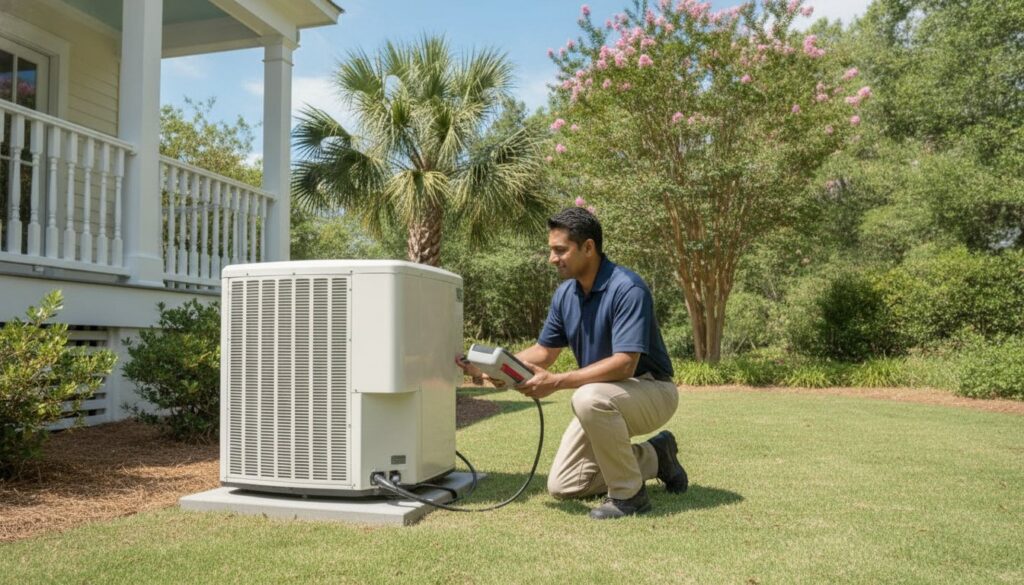
Most of the price difference between new air conditioners comes from how the compressor runs. Choosing the right type for your home matters more than the brand name on the cabinet.
- Single-stage systems run at full power or not at all. They cost the least up front and work well in smaller, well-insulated homes.
- Two-stage systems run on a lower setting most of the time and step up on the hottest afternoons. Longer, gentler cycles remove more humidity.
- Variable-speed (inverter) systems adjust output in small steps. They hold the temperature most evenly and are the best at drying the air, which is a real advantage in Lowcountry summers.
We'll explain which options fit your home and budget, and when the extra cost of a higher-efficiency model is likely to pay off. Compare them in variable-speed vs. single-stage AC.
Problems We Solve
Signs You May Need This Service
Plain-language descriptions of the situations homeowners bring to us most often.
AC Over 10–15 Years Old
Older systems become less efficient and more expensive to keep repairing. Replacement may make more sense than another repair.
Repeated Breakdowns
When repair bills keep adding up, the cost of continued repairs can exceed the value of the equipment.
High Energy Bills
An aging, inefficient system works harder and costs more to run. A new, efficient system can change that.
Incorrect Sizing
If the current system short cycles or runs constantly, it may be the wrong size — a replacement is a chance to fix it.
R-22 Refrigerant
Systems that use older refrigerant are increasingly costly to service as that refrigerant is phased out.
Warranty Expired
Once the original warranty is gone, major component failures fall entirely on you.

Ductwork Matters
A New AC Can't Fix Leaky or Undersized Ducts
In many Mount Pleasant homes the ducts run through a hot attic or a damp crawl space. If they leak, are crushed, or are too small, a brand-new system will still leave rooms warm and run up the power bill.
- Loose connections and torn insulation leak cooled air into the attic before it reaches your rooms.
- Undersized return ducts starve the system of air, which lowers efficiency and shortens equipment life.
- Ducts in crawl spaces can pick up moisture and musty odors that end up in the house.
- Sealing and repairing ducts at installation time usually costs less than doing it later.
During the evaluation we look at the ductwork as well as the equipment, so the new system can deliver the comfort it's rated for. Related: what causes uneven home temperatures.
How It Works
How It Works
A clear process, so you know what to expect from the first call to the finished job.
Request an Evaluation
Call us or request service online. We assess your current system, home, and comfort needs.
Review the Options
We present system options, sizing, and pricing so you can compare and decide.
Schedule the Installation
We book the installation at a time that works for you, with same-day appointments when available.
Professional Install
Our team installs the system, checks ductwork and airflow, and handles permits and removal of the old unit.
Test & Walk-Through
We start the system, verify performance, and walk you through operation and care.
Why Choose Us
Why Mount Pleasant Homeowners Call Us
Licensed, Bonded & Insured
Our company carries the licenses, bonding, and insurance required in South Carolina.
Background-Checked Techs
Every technician is background-checked before entering your home.
All Major Makes & Models
We install and service most major brands of cooling equipment.
Local Since 2007
A Mount Pleasant company serving the Lowcountry since 2007.

Installation Day
What to Expect on Installation Day
Most residential replacements take a day. Knowing the plan ahead of time makes the day easier for everyone in the house.
- Access: we'll need a clear path to the indoor unit (attic, closet or crawl space) and the outdoor pad.
- Power: the system will be off for most of the day, so plan for a warm afternoon in summer.
- Removal: the old equipment and refrigerant are removed and disposed of properly.
- Start-up: we check refrigerant charge, airflow, drainage and thermostat settings before we leave.
- Walk-through: you'll learn how to change the filter, use the thermostat and spot problems early.
Keep your paperwork in one place. The model and serial numbers and the installation date are what you'll need if you ever file a warranty claim.
Common Questions
Straight Answers
Quick, honest answers to the questions we hear most from Mount Pleasant homeowners.
How do I know if I need AC repair or a new AC?
Consider the system’s age, repair history, performance, and reliability. If repairs are frequent or the system is old, a professional evaluation can compare the practical options — repair now or replace.
How much does AC installation cost in Mount Pleasant?
It depends on the system, the size of your home, and the installation work involved. We explain the options and the price before any work begins.
How long does AC installation take?
Most residential AC installations are completed in a day, depending on the system and the existing setup. We give you a realistic timeline when you schedule.
What size AC does my home need?
Correct sizing comes from a load calculation that accounts for square footage, insulation, windows, and climate — not guesswork. We include sizing in the evaluation.
Do you service all AC brands?
We install and service most major makes and models of air conditioning equipment.
Done Right
What Goes Into a Proper AC Installation
A new air conditioner only performs as well as it is sized and installed. Here is what a careful installation includes:
- A load calculation, not a guess. We size the system from your home’s square footage, insulation, windows, sun exposure and ductwork using a room-by-room calculation (the industry’s ACCA Manual J method), rather than matching the old unit’s size.
- Matched equipment. The outdoor unit and indoor coil are selected as a matched pair, so the system reaches its rated efficiency and capacity.
- A duct check. Leaky or undersized ducts can undo the benefit of a new system, so we look at airflow and duct condition before installing.
- Clean refrigerant lines. We replace or properly clean the line set, pressure-test it for leaks and pull a deep vacuum before charging the system.
- Drainage and safety. A new condensate drain and float switch protect against water damage in our humid climate.
- Start-up and testing. We verify refrigerant charge, airflow and thermostat setup, then walk you through the system.
Since January 2023, new central air conditioners installed in the Southeast must meet regional minimum efficiency standards, rated in SEER2. Every system we install meets them, and we can explain when a higher-efficiency model is worth the extra cost; see whether high-efficiency HVAC is worth it in Charleston. Before you choose, read how to choose the right AC size, compare variable-speed vs. single-stage systems, and see what to expect on installation day.

Planning Ahead
Replace on Your Schedule, Not in a Heat Wave
The worst time to shop for an air conditioner is the day it dies in July. If your system is getting older or needing frequent repairs, planning the replacement gives you time to compare options calmly.
- Spring and fall are usually the easiest times to schedule an installation.
- Having time lets you compare system types, efficiency levels and quotes side by side.
- Utility rebates and manufacturer promotions change often; we can tell you what applies when you're ready.
- A planned replacement avoids paying for emergency repairs on equipment you're about to retire.
Not sure if it's time? Read HVAC repair vs. replacement and questions to ask when choosing a new AC, or call for an evaluation.
Efficiency Ratings
Understanding SEER2 Ratings on a New AC
SEER2 measures how much cooling a system delivers for the electricity it uses. The higher the number, the less it costs to run. The rating replaced the older SEER scale in 2023 and uses a test that better matches real ductwork.
- Minimums in South Carolina: new central air conditioners in the Southeast must be at least 14.3 SEER2, or 13.8 SEER2 for systems of 45,000 BTU and larger. Heat pumps must meet 14.3 SEER2 and 7.5 HSPF2.
- The rating covers a matched system: the number applies to a specific outdoor unit, indoor coil and furnace or air handler working together. Ask for the AHRI certificate number for the exact combination you’re quoted.
- Higher isn’t always worth it: our long cooling season makes efficiency pay back faster than up north. Even so, correct sizing and sealed ducts affect your bill as much as the rating does.
- New refrigerants: new systems use lower-impact refrigerants such as R-454B or R-32 in place of R-410A. R-410A is still available for servicing existing systems.
We’ll show you the real difference in running costs between options, so you can choose based on numbers, not a sales pitch. Read more about high-efficiency HVAC in Charleston.
Ready to Get Comfortable?
Call (843) 714-0863 or request service online. We are available 24/7 for emergencies and offer same-day appointments when available.
Call (843) 714-0863Request Service