Mount Pleasant Heating & Air Conditioning · Maintenance
HVAC Maintenance in Mount Pleasant, SC
Preventive HVAC maintenance helps identify developing problems and keeps your heating and cooling equipment operating as intended — before a breakdown happens on the hottest or coldest day of the year.
Quick Answer
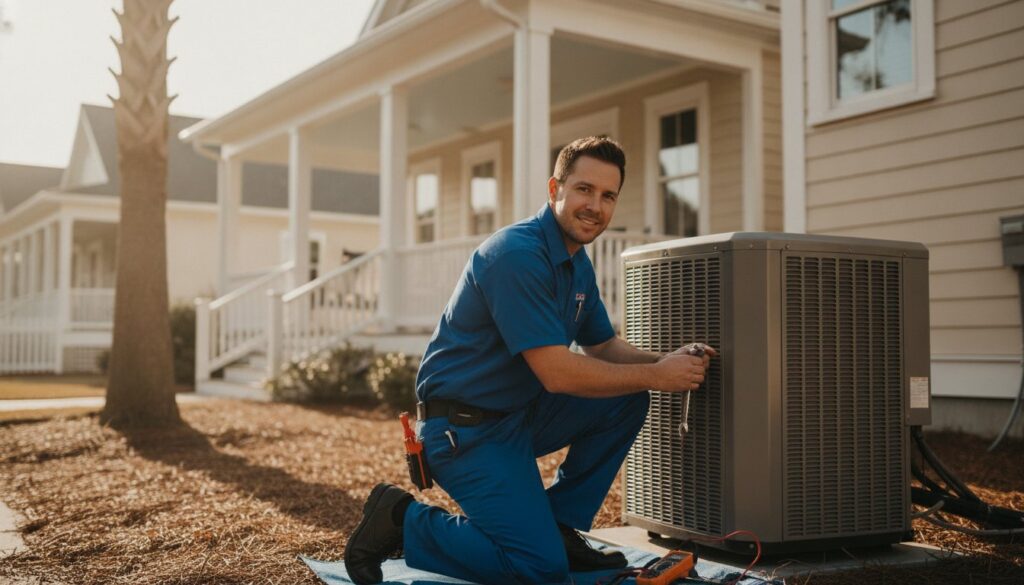
HVAC maintenance is a professional checkup of your heating and cooling system: filters, coils, refrigerant, electrical connections, airflow, and safety controls. Regular maintenance helps the system run efficiently, catch small problems early, and extend the life of the equipment. We offer maintenance for all major makes and models.
What We Do
HVAC Maintenance
A full range of hvac maintenance services for homes and businesses in the Mount Pleasant area.
AC Maintenance
Seasonal cooling system checkup: filters, coils, refrigerant, and airflow.
Heating Maintenance
Pre-season heating checkup: ignition, burners, blower, and safety controls.
Heat Pump Maintenance
Checkup of the defrost system, refrigerant, and both heating and cooling modes.
Ductless Maintenance
Cleaning and service for ductless mini-split systems.
Pre-Season Tune-Ups
Get the system ready before the cooling or heating season begins.
Filter Replacement
Replacing air filters so airflow and efficiency stay where they should be.
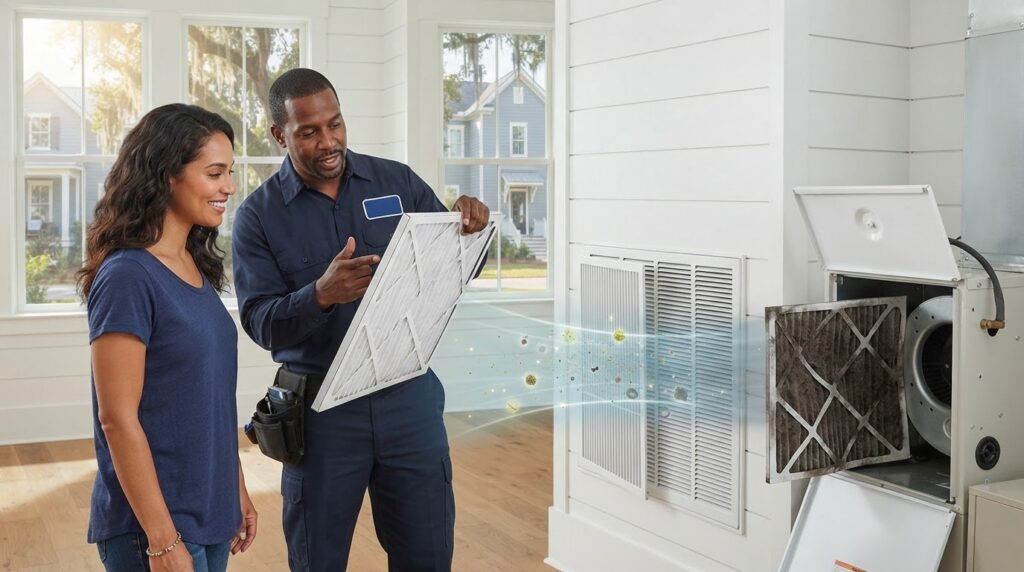
Air Filters
Choosing and Changing Your Air Filter
The filter is the cheapest part of your system and one of the most important. A clogged filter cuts airflow, raises bills and is behind many frozen coils and overheating shutdowns.
- Check the filter monthly during heavy cooling or heating, and replace it when it looks gray.
- One-inch filters usually need changing every one to three months; thicker media filters last longer.
- A MERV 8 to 11 filter suits most homes. Very high ratings can restrict airflow on systems that weren't designed for them.
- Write the filter size on the return grille or the air handler so you always buy the right one.
Homes with pets, allergies or nearby construction may need more frequent changes. See what MERV ratings mean.
Problems We Solve
Signs You May Need This Service
Plain-language descriptions of the situations homeowners bring to us most often.
High Energy Bills
A system that is not maintained works harder and costs more to run.
Frequent Repairs
Small problems that are caught early rarely become expensive breakdowns.
Short Cycling
A dirty system can trigger the safety shutdowns behind short cycling.
Why It Pays Off
Why Regular Maintenance Pays Off
- Fewer preventable breakdowns. A weak capacitor, a worn connection, a dirty coil, a blocked drain or low refrigerant usually shows signs long before the system stops. Maintenance can’t promise a part will never fail, since HVAC equipment is mechanical, but it lowers the odds and shows you the system’s condition.
- Lower running costs. Dirt on the coils, blower or filter makes the system work harder and run longer. How much you save depends on the equipment’s age and condition, your insulation, your thermostat settings and how much you use it.
- More even comfort and humidity control. A technician checks airflow, the condensate drain and whether the thermostat is talking to the system correctly, and can raise bigger issues such as duct leaks or undersized equipment.
- Less wear on expensive parts. A dirty coil makes the compressor work harder. Age alone doesn’t mean replacement. An honest assessment weighs age, repair history, efficiency and the cost of the repair.
- Cleaner air, within limits. A clean filter, coil and drain are a good starting point. Maintenance isn’t a cure-all for allergies, and some homes also need better filtration, humidity control or duct repairs.
- A plan instead of a surprise. Each visit tells you what is fine, what needs attention now and what to budget for later. The service record also gives a technician a baseline if something goes wrong.
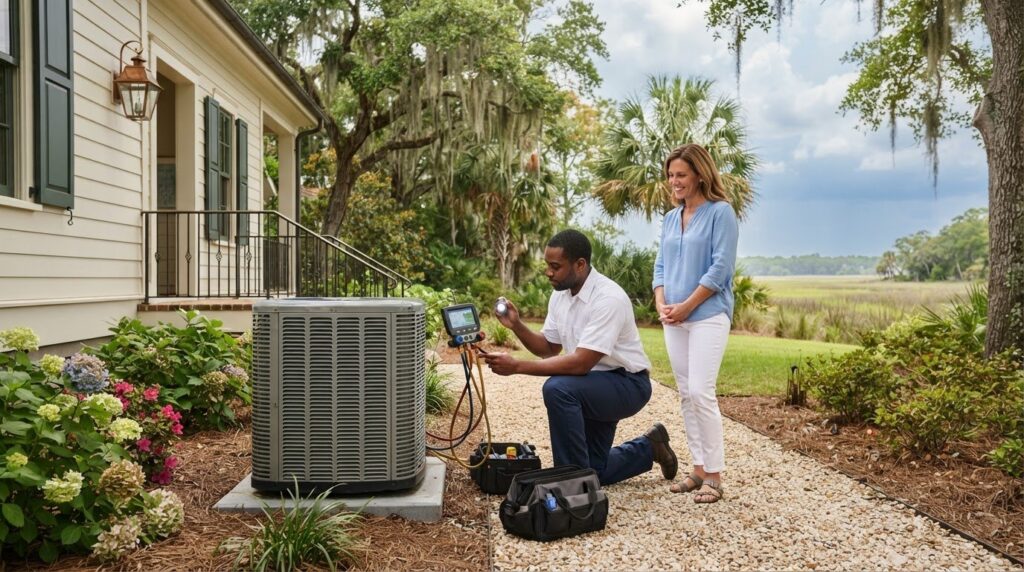
Homeowner Care
Simple Maintenance You Can Do Between Visits
Professional tune-ups do the technical work, but a few minutes of homeowner care makes a real difference:
- Keep at least two feet of clear space around the outdoor unit, and remove leaves and pine straw after storms.
- Keep supply vents and return grilles open and uncovered by furniture or rugs.
- Look for water around the indoor unit or drain pan during the cooling season.
- Listen for new noises and notice longer run times. Both are early warning signs.
- Test carbon monoxide alarms if your home has gas heat.
Leave electrical parts, refrigerant and deep coil cleaning to a technician. More on why maintenance pays off.
Two more habits. Don’t pressure-wash the outdoor unit or bend its coil fins. If the coil is visibly dirty, have it cleaned professionally. And keep vents open even in rooms you don’t use, because closing them can raise pressure in the ducts and cut airflow across the indoor coil.
If your system has a safety float switch, it may shut the equipment off when the drain backs up. That is a protective feature, not something to bypass. Pick a steady thermostat setting. Setting it far lower doesn’t cool the house faster, it only makes the system run longer. When you’re away, raise it a little instead of turning the system off.
Turn the system off and call if you smell burning, hear loud grinding or screeching, see ice on the refrigerant lines, notice water near electrical parts, or the breaker keeps tripping.
How It Works
How It Works
A clear process, so you know what to expect from the first call to the finished job.
Book a Checkup
Schedule a maintenance visit before the cooling or heating season.
We Inspect the System
We check filters, coils, refrigerant, electrical connections, airflow, and safety controls.
We Report Findings
We tell you what we found, what we did, and anything worth watching.
You Stay Comfortable
A maintained system is more efficient, more reliable, and less likely to fail when you need it.
Why Choose Us
Why Mount Pleasant Homeowners Call Us
Catch Problems Early
Maintenance identifies developing issues before they become breakdowns.
Licensed, Bonded & Insured
Proper credentials for every visit.
All Major Brands
We maintain most major AC, heat pump, and furnace makes and models.
Background-Checked Techs
Trained and screened before they enter your home.
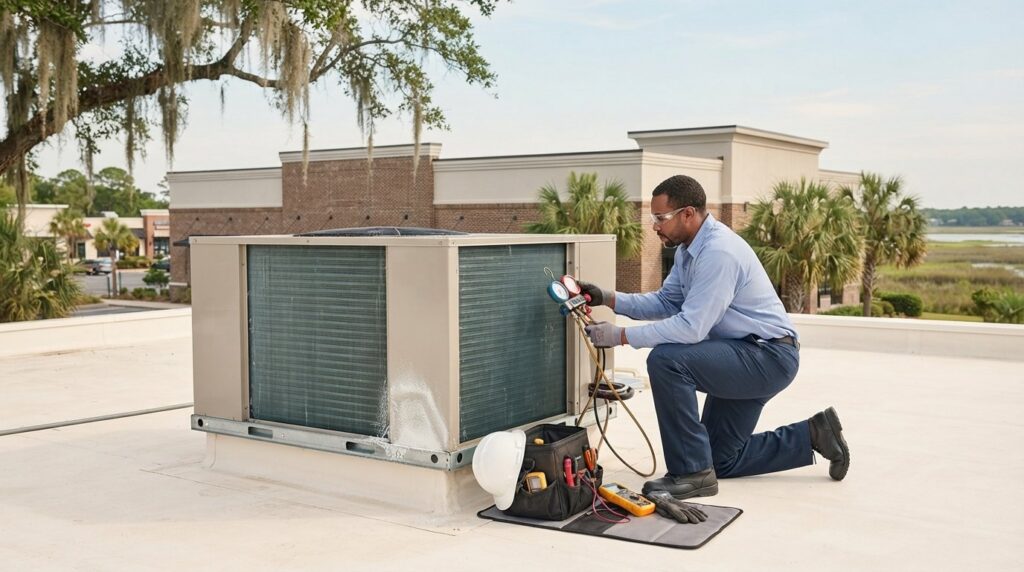
Businesses
Maintenance for Commercial Properties
Offices, shops and rental properties have the same equipment needs as homes, multiplied across several systems and with more at stake when one fails.
- Seasonal inspections for rooftop, packaged and split systems
- Filter, belt and coil service matched to how hard the equipment runs
- Written findings that help you plan repairs and budget for replacements
- Visits scheduled to keep disruption for tenants and customers low
See commercial HVAC maintenance for details.
Common Questions
Straight Answers
Quick, honest answers to the questions we hear most from Mount Pleasant homeowners.
How often should HVAC maintenance be performed?
A good rule is twice a year — once before the cooling season and once before the heating season. At minimum, once a year.
What does an HVAC tune-up include?
Typically filters, coils, refrigerant, electrical connections, airflow, and safety controls. We report what we found and what we did.
Does maintenance really save money?
A well-maintained system runs more efficiently, which can lower energy bills, and it is less likely to fail when you need it most — avoiding costly emergency repairs.
Do you offer maintenance for all systems?
We maintain most major AC, heat pump, furnace, and ductless systems for residential and commercial customers.
Can maintenance guarantee my system won’t break down?
No. HVAC equipment is mechanical and a part can fail at any time. Maintenance reduces the odds of preventable breakdowns and gives you a clear picture of the system’s condition.
Should I close vents in rooms I don’t use to save energy?
Usually not. Closing too many vents can raise pressure in the duct system and reduce airflow across the indoor coil or heat exchanger. Keep supply vents and return grilles open.
Does maintenance help with indoor air quality?
Yes, to a point. A clean filter, coil and drain line help, and maintenance is a good starting point. It isn’t a cure-all for allergies, and some homes also need better filtration, humidity control or duct repairs.
What’s Included
What’s Included in an HVAC Maintenance Visit
Each visit is matched to the season and your equipment:
- Spring cooling tune-up: clean and inspect the outdoor coil, check refrigerant pressures, test capacitors and contactors, clear the condensate drain, check airflow and thermostat operation. See the AC tune-up checklist.
- Fall heating tune-up: for heat pumps, test heating mode, defrost controls and backup heat; for gas furnaces, clean burners and flame sensor, inspect the heat exchanger and venting, and test safety controls. See the furnace tune-up checklist.
- Every visit: filter check, electrical connections tightened, blower inspection, a full operating test and a plain-language report of anything that needs attention.
- Ductless mini-splits: clean the indoor heads, check drainage and confirm each zone responds correctly. See ductless mini-split maintenance.
Most Lowcountry homes with a heat pump benefit from two visits a year, one before summer and one before winter. Coastal homes near the water also benefit from coil rinsing and corrosion checks; see coastal HVAC corrosion.
Maintenance Guides
HVAC Maintenance Guides for Lowcountry Homes
Practical guides for homeowners and business owners who want to keep their systems running well between visits.
- When to schedule seasonal HVAC tune-ups
- AC tune-up checklist for Charleston-area homes
- 21-point HVAC maintenance checklist
- Year-round seasonal HVAC checklist (spring, fall and storm season)
- Home HVAC inspection: what to check and when to call a pro
- Furnace tune-up checklist: what a fall heating tune-up includes
- Ductless mini-split maintenance
- Commercial HVAC maintenance for businesses
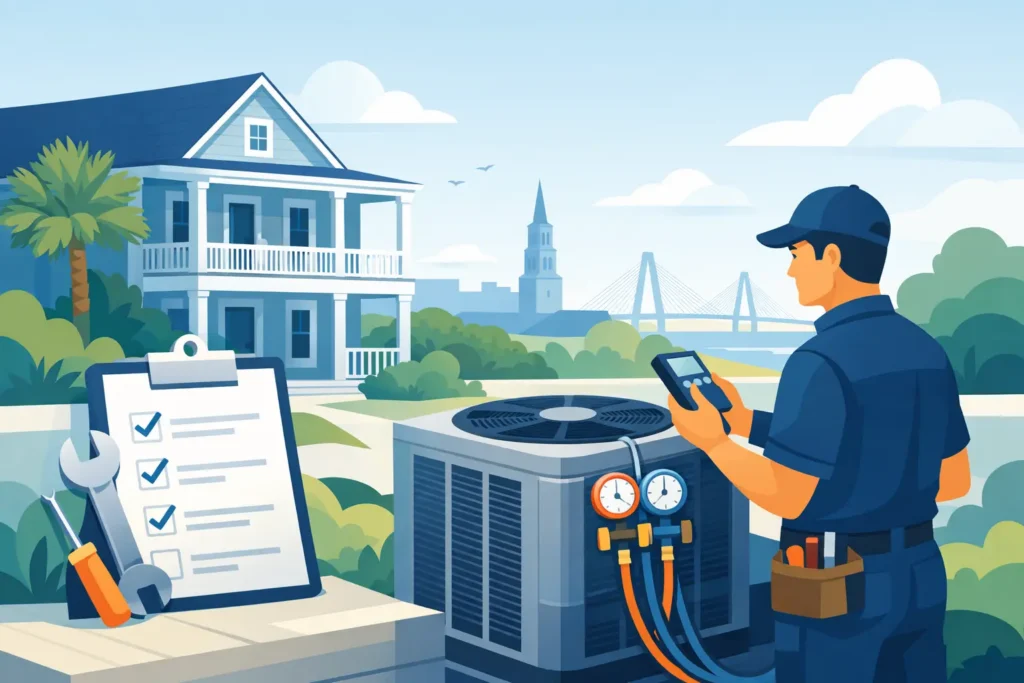
Timing
When to Schedule Your Tune-Ups
The best time for maintenance is before the system is under heavy load, while appointments are easier to get:
- Cooling tune-up: March through May, before the first long stretch of heat.
- Heating tune-up: September through November, before the first cold snap.
- Heat pumps: two visits a year, because they work hard in both seasons.
- After a storm: have the system checked if the outdoor unit was flooded, hit by debris or exposed to a power surge.
See the year-round HVAC checklist and the tune-up checklist for what each visit covers.
Local Wear and Tear
What Wears Out HVAC Systems in the Lowcountry
Maintenance here focuses on what our climate does to equipment. During a visit we pay extra attention to:
- Capacitors and contactors: long summer run times wear these electrical parts faster than anything else. We test them at every visit because a weak capacitor is one of the most common reasons an AC stops on a hot day.
- Condensate drains: humid air means a lot of water, and algae grows in the drain line. We flush it so it doesn’t back up into the house.
- Outdoor coils: pollen, grass clippings and salt film block airflow and speed up corrosion. We clean and inspect the coil fins.
- Refrigerant levels: we check pressures and temperatures. If the system is low, we look for the leak rather than just adding refrigerant.
- Airflow: we measure temperature drop and check the blower, because restricted airflow strains the whole system.
Each visit ends with a plain report of what we found and what can wait. See our tune-up checklist.
Ready to Get Comfortable?
Call (843) 714-0863 or request service online. We are available 24/7 for emergencies and offer same-day appointments when available.
Call (843) 714-0863Request Service