


Mount Pleasant Heating & Air Conditioning · Thermostats
Thermostat Services in Mount Pleasant, SC
Your thermostat controls everything — comfort, efficiency, and how well the system responds. We install, repair, and replace thermostats, including programmable and smart models, for Mount Pleasant homes.
Quick Answer
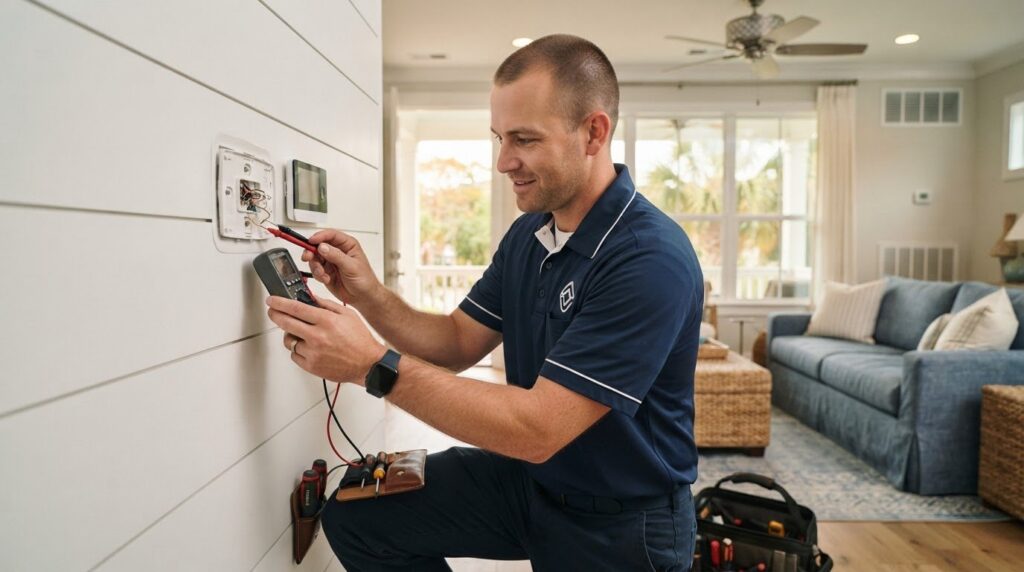
Thermostat service covers installation, replacement, wiring, and troubleshooting of blank or unresponsive thermostats. A thermostat that cannot control the system properly can cause short cycling, uneven temperatures, or a system that never shuts off. We install and service most major thermostat brands and types.
What We Do
Thermostat Service & Installation
A full range of thermostat service & installation services for homes and businesses in the Mount Pleasant area.
Thermostat Installation
Installing new thermostats, including programmable and smart models, with correct wiring.
Thermostat Replacement
Replacing old, failing, or outdated thermostats with a model that fits your system.
Thermostat Repair
Fixing wiring, power, and control problems that stop the thermostat working.
Smart Thermostat Setup
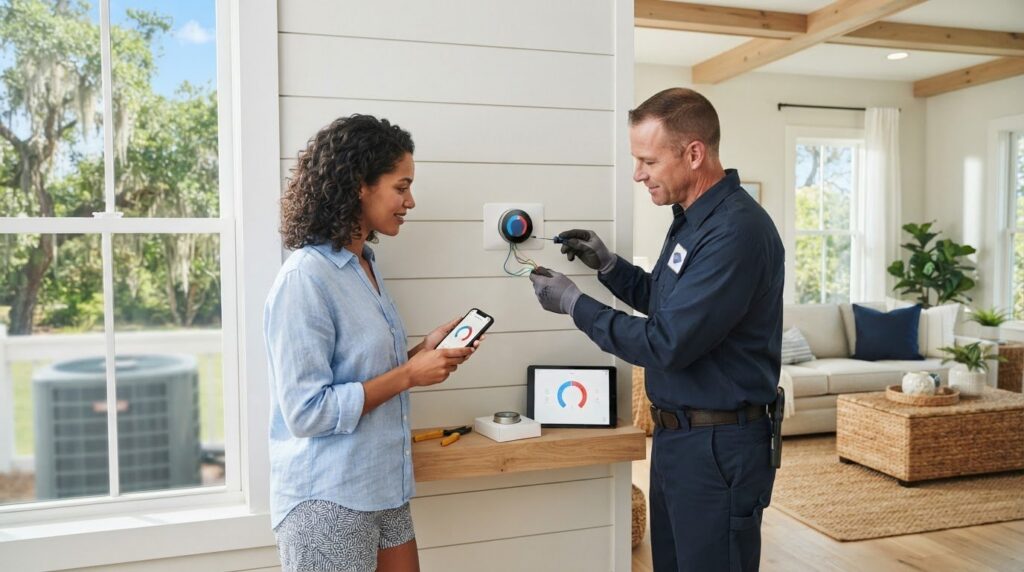
Installation and setup of Wi-Fi and smart thermostats, including app connection.
Thermostat Wiring
Correct wiring for multi-stage and heat pump systems, including auxiliary heat.
Temperature Troubleshooting
Diagnosing systems that cycle too often or never reach temperature due to thermostat issues.
Choosing a Thermostat
Smart, Programmable or Basic?
The best thermostat is the one that fits your system and that you'll actually use:
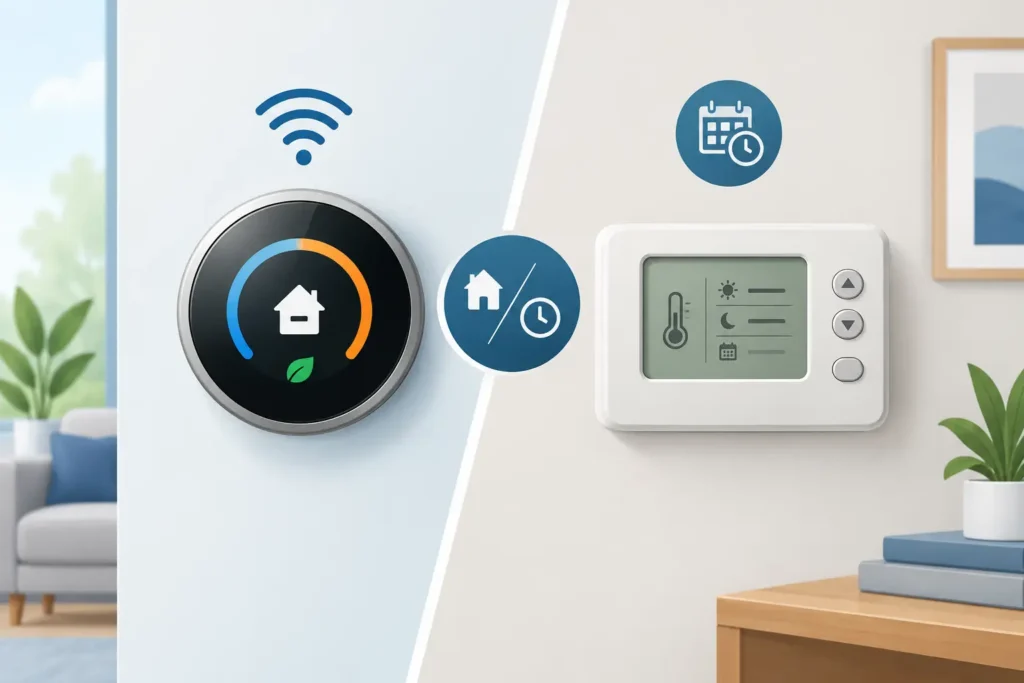
- Basic digital thermostats are simple and reliable, a good fit if your schedule is steady and you prefer to set it and forget it.
- Programmable models follow a weekly schedule, raising or lowering the setting when you're away or asleep.
- Smart thermostats add phone control, usage reports and alerts. Some learn your routine.
- Heat pumps, two-stage and variable-speed systems need a thermostat that supports them, or comfort and efficiency suffer.
See smart vs. programmable thermostats for a closer comparison.
Repair or Replace
When a Thermostat Is Worth Replacing
A new thermostat isn’t the answer to every comfort problem, but it’s a practical first step when the old one is outdated, poorly placed, incompatible or inaccurate. Replacement makes sense when:
- It doesn’t hold the programmed temperature, or the room feels much warmer or cooler than the setting.
- The display is blank or unreliable, or it needs frequent battery changes.
- The system cycles on and off too often.
- You’ve had a renovation or HVAC replacement, or added a heat pump, variable-speed, ductless or zoned system that needs controls able to manage several stages.
- You want scheduling or remote access that a basic model doesn’t offer.
Most thermostat problems can be repaired, though. Corroded wire ends, loose terminals, a blown low-voltage fuse and a sensor that only needs a calibration offset get fixed first. We recommend a new thermostat when the unit has failed, is too old to control your equipment, or can’t run the stages on a newer heat pump or variable-speed system.
Problems We Solve
Signs You May Need This Service
Plain-language descriptions of the situations homeowners bring to us most often.
Blank Screen
A thermostat with no display usually means batteries, power, or wiring.
Short Cycling
A thermostat in the wrong spot can make the system cycle too often.
Uneven Temperatures
A poorly placed thermostat can leave some rooms comfortable and others not.
Wrong Mode or No Heat
A thermostat that cannot control the mode properly affects both heating and cooling.
High Energy Bills
A thermostat that runs the system too long or too often wastes energy.
Reading the Symptoms
What Common Thermostat Problems Usually Mean
A technician has to confirm the cause, but these are the usual ones.
- Blank or frozen screen, or random resets. Dead batteries, a blown low-voltage fuse or a loose connection behind the faceplate. Heat inside the wall can drain batteries early, and a storm surge can scramble the electronics or blow the fuse.
- A click, but the system doesn’t respond. The thermostat’s relay is trying to complete the circuit, and power is missing somewhere downstream. A failed outdoor contactor, a tripped drain-pan float switch or a blown fuse are common causes.
- Short cycling. Loose terminal screws can interrupt the 24-volt circuit, so the system shuts down and restarts seconds later.
- Wrong readings. The sensor can drift with dust, age or moisture. The display might say 72 while a separate thermometer reads 77. A sensor that reads high keeps the AC running, and one that reads low may never start it. Both can raise your bill.
- Corrosion. Salt and humidity can corrode bare wire ends and terminals, which weakens the low-voltage signal.

Placement
Why Thermostat Location Matters
A thermostat only knows the temperature where it hangs. In the wrong spot it can make a healthy system short cycle or leave rooms uncomfortable.
- Avoid direct sun, which makes it think the house is warmer than it is.
- Keep it away from kitchens, lamps, TVs and supply vents.
- Avoid exterior walls and spots near doors that let in drafts.
- Choose a central interior wall about five feet off the floor, in a room you use often.
Moving a thermostat usually means running new wire, which we can handle during a replacement. Related: signs of AC short cycling.
How It Works
How It Works
A clear process, so you know what to expect from the first call to the finished job.
Describe the Problem
Tell us what the thermostat is doing — blank, unresponsive, cycling, or stuck.
We Check the Basics
Batteries, power, and wiring are the first things we verify.
Repair or Replace
If the thermostat has failed, we recommend the right replacement and install it.
Setup & Test
We install, wire, and — for smart models — connect and test the thermostat.
Why Choose Us
Why Mount Pleasant Homeowners Call Us
All Thermostat Types
We install and service programmable, smart, and standard thermostats.
Licensed, Bonded & Insured
Proper credentials for every job.
Correct Wiring
Heat pump and multi-stage systems wired correctly, including auxiliary heat.
Background-Checked Techs
Trained and screened before they enter your home.
Wiring
The C-Wire and Other Installation Details
Many thermostat problems after a do-it-yourself install come down to wiring.
- Most smart thermostats need a common wire, often called the C-wire, for steady power. Without it some models drain their battery or reboot.
- Heat pumps use a reversing valve wire (O or B) that must match the thermostat setting, or heating and cooling run backward.
- Older homes may have too few wires in the wall. An adapter or a new cable can solve it.
- Always turn off power at the breaker before removing a thermostat.
If the system acts strangely after a new thermostat goes in, call us before changing more settings. See smart thermostat setup.
What to Expect
What a Thermostat Visit Includes
Whether it’s a repair or a new install, the visit is more than connecting wires by color. Wire colors aren’t always consistent, especially in older homes or after earlier repairs.
- Identify each terminal and measure the voltage. A meter across the R and C wires should read about 24 to 28 volts. If it reads zero, we look for a blown low-voltage fuse on the furnace or air handler board.
- Check that the signal reaches the outdoor unit when the thermostat calls for cooling, and on a heat pump that the reversing valve wire energizes.
- For an installation, set the equipment type, number of stages, fan operation, temperature differential and heat pump and auxiliary heat controls. These settings affect how often the system cycles.
- Test heating, cooling and fan through a full cycle. For a smart thermostat, connect it to your Wi-Fi and show you the controls you’ll actually use.
Older wiring, a missing C-wire or wall damage around the old thermostat can add work, and we tell you up front. If the thermostat turns out not to be the problem, we say so and look at the equipment. Ice on the refrigerant line, water around the indoor unit, weak airflow or burning smells all point to the HVAC system.
To speed up the visit: know whether you have a heat pump, a furnace with central AC or a ductless system. With the power off at the breaker, photograph the wires and terminal letters so we can see right away whether there’s a C-wire. For a smart thermostat, check that your phone gets a solid Wi-Fi signal where it will be mounted.
Common Questions
Straight Answers
Quick, honest answers to the questions we hear most from Mount Pleasant homeowners.
Why is my thermostat screen blank?
Most often dead batteries, a tripped breaker, or a wiring problem. We check the basics first, then repair or replace as needed.
Can you install a smart thermostat?
Yes — we install and set up smart and Wi-Fi thermostats, including app connection, for most systems.
Will a new thermostat work with my HVAC system?
Most modern thermostats work with standard systems. For heat pumps and multi-stage systems, we verify compatibility and wiring.
How much does thermostat installation cost?
It depends on the thermostat model and the wiring work involved. We explain the options and the price before starting.
Is it safe to wire a thermostat myself?
Most thermostat wires carry only 24 volts and rarely cause a serious shock, but a mistake can blow the fuse on the air handler board or burn out the transformer. Some older homes use line-voltage thermostats at 120 or 240 volts, which can cause a severe shock. Turn the power off at the breaker first, and call us if you’re not sure.
How do I tell if the problem is the thermostat or the HVAC unit?
Change the setting five degrees above or below the room temperature. A click at the wall with silence from the blower and outdoor unit often points to a relay or wiring problem. If the system runs but blows room-temperature air, the cause is usually mechanical, such as low refrigerant or a failed capacitor. See how to tell if your thermostat is bad.
Can a faulty thermostat make my AC freeze up?
Yes. If the thermostat never registers that the room reached the setting, the AC keeps running and the evaporator coil can freeze. If you see ice, turn the system off and call.
Thermostat Guides
Thermostat Guides for Mount Pleasant Homeowners
Want to check a few things yourself first, or compare options before you call? Start here.
Saving Energy
Thermostat Settings That Lower Your Bill
How you set the thermostat often matters as much as which one you own:
- In summer, set it as high as is comfortable when you're home and a few degrees higher when you're away.
- In winter, lower it a few degrees at night and when the house is empty.
- With a heat pump, raise the setting a degree or two at a time so the backup heat strips stay off.
- Use the fan's Auto setting. Running the fan constantly can put moisture back into the air in humid weather.
- Keep the filter clean so the system reaches the setting faster.
For more ideas, see how to lower summer cooling bills.
Compatibility
Thermostats for Heat Pumps and Multi-Stage Systems
Most thermostats work with a basic gas furnace and AC. Heat pumps and multi-stage systems need more, and the wrong setup can cost you money every month.
- Heat pumps: the thermostat has to be set for a heat pump so it controls the reversing valve (the O/B wire), backup heat and the emergency heat setting correctly.
- Backup heat lockout: good heat pump thermostats can keep the electric heat strips from running when the heat pump can handle the load on its own, which keeps winter bills down.
- Two-stage and variable-speed systems: some need the manufacturer’s own communicating thermostat to use every speed. A generic smart thermostat may run them at only one or two.
- Check before you buy: look at your current wiring, or send us a photo of the terminals, before buying a new thermostat.
We install, wire and configure thermostats for every system type. See smart vs. programmable thermostats.
Ready to Get Comfortable?
Call (843) 714-0863 or request service online. We are available 24/7 for emergencies and offer same-day appointments when available.
Call (843) 714-0863Request Service