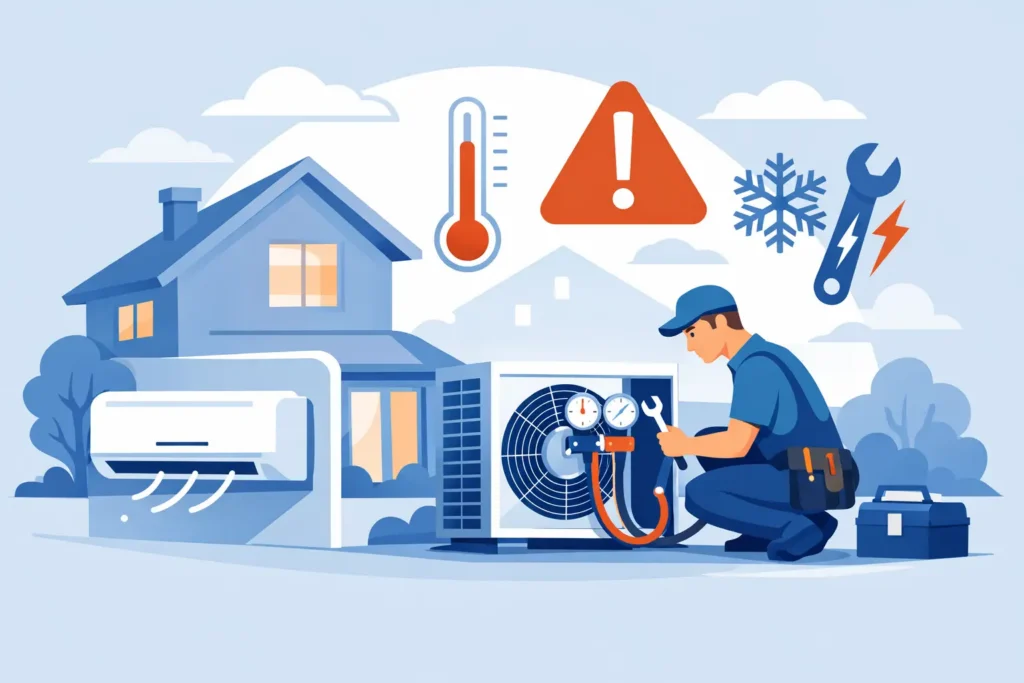
A broken air conditioner at 9 p.m. in a South Carolina summer is more than an inconvenience. Indoor temperatures can climb quickly, humidity can make the house feel unbearable, and certain situations can put children, older adults, pets, and people with medical conditions at real risk. This guide to emergency AC repair helps you make the right first moves, avoid unsafe DIY fixes, and know when it is time to call for immediate professional help.
What Counts as an AC Emergency?
Not every cooling problem requires an after-hours visit. If your system is running but the home is a few degrees warmer than usual, you may be able to schedule a standard repair appointment. An emergency is a problem that creates a safety concern, threatens significant property damage, or leaves your household without reasonable cooling during extreme heat.
A complete system failure during a heat wave is one common example. So is an AC unit that repeatedly trips breakers, smells like burning wires, produces smoke, or causes water to leak through a ceiling. These symptoms should not be ignored while you wait to see whether the unit starts working again.
Your household’s needs matter, too. A home with an infant, a senior family member, a person with a respiratory condition, or pets that cannot tolerate high heat may need faster service than a household that can safely use fans and stay elsewhere for the evening.
First Steps Before Calling for Emergency AC Repair
A few quick checks can resolve simple issues and give the technician useful information. The goal is not to take apart the equipment or force it to operate. It is to rule out the most common homeowner-level causes safely.
Start at the thermostat. Confirm that it is set to Cool, that the target temperature is below the current room temperature, and that the fan setting is on Auto. A thermostat with a weak battery, an accidental schedule change, or an incorrect mode setting can look like a major breakdown.
Next, check the air filter. A heavily clogged filter can restrict airflow, contribute to a frozen indoor coil, and make the system work much harder than it should. If the filter is visibly dirty and you have the correct replacement, install a clean one. Do not run the system without a filter.
Then look at your electrical panel. If the AC breaker has tripped once, you may reset it one time. If it trips again, leave it off and call a professional. Repeated breaker trips can point to an electrical issue, a failing component, or a compressor problem. Resetting it over and over can damage the system and create a fire risk.
Finally, inspect the outdoor unit from a safe distance. Clear away leaves, branches, or lawn debris that block airflow around it. Do not remove panels, reach inside the unit, or try to straighten damaged coil fins during an emergency. If the unit is iced over, turn the cooling mode off and set the thermostat fan to On if it still operates. This can help thaw the coil while you arrange service.
Signs You Should Shut the System Down
There are situations where keeping the AC running can turn a repair into a larger problem. Shut off the system at the thermostat and, if needed, the breaker when you notice a burning smell, smoke, sparks, buzzing from an electrical component, or a breaker that will not stay on.
Turn the system off if there is substantial water around the indoor equipment, especially near electrical connections. Some condensation is normal, but water pouring from an air handler, pooling in an attic, or staining a ceiling needs prompt attention. A blocked drain line can be a manageable repair, but water damage can spread quickly in a home.
Ice on the refrigerant line or indoor coil is another reason to stop cooling. Frozen equipment is usually a symptom, not the root cause. Low airflow, a dirty coil, a blower issue, or a refrigerant problem may be involved. Continuing to run it can place unnecessary strain on the compressor.
If you suspect a gas leak from heating equipment or smell sulfur or rotten eggs, leave the home if necessary and contact the appropriate emergency utility service first. Although this article focuses on air conditioning, safety always comes before restoring comfort.
What Not to Do During an AC Breakdown
When the house is hot, it is tempting to search for a quick fix. The wrong fix can make the problem worse or create an unsafe condition. Do not add refrigerant yourself, bypass a safety switch, replace electrical parts without proper training, or repeatedly cycle the power to force the unit to start.
Avoid spraying the outdoor unit with a hose if you see ice or if you do not know what caused the shutdown. While careful coil cleaning has a place in routine maintenance, an emergency failure calls for diagnosis first. Similarly, do not close most of the supply vents in unused rooms. That may seem like a way to direct more air where you want it, but it can increase duct pressure and reduce proper system airflow.
Portable fans, closed blinds, and drinking water are safer short-term measures while you wait. If the house is becoming dangerously hot, arrange to stay with family, visit a public cooling location, or book temporary accommodations. Comfort systems can be repaired. Heat-related illness is not something to gamble with.
Information That Helps a Technician Diagnose Faster
A professional can work more efficiently when you can describe what changed and when. Before your appointment, note whether the system is completely silent, blowing warm air, running continuously, making unusual sounds, or turning on and off every few minutes. Mention any recent power outage, storm, renovation, thermostat change, or maintenance visit.
If it is safe, take a photo of ice buildup, water leakage, or a thermostat error message. Do not touch damaged wiring or remove access panels for a better picture. Your observations can help narrow down whether the issue is related to airflow, drainage, electrical controls, the thermostat, or the outdoor equipment.
An experienced technician should inspect the system rather than assume the most expensive part has failed. Emergency service is about restoring safe, reliable cooling, but it should also include a clear explanation of the problem, the repair options, and whether a repair makes practical financial sense for your equipment.
Repair or Replacement: The Decision Depends
An emergency does not automatically mean you need a new air conditioner. Many failures involve repairable parts such as capacitors, contactors, drain components, blower motors, thermostats, or wiring. Even an older system may have useful life left when the repair is targeted and the rest of the equipment is in sound condition.
Replacement becomes a more serious consideration when repairs are frequent, the compressor has failed, the system uses outdated refrigerant, or the equipment cannot keep the home comfortable despite proper repairs. Energy costs, system age, repair history, and the condition of your ductwork all matter. A trustworthy HVAC professional will explain the trade-offs instead of pushing replacement before diagnosis.
For Mount Pleasant and Charleston homeowners, humidity is part of that decision. The right system must do more than lower the temperature. It needs to manage moisture effectively, fit the home’s cooling load, and work with the existing duct system. Oversized equipment, for example, can cool too quickly and leave indoor humidity high.
Preventing the Next After-Hours Call
Most emergency breakdowns give warning signs before they become a complete failure. Rising utility bills, weak airflow, hot and cold rooms, unusual noises, frequent cycling, and water near indoor equipment all deserve attention before the hottest week of the year.
Regular maintenance helps catch worn electrical parts, drainage problems, dirty coils, refrigerant concerns, and airflow restrictions early. Homeowners can help by changing filters on schedule, keeping the outdoor unit clear, and calling when performance changes rather than waiting for total shutdown. Preventive service cannot eliminate every surprise, but it can greatly reduce the chance that your AC quits when your family needs it most.
When cooling fails unexpectedly, stay calm, prioritize safety, and choose a team that can diagnose the issue accurately. Mt Pleasant Heating & Air provides 24/7 emergency service with practical repair guidance designed to restore comfort without recommending more work than your system truly needs.