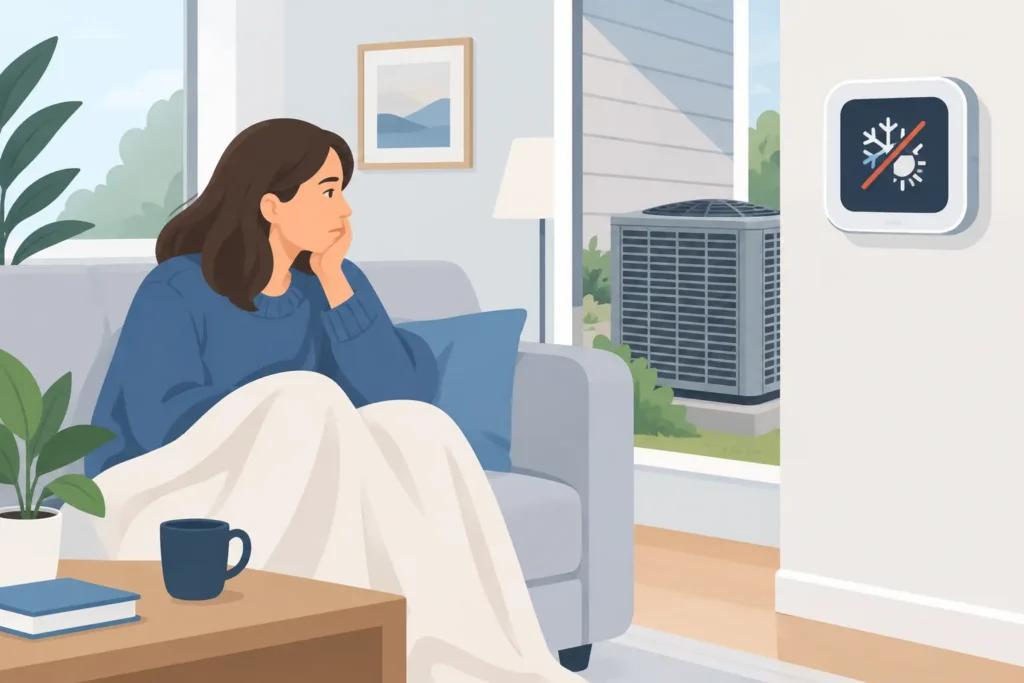
A cooling system that quits at 4 p.m. in a South Carolina summer can turn a comfortable home hot and humid surprisingly fast. A heating failure on a cold night brings a different set of concerns, from frozen pipes to unsafe attempts at temporary heat. Knowing how to handle an HVAC outage helps you protect your family, your home, and your equipment while arranging the right repair.
The first rule is simple: do not assume a complete system replacement is the answer. Many outages come down to a tripped breaker, thermostat issue, clogged drain safety switch, failed capacitor, or another repairable component. A careful response gives a qualified technician better information and keeps a manageable problem from becoming a larger one.
Start With Safety, Not Troubleshooting
If you smell gas, notice smoke, see sparks, or hear loud electrical buzzing, leave the immediate area and do not operate the system. For a suspected gas leak, avoid switches, flames, and anything that could create a spark. Get outside, contact your gas utility or emergency services as appropriate, and then arrange HVAC service once the home is safe.
If there is water around the indoor unit, turn the system off at the thermostat. Water near electrical equipment deserves caution. In many homes, a clogged condensate drain line triggers a safety shutoff to prevent overflow, but standing water can also point to a drain, pump, or equipment issue that needs professional attention.
For an ordinary outage with no safety warning signs, set the thermostat to Off before checking anything else. This prevents the equipment from repeatedly trying to start and may help protect a compressor or blower motor from additional strain.
How to Handle an HVAC Outage: Check the Simple Causes
A few homeowner checks are reasonable, provided they do not involve opening electrical panels on the unit or bypassing safety controls. Start at the thermostat. Confirm it has power, is set to Heat or Cool rather than Off, and has a temperature setting that should call for the system to run. If the screen is blank, replace the batteries if your thermostat uses them.
Next, check the breaker panel. Look for a breaker that is sitting between the On and Off positions. Reset it once by moving it fully to Off, then back to On. If it trips again, leave it off and call for service. A repeatedly tripping breaker can signal an electrical fault, a failing motor, or another issue that should not be ignored.
Check the return air filter as well. A severely dirty filter can restrict airflow enough to cause overheating in heating mode or freeze-up during cooling season. If the filter is visibly loaded with dust and you have the correct replacement, change it. Do not run the system without a filter, even as a temporary measure.
For outdoor equipment, look from a safe distance for obvious issues such as branches, storm debris, or a blocked condenser coil. Clear loose debris from around the unit, but do not insert objects into the fan guard or remove access panels. If the outdoor unit is iced over, turn cooling off and leave the fan setting on Auto unless a technician advises otherwise. Continuing to cool an iced system can cause more damage.
Keep the House Comfortable While You Wait
The best temporary strategy depends on whether you have lost cooling or heat. During an AC outage, close blinds and curtains on sunny windows, especially on the west-facing side of the home. Avoid using the oven, dryer, dishwasher, and other heat-producing appliances until the system is restored. Ceiling fans and portable fans do not lower room temperature, but they improve air movement and can make the space feel more tolerable.
Choose one or two rooms as your comfort zone rather than trying to cool the entire house. Stay hydrated, wear lightweight clothing, and keep an eye on children, older adults, and pets, who can be more vulnerable to heat stress. If indoor conditions become unsafe, go somewhere air-conditioned rather than trying to push through extreme heat.
During a heating outage, keep exterior doors and unused rooms closed to hold warmth in the main living area. Add layers, blankets, and warm drinks, but use portable space heaters carefully. Keep them on a level surface, at least three feet from bedding, furniture, curtains, and anything flammable. Plug them directly into a wall outlet, never a power strip or extension cord, and turn them off when you leave the room or go to sleep.
Do not use an oven, grill, gas range, or generator indoors for heat. These shortcuts create serious fire and carbon monoxide risks. If temperatures drop near freezing, open cabinet doors below sinks on exterior walls and allow a small trickle of water to run from vulnerable faucets. This can help reduce the risk of frozen pipes while you wait for heating repair.
Record What Happened Before the System Stopped
A quick set of notes can speed up diagnosis and help separate a one-time interruption from a developing equipment problem. Think about what you noticed before the outage. Was there weak airflow, uneven temperatures, a burning odor, a clicking sound, water near the air handler, or a rise in your energy bill? Did the thermostat go blank, or did the outdoor unit fail to start?
Also note whether the outage followed a thunderstorm, power interruption, recent filter change, or thermostat adjustment. These details matter. For example, a system that will not cool after a storm may have an electrical or surge-related issue, while an air conditioner that ran constantly before shutting down may have airflow, refrigerant, or drainage concerns.
Avoid repeatedly cycling the thermostat to see if the unit will restart. One controlled check is enough. Repeated starts can put extra stress on certain components, particularly when the system is already struggling.
Know When It Is an Emergency Call
Not every HVAC issue requires after-hours service, but some situations should not wait. Call for urgent help when there is no cooling during dangerous heat, no heat during freezing conditions, water threatening ceilings or floors, a burning smell, electrical trouble, or a gas odor. The same applies when a vulnerable household member cannot safely remain in the home without climate control.
For less urgent situations, such as mild weather and a system that has stopped without warning signs, scheduling the earliest available repair may be reasonable. The trade-off is comfort versus cost and timing. A dependable HVAC company should explain what it finds, present repair options clearly, and tell you honestly when repair makes more sense than replacement.
At Mt Pleasant Heating & Air, emergency calls are approached with practical diagnostics first. The goal is to identify the failure, restore safe operation where possible, and help homeowners make a sound decision about the next step rather than recommending new equipment by default.
Prevent the Next Outage
Some breakdowns are unavoidable, especially as equipment ages, but many outages give warning signs or stem from maintenance gaps. Replace filters on schedule, keep outdoor units clear of leaves and vegetation, and have the system inspected before the season when it will work hardest. Preventative maintenance can catch weak capacitors, worn electrical connections, drainage problems, and airflow restrictions before they become a no-cool or no-heat call.
If your system is older, ask for a clear picture of its condition during service. A repair may still be the smart investment, particularly when the core equipment is in good shape. But recurring failures, major refrigerant issues, or costly compressor problems can change the calculation. Good advice should account for repair cost, system age, energy performance, and your plans for the home.
An HVAC outage is stressful, but the right response is steady and practical: protect safety first, check the basics once, keep your household comfortable without taking risks, and call a qualified technician when the problem is beyond a simple reset. That approach gives you the best chance of a fast repair and a home that feels like home again.