

A living room that feels comfortable while an upstairs bedroom stays stuffy is more than an annoyance. It is usually a sign that conditioned air is not moving through the home as it should. Learning how to improve airflow in house starts with finding out whether the problem is a simple blockage, a thermostat setting, a duct issue, or an HVAC system that needs professional attention.
In Mount Pleasant and Charleston, high humidity can make weak airflow feel even worse. Your air conditioner may be running, but if cool air cannot reach the rooms that need it, the system works harder while your comfort drops. The good news is that several airflow problems have straightforward fixes.
Start by Separating Airflow Problems From Cooling Problems
Before changing vents or buying fans, pay attention to what your system is doing. If air is coming from the registers but it is not cool, the issue may involve refrigerant, the outdoor unit, a thermostat problem, or a failing component. If the air feels cool but barely reaches the room, restricted airflow is more likely.
A few clues can help. One or two warm rooms may point to duct layout, closed dampers, sun exposure, or return-air limitations. Weak airflow throughout the entire house often points to a dirty filter, blower problem, blocked returns, or duct restrictions. A sudden change in airflow deserves prompt attention, especially if the system is making new noises, freezing up, or cycling on and off repeatedly.
How to Improve Airflow in House With Simple First Checks
Start with the fixes that cost little and protect your HVAC equipment. These steps do not replace a proper diagnostic visit when there is a mechanical issue, but they can resolve many common comfort complaints.
Replace a clogged air filter
Your filter is designed to capture dust, pollen, pet hair, and other airborne particles before they reach the system. Once it becomes heavily loaded, it restricts the air entering the return side of your HVAC system. That can reduce airflow at every supply register and place unnecessary strain on the blower.
Check the filter monthly during heavy heating or cooling seasons. Many homes need a replacement every one to three months, although pets, renovations, allergies, and frequent system use can shorten that timeline. Make sure the replacement is the correct size and is installed with the airflow arrow pointing toward the equipment.
A higher-rated filter is not always better. Very dense filters can restrict airflow if the system was not designed for them. If you want stronger filtration, ask an HVAC technician which filter rating fits your equipment and household needs.
Keep supply registers and return grilles open and clear
Supply registers deliver conditioned air into a room. Return grilles pull air back to the system to be cooled or heated again. Both need room to work.
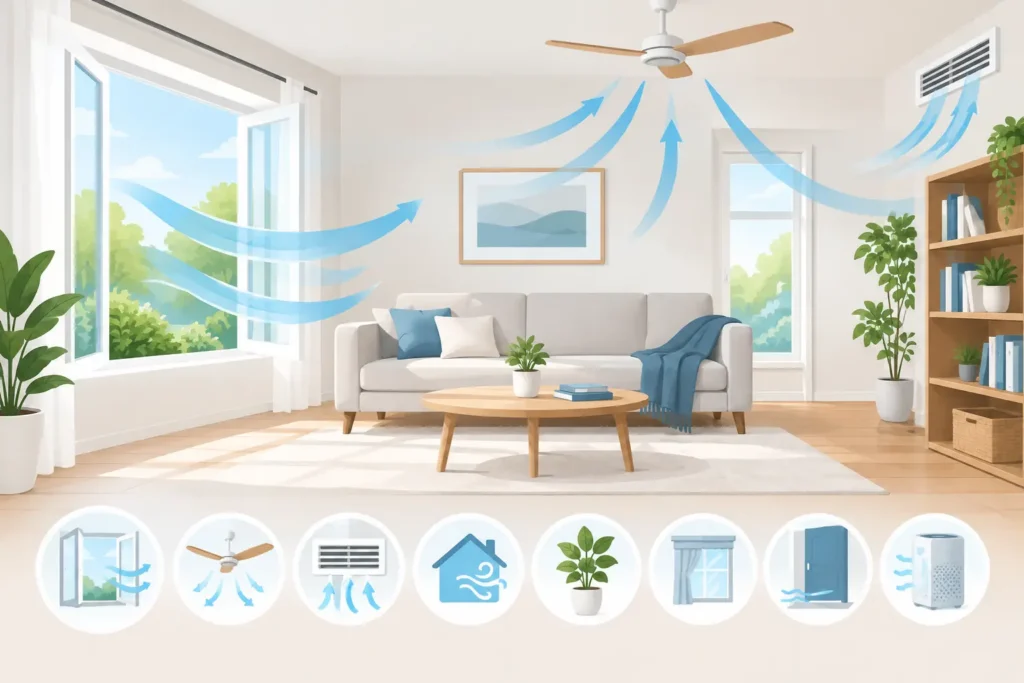
Move furniture, curtains, storage bins, and rugs away from registers and returns. A large sofa placed directly in front of a return grille can limit the air your system needs to circulate through the home. Vacuum grille covers when dust builds up, particularly in homes with pets.
It is also tempting to close vents in rooms you use less often. In most central HVAC systems, that strategy can create excess pressure in the ducts and reduce performance elsewhere. Leave most registers open and adjust only slightly if needed for balance. If a room is consistently too warm or too cold, find the underlying cause instead of shutting off its airflow.
Set ceiling fans for the season
Ceiling fans do not lower the air temperature, but they can make occupied rooms feel more comfortable by moving air across the skin. In summer, fans should generally rotate counterclockwise when viewed from below, creating a downward breeze. In winter, a low-speed clockwise setting can help circulate warm air that collects near the ceiling.
Turn fans off when rooms are empty. They improve comfort for people, not for the room itself.
Use the thermostat fan setting wisely
Most thermostats offer an Auto setting and an On setting for the blower fan. Auto runs the fan only during heating or cooling cycles. On keeps the fan running continuously, which may help even out temperatures between floors and rooms.
Continuous fan operation uses more electricity and may increase indoor humidity during a humid South Carolina summer if the system is not properly configured. Try it for a day or two, then compare comfort and humidity. A technician can also advise whether a variable-speed blower or specific fan setting would help your home without creating moisture concerns.
Check the Ductwork, Dampers, and Air Pathways
When basic maintenance does not improve the problem, the next step is to look at how air travels through the house. Ductwork hidden in attics, crawl spaces, and walls can develop leaks, disconnections, crushed sections, or inadequate insulation over time.
Leaky ducts are especially costly when they run through a hot attic. Conditioned air can escape before it reaches the bedroom or living area, while hot, humid attic air may be pulled into the system. Signs of duct issues include dusty rooms, unusually high utility bills, inconsistent temperatures, and weak airflow at registers farthest from the equipment.
Some homes have manual balancing dampers inside ducts. These are different from the louvers on individual registers. A correctly adjusted damper can direct more air to a problem area, but random adjustments can make other rooms uncomfortable. If you are unsure where dampers are located or how they are set, leave the balancing to a qualified technician.
Return-air pathways matter just as much as supply ducts. A closed bedroom door can limit air leaving the room, particularly if there is no dedicated return grille inside it. You may notice the door pulling inward or outward when the system starts. Keeping the door slightly open can help as a short-term test. Permanent solutions may include a transfer grille, jump duct, or properly designed return-air modification.
Address Room-Specific Heat Gain
Sometimes the HVAC system is moving air properly, but one room has a heavier cooling load than the rest of the home. West-facing bedrooms, bonus rooms over garages, rooms with large windows, and upstairs spaces commonly absorb more heat.
Start with practical changes such as closing blinds during the hottest part of the day, using insulated window coverings, and checking for air leaks around windows and exterior doors. Attic insulation and ventilation also affect upstairs comfort. If hot attic conditions are pushing down into the living space, no amount of vent adjustment will fully solve the issue.
For additions, converted garages, or rooms that were never well served by the original duct system, a ductless mini-split may be a better solution than forcing more air through undersized existing ducts. The right option depends on the room size, insulation, electrical capacity, and the condition of the central system.
Watch for Signs Your HVAC System Needs Service
Poor airflow can be an early warning that a component is failing. A blower motor, capacitor, evaporator coil, or control issue may keep the system from moving the volume of air it should. A dirty evaporator coil can also restrict airflow, and ignoring it can lead to ice buildup and more serious damage.
Schedule professional service if you notice persistent weak airflow after changing the filter, hot and cold spots that are getting worse, unusual rattling or whistling, water around the indoor unit, frozen refrigerant lines, or a sharp rise in energy costs. Do not keep lowering the thermostat to compensate. That usually increases run time without fixing the restriction.
An experienced technician should measure airflow, inspect the filter and coil, evaluate blower performance, check duct condition where accessible, and look at static pressure. Those measurements identify whether the problem is maintenance-related, mechanical, or tied to the home’s duct design. Mt Pleasant Heating & Air can help homeowners determine whether a targeted repair or adjustment can restore comfort before considering larger system changes.
Make Airflow Part of Regular Maintenance
Airflow is easiest to protect before rooms become uncomfortable. Keep registers and returns unobstructed, replace filters on schedule, and arrange seasonal maintenance before the peak summer or winter demand arrives. During a tune-up, technicians can catch buildup, loose connections, drain issues, and declining blower performance before they become a breakdown.
A comfortable home should not require closing doors, running multiple fans, or constantly changing the thermostat. If one room never feels like the rest of the house, treat it as a solvable comfort issue and have the airflow evaluated before the next stretch of extreme weather.