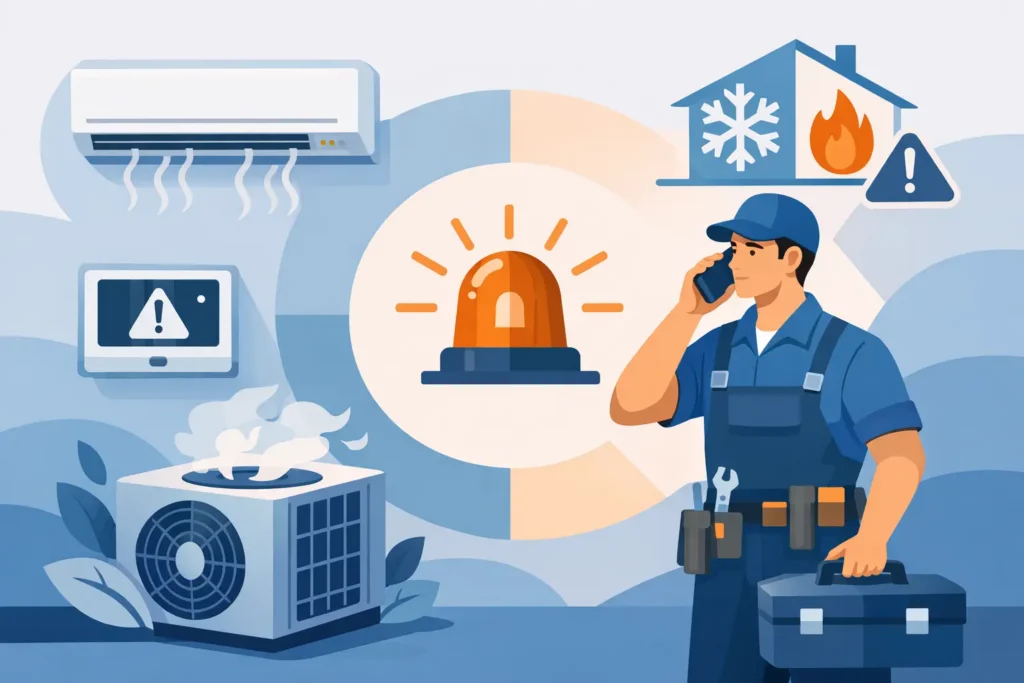
A Charleston-area summer night without air conditioning can turn miserable fast. A cold snap without heat is more than inconvenient. If you are wondering when to call emergency HVAC repair, the answer usually comes down to safety, system damage, and how quickly your home comfort is getting worse.
Not every HVAC issue is a true emergency. Some problems can wait until normal business hours without putting your home or equipment at serious risk. Others need attention right away, especially when your system has stopped working completely, is showing signs of an electrical problem, or could be creating unsafe conditions inside the house. Knowing the difference can save you stress, limit damage, and help you make a smart call in the moment.
When to call emergency HVAC repair right away
If your system stops heating or cooling during extreme weather, that is one of the clearest times to call. In Mount Pleasant, losing AC during a stretch of high heat and humidity can quickly make indoor conditions uncomfortable and, for young children, older adults, or anyone with health concerns, potentially unsafe. The same goes for a heating failure during a cold night when indoor temperatures keep dropping.
You should also treat burning smells, smoke, sparking, or repeated breaker trips as urgent. HVAC systems involve high-voltage components, motors, capacitors, and wiring. If something electrical is failing, waiting can increase the chance of damage to the system or even create a fire risk. Turn the system off if you can do so safely, and call for immediate service.
Another situation that deserves emergency attention is water leaking where it should not. A little condensation near the indoor unit is one thing. Active leaking, water pooling around equipment, or signs that a clogged drain line is causing overflow into ceilings, walls, or flooring is another. At that point, the issue is no longer just HVAC performance. It is also a risk to your home.
Strange mechanical sounds can matter too, depending on the severity. A mild rattle may point to a loose panel that can wait until morning. Loud grinding, banging, screeching, or metal-on-metal sounds often suggest a failing motor, blower issue, or compressor trouble. Continuing to run the system can turn a repairable problem into a much bigger one.
Signs the problem may be urgent, even if the system is still running
One reason homeowners delay calling is simple: the unit has not fully shut down. But a system can still be operating and be in real trouble.
If your AC is running but blowing warm air during very hot weather, that can be urgent if the house temperature is rising quickly and someone in the home is vulnerable to heat. If your heat pump or furnace is on but not producing enough heat to maintain safe indoor temperatures, that can also justify a same-night call.
Short cycling is another red flag. If the unit starts, runs briefly, shuts off, and repeats the pattern over and over, it may be dealing with airflow restrictions, thermostat problems, electrical faults, or overheating components. Left alone, short cycling puts extra strain on the system and can lead to more expensive damage.
A sudden spike in humidity inside the house is also worth paying attention to here on the coast. Your cooling system does more than lower temperature. It helps remove moisture from the air. If your home feels sticky, damp, and uncomfortable while the AC is supposedly cooling, the system may not be operating correctly. In some cases, that is more than a comfort issue. Excess indoor moisture can affect air quality and contribute to damage over time.
Safety issues always come first
The easiest way to decide whether to call emergency HVAC repair is to ask one question: does this seem unsafe?
If you smell something burning, hear buzzing from the unit, notice sparking, or see smoke, stop using the system. If you have a gas furnace and suspect a gas odor, leave the area and follow proper safety steps before calling for service. If carbon monoxide alarms are sounding, treat that as an emergency immediately.
Even less dramatic warning signs can matter. A furnace that starts and stops with unusual force, a unit that trips the breaker every time it comes on, or vents that suddenly stop delivering air after a loud sound from the equipment all point to problems that should not be ignored.
The main point is simple. Comfort problems can become safety problems faster than most homeowners expect.
Problems that can usually wait until regular hours
There is a difference between urgent and inconvenient. Understanding that difference helps you avoid unnecessary after-hours stress while still protecting your system.
If your AC is cooling, but one room is warmer than the others, that is usually not an emergency. The same goes for weak airflow in a single area, minor thermostat programming issues, or a system that seems louder than normal without any harsh or alarming sounds. Those issues still deserve service, but they can often wait for a scheduled appointment.
A dirty filter is another common example. Restricted airflow can make your system work harder and cause performance issues, but if changing the filter restores normal operation, an emergency call may not be necessary. Likewise, if the thermostat batteries have died or a circuit switch has been flipped, the solution may be simple.
That said, it depends on the household. If an elderly family member, infant, or medically sensitive person is in the home, a problem that might be manageable for one family may feel much more urgent for another. Good judgment matters.
What to check before making the call
Before you assume the worst, take a few quick steps. Check the thermostat settings and make sure the system is set to the right mode. Replace the batteries if needed. Look at the air filter. If it is heavily clogged, change it. Check the breaker panel to see whether the HVAC circuit has tripped once.
If your outdoor AC unit is running, but indoor cooling is poor, look for ice on the refrigerant line or indoor coil area if visible. If you see ice, turn the system off and call a professional. Running it longer can make the problem worse.
If water is leaking, turn the system off to limit damage. If you smell burning or notice electrical symptoms, shut the unit down and do not keep resetting breakers to force it back on. Those steps will not solve the underlying issue and may increase risk.
A few minutes of checking can save you time. But if the system still is not working properly, or anything about the situation feels unsafe, that is the time to stop troubleshooting and bring in an experienced technician.
Why waiting can cost more
A lot of homeowners hesitate because they do not want to overreact. That is understandable. But with HVAC equipment, delay can be expensive.
A struggling blower motor can fail completely. A clogged condensate drain can become water damage. An overheating component can affect other parts of the system. A refrigerant-related cooling issue can put added strain on the compressor, which is one of the most expensive components to replace.
There is also the comfort factor. When your home is already hot and humid, every hour matters. The same is true when your heating system goes down on a cold night. Waiting until the issue becomes unbearable usually means more discomfort and sometimes a more complicated repair.
This is where experienced diagnostics make a difference. The right technician is not just there to swap parts. They should be able to identify the actual cause of the problem, explain whether the issue is urgent, and repair the system in a way that protects its remaining life when possible.
Choosing the right response in the moment
The best rule is this: call emergency service when the issue affects safety, risks damage to your home or HVAC system, or leaves you without reliable heating or cooling during severe conditions.
If the problem is minor, stable, and not creating unsafe conditions, scheduling a regular service visit is often the better choice. But if you are stuck between those two categories, err on the side of caution. A reputable local company will help you talk through what is happening and tell you whether immediate service makes sense.
For homeowners in Mount Pleasant, fast action matters because our weather does not give HVAC systems much room for error. Long cooling seasons, high humidity, and sudden temperature swings can turn small problems into urgent ones quickly. That is why many local homeowners keep a trusted 24/7 provider like Mt Pleasant Heating & Air in mind before trouble starts.
If your system is making you question whether the situation can wait, pay attention to what it is telling you. HVAC equipment usually gives warning signs before a full breakdown. Catching those signs early is one of the smartest ways to protect your comfort, your home, and your budget.