
When your house is stuck at 78 degrees and the AC has been running for hours, the question gets urgent fast: why is my AC not cooling? In Mount Pleasant, that is not a minor inconvenience. Our summer heat and humidity can turn a small cooling problem into a full comfort issue in one afternoon.
The good news is that an AC that is not cooling does not always mean you need a new system. Sometimes the fix is simple. Sometimes the problem is deeper and needs experienced diagnostics. The key is knowing what you can check yourself, what the symptoms are telling you, and when it is time to bring in a professional before the problem gets more expensive.
Why is my AC not cooling even though it runs?
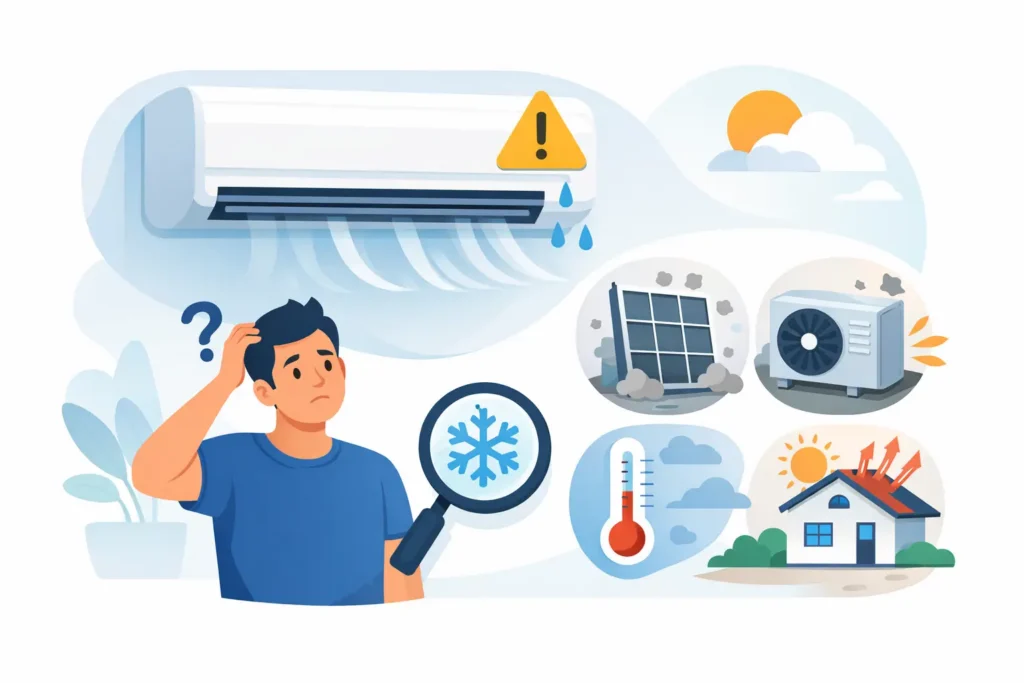
This is one of the most common service calls homeowners make. The system turns on, the thermostat looks normal, air may even be coming from the vents, but the house never reaches the set temperature. That usually points to one of three categories: airflow problems, refrigerant or mechanical issues, or control and electrical faults.
Airflow problems are often the first place to look because they are common and sometimes easy to correct. If the system cannot move enough air across the indoor coil or through the ductwork, it will struggle to remove heat from your home. A clogged filter, blocked return vent, dirty evaporator coil, or blower issue can all reduce cooling performance.
Refrigerant and mechanical issues are more serious. Low refrigerant, a failing compressor, a frozen evaporator coil, or a dirty outdoor condenser can keep the system from transferring heat the way it should. In those cases, the AC may run constantly and still fall behind.
Control and electrical issues can be less obvious. A thermostat problem, capacitor failure, contactor issue, or wiring fault can cause part of the system to operate while another part does not. That is when homeowners often say, “The AC is on, but it is not actually cooling.”
The first things to check before calling
Start with the thermostat. Make sure it is set to cool and not just fan. Check that the temperature setting is below the current room temperature. If your thermostat uses batteries, replace them. It sounds basic, but it solves more calls than most people expect.
Next, check the air filter. A dirty filter restricts airflow and can make the entire system underperform. If it looks packed with dust or debris, replace it. In a coastal area like ours, where systems often run hard for long stretches, filters can clog faster than homeowners realize.
Then walk through the house and check the vents. Make sure supply registers are open and not blocked by furniture, rugs, or drapes. Also make sure return vents are not covered. Closed vents do not usually save money, and they can create airflow imbalances that make cooling worse.
Go outside and look at the condenser unit. If it is buried in leaves, grass clippings, or dirt, it cannot release heat efficiently. Gently clear debris around the unit and make sure there is breathing room. If the outdoor coil is heavily coated, that moves beyond a simple homeowner fix and should be cleaned properly.
Finally, check your breaker panel. If the indoor unit or outdoor unit has tripped a breaker, the system may appear to be running when only one side is actually operating. If a breaker trips again after you reset it once, stop there and call for service. Repeated trips usually point to an electrical or mechanical problem.
Common reasons your AC is not cooling
A dirty air filter is choking airflow
This is the simplest problem and one of the most damaging if ignored. Restricted airflow can cause weak cooling, higher energy bills, frozen coils, and unnecessary wear on the blower motor. If the filter is overdue, replacing it is the right first move.
The evaporator coil may be frozen
If you notice ice on the indoor unit, refrigerant lines, or around the air handler, the coil may be frozen. This can happen because of poor airflow, low refrigerant, or both. A frozen coil will stop the system from cooling properly. Turning the system off and switching the fan on can help thaw it, but that does not fix the root cause.
The outdoor unit is dirty or not working correctly
Your condenser has one job: release the heat removed from your home. If the coil is packed with grime or the fan is not operating correctly, that heat has nowhere to go. The result is warm air, long run times, and rising stress on the compressor.
Low refrigerant may mean there is a leak
Refrigerant does not get “used up” like fuel. If your system is low, there is usually a leak. You might notice weak cooling, hissing sounds, ice buildup, or longer cycles. Topping it off without finding the leak is a short-term patch, not a real repair.
The thermostat may be misreading the house
A thermostat that is out of calibration, poorly located, or failing can send the wrong signals to the system. If it thinks the house is cooler than it really is, the AC may not run long enough. If it has wiring or programming problems, cooling can become inconsistent.
Duct leaks can waste cooled air
If your AC seems to cool some rooms but not others, leaking or poorly insulated ducts may be part of the problem. In attics and crawl spaces, lost air means your system is paying to cool spaces no one lives in. That is especially frustrating in larger homes where comfort should be even and reliable.
The system may be undersized, aging, or both
Sometimes the issue is not a sudden failure but a system that has gradually lost capacity. Older units can still run while delivering far less cooling than they once did. In other cases, the original installation may not have matched the home’s needs. Additions, changing insulation levels, sun exposure, and duct design all affect performance. This is where real diagnostics matter, because the right answer is not always replacement.
When why is my AC not cooling becomes an emergency
Not every cooling problem is an after-hours emergency, but some should move to the front of the line. If your AC stops cooling during extreme heat, if there are elderly family members or young children in the home, or if indoor temperatures are climbing quickly, it makes sense to call right away.
You should also treat burning smells, buzzing sounds, repeated breaker trips, water leaks around the unit, or ice buildup as signs that the problem should not wait. Running a struggling system longer can turn a repair into a bigger repair.
What a professional diagnosis should actually do
A good AC diagnosis should go beyond swapping parts and guessing. The technician should verify airflow, inspect the blower and coils, test refrigerant pressures, check electrical components, evaluate thermostat operation, and look for signs of duct leakage or drainage issues.
This matters because different problems can look the same from the homeowner’s perspective. Warm air at the vents might be a thermostat issue, a failed capacitor, low refrigerant, a frozen coil, or a compressor problem. The symptoms overlap. The fix does not.
That is why homeowners in Mount Pleasant often want more than a quick sales pitch. They want a clear answer, a practical repair plan, and honest guidance about whether the existing system still makes sense to keep. At Mt Pleasant Heating & Air, that diagnostic approach is central to how service should work.
Repair or replace? It depends on the real cause
If your system is relatively young and the issue is isolated, repair is often the right move. A capacitor, contactor, drain issue, thermostat replacement, coil cleaning, or refrigerant leak repair can restore performance without major expense.
If the system is older, uses outdated refrigerant, has a failing compressor, or has a history of repeat breakdowns, replacement may be the more cost-conscious option over time. But this is where trade-offs matter. A repair can buy useful life if the equipment is otherwise sound. Replacement makes more sense when the system is losing reliability and efficiency at the same time.
The right call depends on age, condition, repair history, energy costs, and how long you plan to stay in the home. There is no one-size-fits-all answer, and a trustworthy HVAC company will tell you that.
How to reduce the chances of it happening again
Most no-cooling calls do not come out of nowhere. Systems usually show warning signs first: longer run times, uneven temperatures, rising utility bills, weak airflow, or humidity that starts to feel harder to control.
Seasonal maintenance helps catch those issues before they become a midsummer breakdown. Cleaning coils, checking refrigerant levels, testing electrical components, clearing drains, and verifying airflow all help your AC do its job when the heat is at its worst. Homeowners can also help by changing filters regularly and keeping the area around the outdoor unit clear.
If your system is not keeping up, do not wait for a total failure to get answers. The sooner the cause is identified, the more likely it is that the fix stays straightforward, affordable, and focused on getting your home comfortable again.