Imagine it’s a typical August afternoon in Mount Pleasant. The humidity is thick enough to feel, and you suddenly realize your home is getting warmer by the minute. When your cooling system fails, that first major repair estimate can feel like a heavy burden. You’re left wondering if you should just pay for the fix or if it’s finally time to look at an hvac repair vs replacement. Is this repair a smart bridge to next year, or are you just throwing good money after bad?
We know how stressful it is to face high costs while your family is uncomfortably warm. You want a home that stays cool without the fear of being pressured into a sale you don’t actually need. This guide provides the exact criteria you need to make an informed choice for your Lowcountry home. We will walk you through the “Rule of 5,000” financial formula, explain how coastal salt air changes the math on system longevity, and show you how current SEER2 efficiency standards impact your long-term savings. By the end, you’ll have a clear path forward and the peace of mind that you’re making the right investment for your comfort.
Key Takeaways
- Apply the “Rule of 5,000” to determine if your current system’s age and repair costs make a new installation the more sensible financial choice.
- Understand how the unique Lowcountry climate, including coastal salt air and high humidity, impacts the hvac repair vs replacement decision for your home.
- Identify critical red flags, such as obsolete R-22 refrigerant or safety risks like cracked heat exchangers, that signal it’s time to stop repairing.
- Learn why modern SEER2 efficiency standards are essential for maintaining a comfortable, cost-effective home environment in South Carolina.
- Discover the value of a consultative, no-pressure diagnostic to help you focus on long-term system health rather than quick, expensive fixes.
Is it Time to Fix or Replace Your HVAC? Key Decision Factors
Facing a broken AC in the middle of a Mount Pleasant heatwave is incredibly stressful. These mechanical failures never seem to happen on a mild spring day; they wait for the hottest, most humid afternoon of the year. It is not just about the rising temperature in your living room. It is about the sudden financial pressure and the fear of being pushed into an expensive decision while you are vulnerable. When you are weighing the choice of hvac repair vs replacement, you need a logical framework to lower the stress. We look at three specific pillars: the age of the unit, the immediate repair cost, and the long-term energy efficiency.
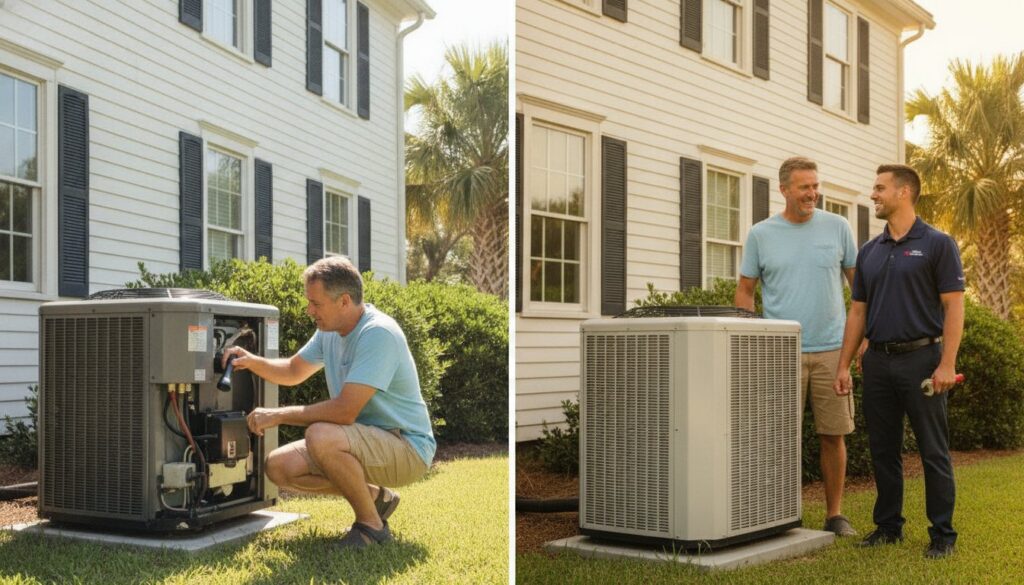
A professional diagnostic is the only way to truly understand your system’s health. Think of a technician as a consultant rather than a salesman. Our “Fix First” philosophy means we prioritize finding the small part, like a contactor or a fan motor, that can save your larger investment. Sometimes, a simple repair is all you need to get several more years of reliable service. However, if the core components are failing, honesty requires us to look at the bigger picture.
The 10-to-15 Year Lifespan Benchmark
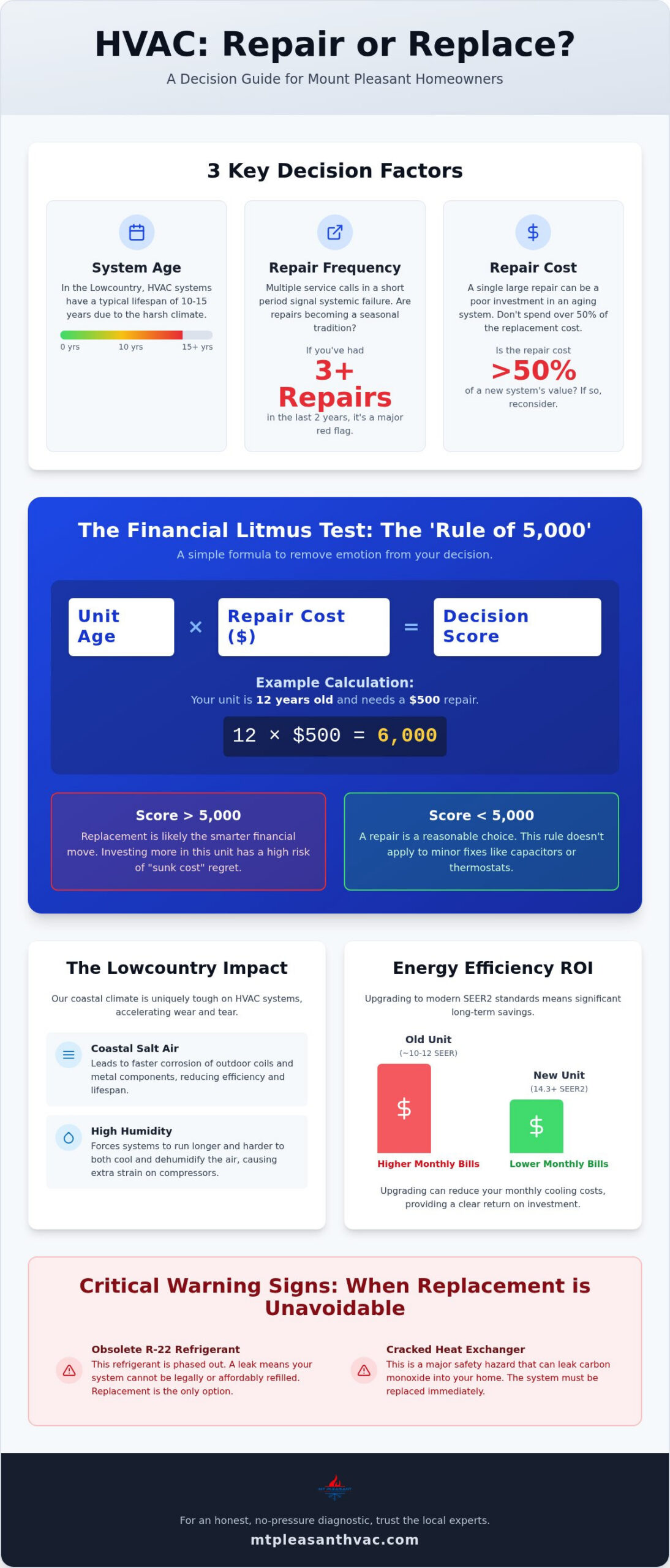
In the Lowcountry, the climate is brutal on Heating, ventilation, and air conditioning (HVAC) systems. While units in cooler climates might last 20 years, systems in the South typically reach their limit between 10 and 15 years. You can find your unit’s age by checking the nameplate on the side of the outdoor cabinet. The manufacture date is usually clearly listed; if not, it is often hidden within the first four digits of the serial number. Keep in mind that a 12 year old unit might still be “running,” but it is likely working twice as hard as a modern system to produce the same cooling. This inefficiency shows up every month on your power bill, even if the house feels okay.
Frequency of Breakdowns: The ‘Nuisance’ Factor
If you are calling a technician for the third time in two years, the “nuisance factor” has officially arrived. Small repairs are manageable on their own. However, when these service calls become a seasonal tradition, the cumulative cost often approaches the price of a down payment on a new unit. Don’t forget the hidden costs either. Every repair visit requires time off work and a window of waiting. If your system is consistently breaking down, it is a sign that the internal components are reaching a point of systemic failure. Tracking your repair history over the last 24 months is a great way to see if you are just patching a sinking ship.
The ‘Rule of 5,000’ and Financial Decision Frameworks
How do you put a price on peace of mind? When you are staring at a multi-page repair estimate, it is easy to feel overwhelmed by the numbers. To simplify the hvac repair vs replacement dilemma, many professionals use a simple mathematical formula. This logic helps you move past the immediate stress and look at the long-term value of your investment. By removing the guesswork, you can make a choice that protects your bank account and your home’s comfort.
Beyond the basic math, you should also consider the “Repair-to-Value” ratio. A good rule of thumb is to avoid spending more than 50% of the cost of a new system on a single repair for an older unit. If your system is already out of warranty, you are essentially gambling that no other major components will fail in the next year. Investing heavily in an aging system often leads to “sunk cost” regret, where you feel forced to keep repairing a unit just because you already spent so much on it last season.
Applying the Rule of 5,000 to Your Quote
The Rule of 5,000 is a standard industry benchmark for HVAC longevity that helps homeowners remove the emotion from a high-stakes financial choice. To use it, simply multiply the age of your unit by the estimated cost of the repair. For example, if your system is 12 years old and needs a $500 repair, your total is $6,000. Since this exceeds the $5,000 threshold, a replacement is likely the smarter financial move. However, you can ignore this rule for minor issues like a blown capacitor or a simple thermostat fix. If you’re staring at an estimate and feeling unsure, it might be time for a professional AC repair diagnostic to see where your system truly stands.
Energy Efficiency ROI in the Charleston Climate
In our sweltering Lowcountry summers, your energy bill is often your largest monthly expense. Modern systems must now meet a minimum efficiency standard of 14.3 SEER2 in South Carolina. If you are currently running an older 10 or 12 SEER unit, upgrading can reduce your monthly power bills by 15% to 20%. It is important to stay updated on the latest financial incentives too. While federal tax credits under Section 25C and 25D were terminated for equipment placed in service after December 31, 2025, you may still find significant savings through state-administered programs like the HEAR point-of-sale rebate or local utility incentives. These monthly savings, combined with a lack of repair bills, often offset the cost of a new system much faster than homeowners expect.
The Lowcountry Impact: Why Our Coastal Climate Matters
Living in Mount Pleasant means enjoying the breeze off the Wando River or the Harbor, but that same air is a silent enemy to your air conditioner. National guides often suggest that a system should last 15 years, but they aren’t accounting for the high salinity of the Lowcountry. Salt air accelerates corrosion at an alarming rate, often shortening a unit’s lifespan by 20% compared to systems located further inland. When you are weighing hvac repair vs replacement, you have to look at the physical condition of the outdoor unit, not just the date it was installed. A local technician understands that a ten-year-old unit near the coast is much “older” than a ten-year-old unit in the Upstate.
This environmental strain puts a massive burden on your compressor. High humidity levels mean your system has to work harder and longer to keep your indoor air comfortable. When a compressor is constantly fighting both heat and moisture, its internal components wear down faster. This is why local expertise is so valuable. We see patterns of failure that a generic national guide would miss, specifically how our unique environment turns a minor repair into a systemic failure much sooner than expected.
Salt Air Corrosion and Coastal Coils
Take a close look at your outdoor condenser coils. Do you see a white, powdery residue or fins that crumble when you touch them? This is aluminum oxide, a clear sign of salt air corrosion, often called “pitting.” Once this corrosion sets in, it creates microscopic leaks that lead to constant refrigerant loss. These “leaky coils” are often the point where we suggest calling it quits on an old unit. While you can patch a leak, the surrounding metal is usually too thin to hold a long-term fix. For homeowners choosing a replacement, we often recommend coastal-rated equipment. Specifying marine-grade components typically adds between $300 and $600 to the equipment cost, but it can add three to five years to the system’s life by resisting the harsh Charleston environment.
Humidity Management and Comfort
In Mount Pleasant, the “invisible” killer of home comfort is our extreme humidity. Your air conditioner’s primary job is to remove moisture from the air. As systems age, they lose this dehumidification capacity. Does your home feel “clammy” even when the thermostat says it is 72 degrees? This happens because an aging or poorly sized compressor cannot run long enough to pull water from the air effectively. Modern replacement systems often feature variable-speed motors. These systems run at lower speeds for longer periods, which is much better at managing humidity than the old “on-or-off” style units. To see how specialists approach these high-efficiency residential setups, visit D-technix for insights into modern climate control. Proper sizing and modern technology are your first line of defense against mold and mildew growth inside your home.
Sometimes the choice between hvac repair vs replacement is taken out of your hands by the physical state of the equipment. While we always look for a way to extend the life of your unit, certain “red flag” symptoms indicate that a repair is simply a temporary bandage on a terminal problem. Have you noticed a loud, grinding noise coming from your outdoor cabinet? This often points to a catastrophic failure of the compressor or the fan motor bearings. These sounds are more than just a nuisance. They are the literal sound of metal-on-metal destruction inside your system. When you face multiple component failures at once, like a bad blower motor alongside a leaking evaporator coil, the labor and parts costs almost always outweigh the value of the unit.
It is also common for one failure to trigger another. An aging motor that pulls too much electricity can eventually “cook” the wiring or damage the control board. If your technician finds a “double whammy” of expensive parts failing simultaneously, it is a clear signal from the machine that its working days are over. We believe in transparency, and sometimes the most honest advice we can give is that a repair is no longer a responsible use of your hard-earned money.
The R-22 Phase-Out and Your Wallet
Many older homes in Mount Pleasant still have systems that rely on R-22 refrigerant, commonly known as Freon. Because this substance is no longer produced or imported, the remaining supply is extremely scarce and expensive. Legal restrictions now prevent technicians from simply “topping off” a leaking system without a permanent fix, which is often impossible on aged copper coils. R-22 was phased out due to environmental regulations, making modern R-410A or R-454B systems the only logical path forward. Continuing to sink money into an R-22 unit is like trying to find parts for a car that hasn’t been manufactured in decades. It is a financial trap that only grows deeper with every service call.
Safety Risks and Electrical Hazards
Your system’s health is also a matter of household safety. If you notice a burning smell coming from your vents or see scorched, discolored wiring inside the air handler, you are looking at a potential fire hazard. Frequent tripped breakers are another clear warning sign. This usually happens because an aging compressor is “slugging” or pulling far more power than it was designed to handle. On the heating side, a cracked furnace heat exchanger is a non-negotiable replacement situation. A crack in this component can allow carbon monoxide to leak into your home’s air supply, posing a severe risk to your family. If you suspect your system is pulling too much power or smells like electrical burning, you should schedule a professional AC installation consultation to explore safer, modern alternatives.
Getting an Honest Diagnostic in Mount Pleasant
Deciding on hvac repair vs replacement shouldn’t feel like a gamble. When you call our team, you aren’t just getting a technician; you’re getting a neighbor who understands the unique demands of the Charleston climate. We know the pressure of a broken AC on a humid afternoon. Our goal is to lower your stress by providing a clear, logical path forward. You can expect total transparency from the moment we arrive at your door. We don’t use high-pressure sales tactics because we value a long-term relationship with you over a quick commission.
What does a diagnostic visit actually look like? It starts with a thorough investigation of your system’s components, from the electrical connections to the refrigerant levels. We look for the root cause of the failure, not just the symptoms. Once we identify the issue, we sit down with you to explain the findings in plain English. We want you to feel like an informed partner in the process, not just a customer. By providing sequential logic for our recommendations, we ensure you have the peace of mind that you aren’t being ripped off.
Our ‘Fix First’ Commitment
We believe in integrity and practical solutions. If a simple part can safely get your system through another few seasons, we will tell you. Our “Fix First” philosophy means we prioritize repairing your system whenever it is cost-effective and safe for your home. During a diagnostic visit, we provide clear, written options. This allows you to weigh the hvac repair vs replacement cost at your own pace. You deserve to know exactly what is wrong, why it happened, and what your choices are before any work begins. Building trust is more important to us than making a one-time big sale.
Preventative Maintenance: Your Best Defense
The best way to handle an HVAC crisis is to prevent it from happening in the first place. Regular maintenance is the most effective tool we have to fight the coastal corrosion and heavy workloads we discussed earlier. In fact, consistent tune-ups can extend the operational life of your system by 3 to 5 years. For our Mount Pleasant neighbors, a maintenance plan ensures that small issues like a clogged drain line or a worn capacitor don’t turn into a midnight emergency in July. It provides the predictability and comfort that every homeowner wants. If you’re already dealing with a sudden breakdown, learning more about reliable AC repair in Mount Pleasant, SC can help you understand what to expect from a fast, honest service call.
Schedule your system diagnostic with MT Pleasant Heating & Air today!
Whether you need a 24/7 emergency repair to restore your comfort or a free installation estimate for a modern, efficient system, we are here to help. Our team focuses on longevity and efficiency, treating every home as if it were our own. Let us help you navigate the mechanics of your home so you can get back to enjoying life in the Lowcountry.
Restoring Comfort to Your Lowcountry Home
Choosing between hvac repair vs replacement doesn’t have to be a guessing game. By applying the Rule of 5,000 and considering the unique toll our coastal salt air takes on your system, you can make a decision that protects your home’s comfort and your family’s budget. Whether you’re facing an obsolete R-22 unit or simply want to lower your monthly power bills with a modern SEER2 system, the right choice is the one that provides long-term peace of mind. You don’t have to navigate these mechanical failures alone.
At MT Pleasant Heating & Air Conditioning, we are locally owned and operated right here in the Lowcountry. We pride ourselves on offering empathetic, no-pressure consultations that treat you like a neighbor, not a sales target. If you’re stuck in a heatwave, remember that our 24/7 emergency service is always available to restore your home to a manageable temperature. Don’t let a failing unit disrupt your life any longer. Book Your HVAC Diagnostic Now and let us help you find the most efficient path forward. We’re ready to help you stay cool, Mount Pleasant.
Frequently Asked Questions
How many years does an HVAC system typically last in Mount Pleasant?
While inland units might last up to 20 years, systems in the Lowcountry typically reach their limit between 10 and 15 years. The heavy humidity and corrosive salt air in Mount Pleasant accelerate the wear on outdoor coils and compressors. Regular maintenance can help you push toward the 15-year mark, but many homeowners see significant efficiency drops and frequent mechanical failures once a unit enters its second decade of service.
Is it worth repairing an AC unit that is 12 years old?
It depends on the specific failure and the unit’s overall condition. If the repair is a minor electrical fix like a capacitor or a contactor, it’s often worth the investment to keep the system running. However, if you’re facing a major component failure like a compressor or a leaking coil, you should consider the hvac repair vs replacement math carefully. At 12 years old, the system is nearing the end of its coastal lifespan. For a clearer picture of what a service visit involves, our guide on AC repair in Mount Pleasant, SC walks through the process in detail.
What is the ‘Rule of 5,000’ for HVAC repair?
The Rule of 5,000 is a simple financial calculation where you multiply the age of your system by the estimated repair cost. If the resulting total is higher than $5,000, industry professionals generally recommend replacing the unit instead of fixing it. For example, a 10-year-old unit needing a $600 repair equals $6,000, suggesting that your money is better spent on a modern, energy-efficient installation that offers a fresh manufacturer warranty.
Why is my AC repair quote so high?
High repair costs often stem from the complexity of modern components or the scarcity of older materials. For instance, labor costs for compressor replacements can be significant due to the specialized equipment and time required. Additionally, if your system uses older R-22 refrigerant, the price of the gas itself has skyrocketed because it’s no longer produced. We provide transparent, written estimates so you understand every line item before any work begins.
Can I still get parts for an R-22 air conditioner?
While some mechanical parts like fan motors are still available, the R-22 refrigerant itself is extremely difficult and expensive to source. Since R-22 was phased out for environmental reasons, supply is limited to recycled stock. If your unit has a refrigerant leak, the cost of the repair and the “recharge” often makes replacement the only logical path forward. Most manufacturers have shifted focus entirely to modern R-410A or R-454B systems.
Does a new HVAC system really lower my energy bills in Charleston?
Yes, especially if you’re upgrading from a system that is over a decade old. Modern units installed in South Carolina must meet a minimum 14.3 SEER2 efficiency standard. Moving from an older 10 SEER unit to a high-efficiency model can reduce your monthly cooling costs by 15% to 20%. These savings are particularly noticeable during our long, humid summers when your air conditioner runs almost continuously to manage indoor comfort.
What happens if I ignore a small HVAC leak?
Ignoring a small leak can lead to catastrophic system failure and higher utility bills. A refrigerant leak forces your compressor to work harder, which pulls more electricity and eventually causes the motor to burn out. If the leak is in the condensate line, you risk water damage to your ceilings or flooring and potential mold growth. For those looking to protect their concrete surfaces from such moisture, Floorguard offers resilient coating solutions. Addressing these issues early prevents a small nuisance from becoming an expensive replacement emergency later on.
A trustworthy technician will act as a consultant and provide clear, physical evidence of the problem. They should show you the corroded coils, the scorched wiring, or the specific readings on their digital gauges. At MT Pleasant Heating & Air Conditioning, we prioritize a “Fix First” approach and provide written options for every budget. If a technician pressures you into a sale without explaining the hvac repair vs replacement logic, it’s always okay to seek a second opinion.