Mount Pleasant Heating & Air Conditioning · Heat Pumps
Heat Pump Repair in Mount Pleasant, SC
Heat pumps handle both heating and cooling, so a problem can affect your comfort in more than one season. We diagnose and repair heat pumps for Mount Pleasant homes and businesses — including freezing, defrost, and refrigerant issues.
Quick Answer
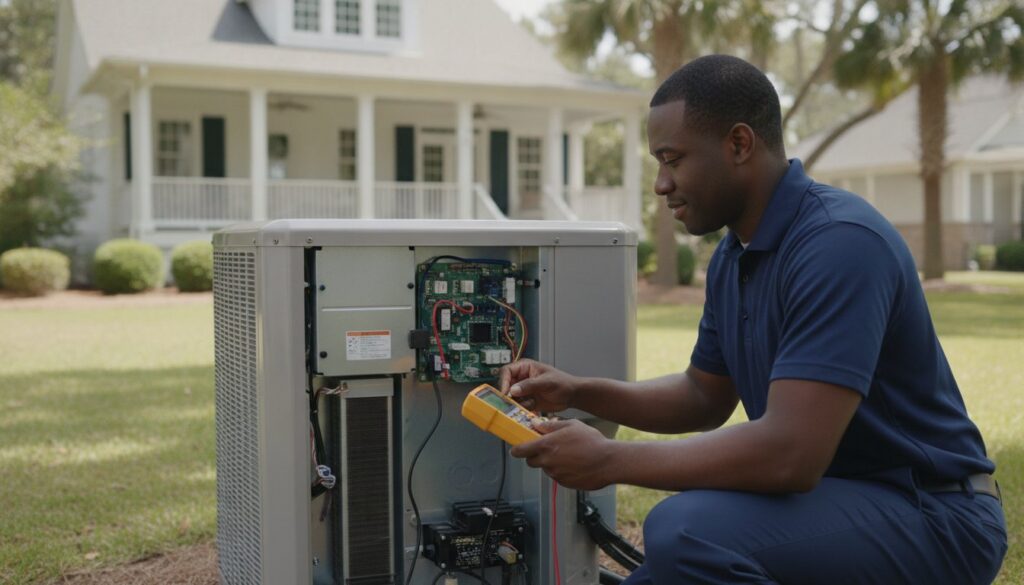
Heat pump repair covers the compressor, refrigerant, defrost system, fan motors, and controls that keep the unit heating and cooling. Common problems include ice buildup, weak airflow, unusual noises, and systems that run but never satisfy the thermostat. We find the cause, explain it, and give you the price before starting.
What We Do
Heat Pump Repair
A full range of heat pump repair services for homes and businesses in the Mount Pleasant area.
Heat Pump Repair
Diagnosing and repairing heat pump problems across heating and cooling modes.
Defrost System Repair
Fixing defrost controls and sensors so ice clears properly in cold weather.
Refrigerant Service
Finding and fixing refrigerant leaks, then charging the system correctly.
Compressor & Motor Repair
Repairing or replacing failing compressors, fan motors, and capacitors.
Emergency Heat Pump Service
24/7 emergency service when heating or cooling stops in extreme weather.
Heat Pump Maintenance
Preventive service that helps keep the heat pump running as intended.

Normal or Not?
Heat Pump Behavior That's Normal and What's Not
Heat pumps do a few things that worry homeowners but are perfectly normal, especially in cold weather:
- Normal: steam rising from the outdoor unit and a whoosh as it switches modes during a defrost cycle.
- Normal: the outdoor fan stopping for a few minutes while the unit defrosts.
- Normal: air from the vents that feels warm but not hot. Heat pumps deliver gentler heat than a gas furnace.
- Not normal: thick ice covering the coil for hours, or ice on the top of the unit.
- Not normal: "Aux" or "Emergency Heat" showing on the thermostat most of the day, which usually means higher bills.
If you're seeing any of the "not normal" signs, call us. Learn more in how a heat pump works.
Problems We Solve
Signs You May Need This Service
Plain-language descriptions of the situations homeowners bring to us most often.
Heat Pump Freezing Up
Thick ice that will not clear usually means airflow, refrigerant, or defrost trouble.
Weak Heat or Cooling
The system runs but never quite reaches the temperature you set.
Blowing Cold in Heat Mode
A heat pump that blows cold air when set to heat needs a diagnosis.
Unusual Noises
Grinding, buzzing, or banging from the outdoor unit deserves attention.
Frequent Cycling
A heat pump that turns on and off too often is working too hard.
High Energy Bills
A struggling heat pump costs more to run than it should.
Reading the Symptoms
What Common Heat Pump Symptoms Usually Mean
A technician has to confirm the cause, but these are the usual suspects.
- Cool air in heat mode, or stuck in one mode. A stuck reversing valve can trap the system in cooling mode during a cold snap. Replacing a valve is usually a smaller job than replacing a compressor, so don’t assume the worst.
- Thick ice on the outdoor unit in winter. A failed defrost board or sensor, poor airflow or low refrigerant are the usual causes.
- Clicking, or a unit that won’t start. A worn capacitor or contactor. They fail most in the hottest months, when the system runs almost nonstop.
- Turning on and off every few minutes. Short cycling strains the compressor and raises bills. Common causes are a faulty thermostat, a clogged filter or an internal pressure problem.
- A musty “dirty sock” smell. Often biological growth on the indoor coil, which thrives in damp air.
- Warm air in summer. After checking the filter and breaker, suspect a failed capacitor, a refrigerant leak or a stuck reversing valve.
- A higher bill with no change in weather. The unit may be working harder to make up for a failing part.

Backup Heat
Auxiliary and Emergency Heat Explained
Most heat pumps in this area have electric heat strips in the indoor air handler. They're a big reason a heat pump bill can jump in winter.
- Auxiliary heat comes on automatically when the heat pump needs help, such as on a cold morning or after you raise the thermostat several degrees.
- Emergency heat is a setting you choose. It turns off the heat pump and runs only the heat strips.
- Use emergency heat only when the outdoor unit is damaged or not working, and call for service.
- Raising the thermostat a couple of degrees at a time helps keep the heat strips off.
If auxiliary heat runs constantly, the heat pump may be low on refrigerant, iced over or failing to switch modes. See how to reset a heat pump safely.
24/7 Service
When to Call for Emergency Heat Pump Service
Our 24/7 emergency line is (843) 714-0863. These situations shouldn’t wait:
- No cooling or no heat when it matters. A total loss of cooling in a Lowcountry heat wave, or no heat during a freeze, is a risk for infants, older family members and pets.
- Loud grinding, metal-on-metal screeching or heavy thumping from the outdoor unit. Turn the system off. It can mean a failing fan motor or compressor bearing.
- Burning smells, sparks, or a breaker that won’t stay reset. These point to an electrical fault and a fire risk.
- Water leaking from the ceiling or pooling around the indoor air handler, usually a backed-up condensate drain.
- The outdoor unit encased in ice. Light frost during a defrost cycle is normal. A solid block of ice is not. Turn the unit off at the thermostat and call. Running it can lead to compressor failure.
- Backup heat that stops working during a freeze. Without the heat strips, the house may not hold a safe temperature.
Before you call, check three things: the thermostat batteries (a blank screen often just means dead batteries), that the thermostat is set to Heat or Cool as you expect, and the air filter. A badly clogged filter can mimic a total failure and make the coil freeze. If those are fine and the air still isn’t flowing, the problem is inside the system.
How It Works
How It Works
A clear process, so you know what to expect from the first call to the finished job.
Describe the Problem
Tell us what the heat pump is doing, hearing, or showing (ice, error codes, weak airflow).
We Diagnose
We test the system — refrigerant, defrost, motors, and controls — to find the cause.
You Approve
We explain the repair and the price before any work begins.
We Fix & Test
We complete the repair and verify the system heats and cools properly.
What to Expect
What a Heat Pump Diagnostic Includes
We repair heat pumps for homes and businesses in Mount Pleasant and across the Charleston area. A diagnostic is a step-by-step check, not a quick look.
- Electrical and refrigerant pressure testing.
- The outdoor unit: coils checked for salt-air debris and early signs of corrosion.
- The indoor coil, for biological buildup, and the condensate drain line, to make sure it’s clear.
- Start capacitor and fan motor amperage, to catch failures before they leave you without heating or cooling.
- Thermostat calibration and airflow through the ducts. Sometimes the problem is a communication error between the thermostat and the unit.
We explain what we find in plain language, and if there are several issues we help you prioritize them by safety and efficiency.
Why Choose Us
Why Mount Pleasant Homeowners Call Us
Heat Pump Specialists
We work on heat pumps every day and know their common failure points.
Licensed, Bonded & Insured
Proper credentials for every repair.
Refrigerant Certified
Refrigerant work is done correctly and legally.
24/7 Emergency Service
Heat pump emergencies answered day and night.
Coastal Homes
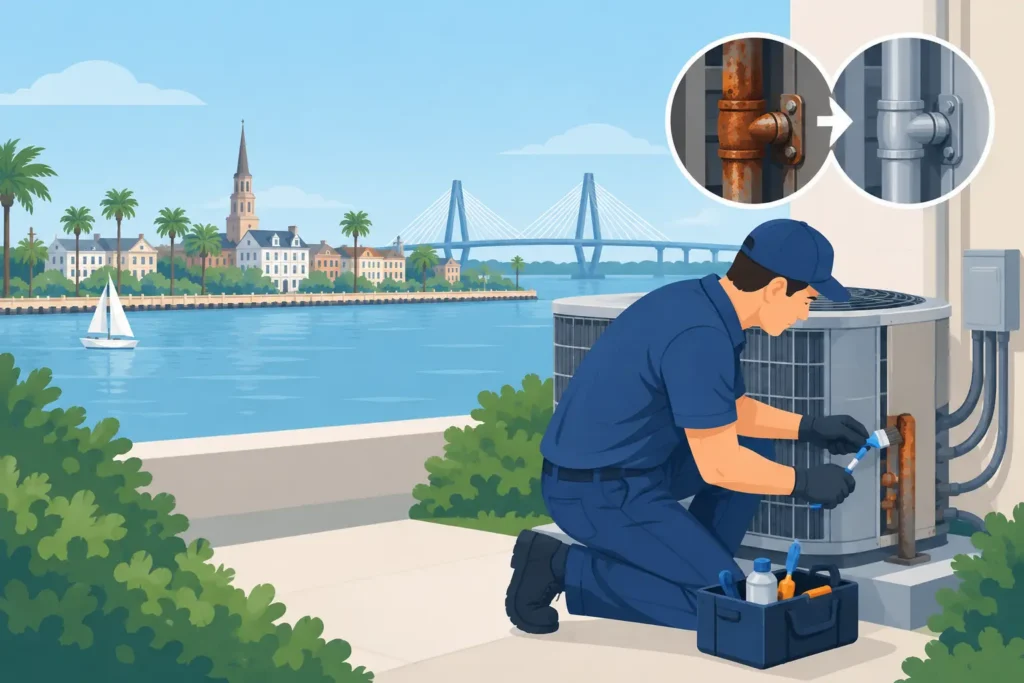
Protecting a Heat Pump From Salt Air
Heat pumps near the harbor, the marsh and the beaches work year-round in salty, humid air. Corrosion can eat through coil fins and copper tubing and loosen electrical connections.
- Gently rinse the outdoor coil with a garden hose a few times a year, with the power off at the disconnect.
- Keep sprinklers from spraying the unit, and keep mulch and plants away from the base.
- Ask about coated coils and corrosion-resistant hardware when it's time to replace equipment.
- Have the electrical connections checked during each maintenance visit.
We see the effects of salt air every week. Read coastal HVAC corrosion repair and heat pump maintenance for coastal homes.
Common Questions
Straight Answers
Quick, honest answers to the questions we hear most from Mount Pleasant homeowners.
Why does my heat pump keep freezing up?
The most common causes are a dirty filter, a blocked outdoor coil, a stuck defrost control, or low refrigerant. A technician can find the specific cause.
How long do heat pumps last?
With proper maintenance, a heat pump typically lasts 10–15 years. Regular service helps it reach its full service life.
Can a heat pump be repaired or should it be replaced?
It depends on the age, the failing component, and the cost of repair. We give you an honest evaluation of both options.
Do you repair all heat pump brands?
We service most major heat pump makes and models.
Can I run my heat pump if the outdoor unit is covered in ice?
No. Light frost is normal during a defrost cycle, but a thick layer of ice points to an airflow, defrost or refrigerant problem. Running the unit can lead to compressor failure. Turn it off at the thermostat and call.
Is it an emergency if my heat pump is making a loud noise?
Grinding, metal-on-metal screeching and heavy thumping are signs of mechanical trouble. Turn the system off and call. Catching a failing motor or bearing early can keep the repair small.
What is the difference between heat pump repair and AC repair?
A heat pump has a reversing valve and heating components that an AC doesn’t, so a diagnosis may involve the switch between modes. The two share many parts, but a heat pump has to work reliably in both seasons.
Can I fix a heat pump that blows warm air in summer myself?
You can check the filter and the breaker. Beyond that, the cause is often a refrigerant leak, a failed capacitor or a stuck reversing valve, and only EPA Section 608-certified technicians may legally handle refrigerant.
What We Fix
Heat Pump Problems We Fix Most Often
Heat pumps work year-round here, so they wear differently from systems that only cool:
- Reversing valve problems that leave the system stuck in heating or cooling.
- Defrost control failures that let ice build up on the outdoor coil in cold weather; see ice on your heat pump in winter.
- Backup (auxiliary) heat problems: heat strips that never come on, or that run too often and drive up your bill.
- Refrigerant leaks that reduce both heating and cooling; see signs of low refrigerant.
- Capacitor, contactor and fan motor failures in the outdoor unit.
- Salt-air corrosion on coils and electrical parts in homes near the water.
Before you call, try a safe heat pump reset and our troubleshooting guide. Twice-yearly heat pump maintenance catches most of these early.
Heat Pump Guides
Heat Pump Guides for Lowcountry Homes
Most Mount Pleasant homes heat and cool with a heat pump. These guides help you understand what’s going on before you call.
- Heat pump troubleshooting: what to check first
- The most common heat pump repairs
- Why is my heat pump freezing up?
- Ice on your heat pump in winter: defrost problems
- How to reset a heat pump safely
- Signs your heat pump is low on refrigerant
- Emergency heat pump service
- Heat pump maintenance for coastal homes
- How a heat pump works
- Choosing a heat pump for a Charleston-area home
- Ductless mini-split vs. heat pump
Repair or Replace
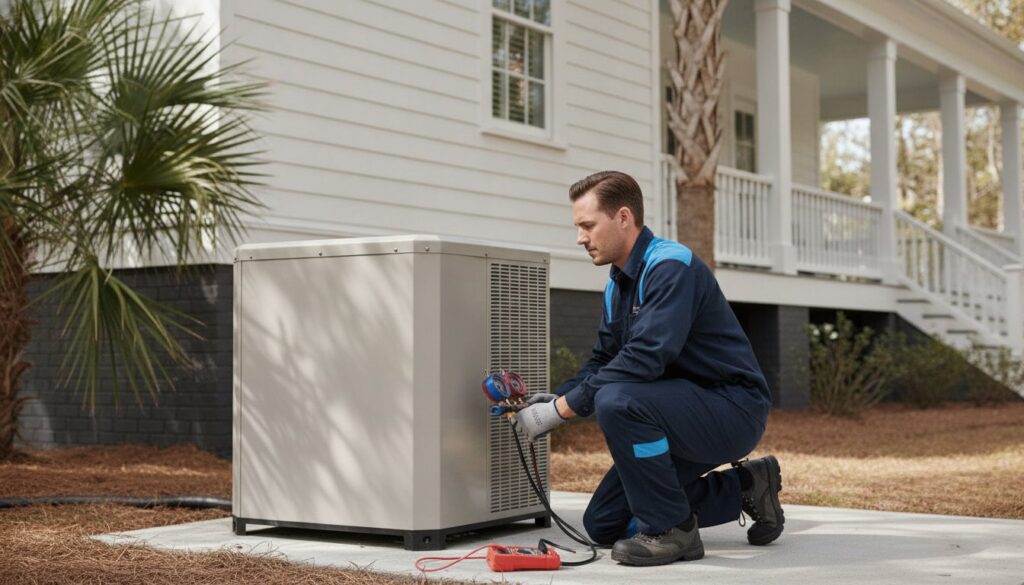
When a Heat Pump Is Worth Repairing
Because a heat pump heats and cools, it runs more hours each year than an air conditioner, and that affects the repair-or-replace decision:
- Capacitors, contactors, fan motors and defrost controls are common, reasonable repairs on most systems.
- A failed compressor or a leaking outdoor coil on an older unit often makes replacement the better value.
- Older systems that use R-22 refrigerant are costly to recharge because new R-22 hasn't been produced in the U.S. since 2020.
- If repairs keep coming, compare the total cost against a new, properly sized system.
A common rule of thumb is that if a repair costs more than half the price of a new system, replacement is usually the more logical choice. Before you commit to a major repair, check your manufacturer’s parts warranty, which may lower your cost.
We'll give you the facts for your specific unit. For more, see common heat pump repairs and choosing a heat pump.
Replacing a Heat Pump
Choosing a New Heat Pump: Efficiency and Sizing
A heat pump handles both heating and cooling, so a replacement gets judged on two ratings and has to suit both seasons.
- SEER2 for cooling, HSPF2 for heating: new heat pumps must meet at least 14.3 SEER2 and 7.5 HSPF2. In our climate, cooling efficiency usually matters most to your yearly bill.
- Variable-speed models: these run at low speed for long stretches, which removes more humidity in summer and needs the heat strips less often in winter.
- Sizing for both seasons: a unit sized only for summer can leave you leaning on backup heat in a cold snap. A load calculation looks at both.
- Matching the air handler: pairing a new outdoor unit with an old indoor coil can cut efficiency and shorten its life. We check whether the indoor side should be replaced too.
- Coastal options: for homes close to salt water, ask about coated coils and corrosion-resistant cabinets.
Compare options on our installation and replacement page, or read ductless mini-split vs. heat pump.
Ready to Get Comfortable?
Call (843) 714-0863 or request service online. We are available 24/7 for emergencies and offer same-day appointments when available.
Call (843) 714-0863Request Service