A bonus room that never cools down, a sunroom that stays muggy, or an aging HVAC system that struggles through a Charleston summer can make homeowners start comparing options fast. The phrase ductless mini split vs heat pump can be confusing, though, because a ductless mini-split is usually a type of heat pump. The real decision is typically between a ductless, room-by-room heat pump system and a central heat pump that conditions the whole home through ductwork.
Both can provide efficient cooling in summer and dependable heat during our relatively mild South Carolina winters. The right choice depends on your home’s layout, the condition of its ductwork, the rooms you use most, and whether you need a targeted comfort fix or a complete HVAC solution.
Ductless Mini Split vs Heat Pump: The Key Difference
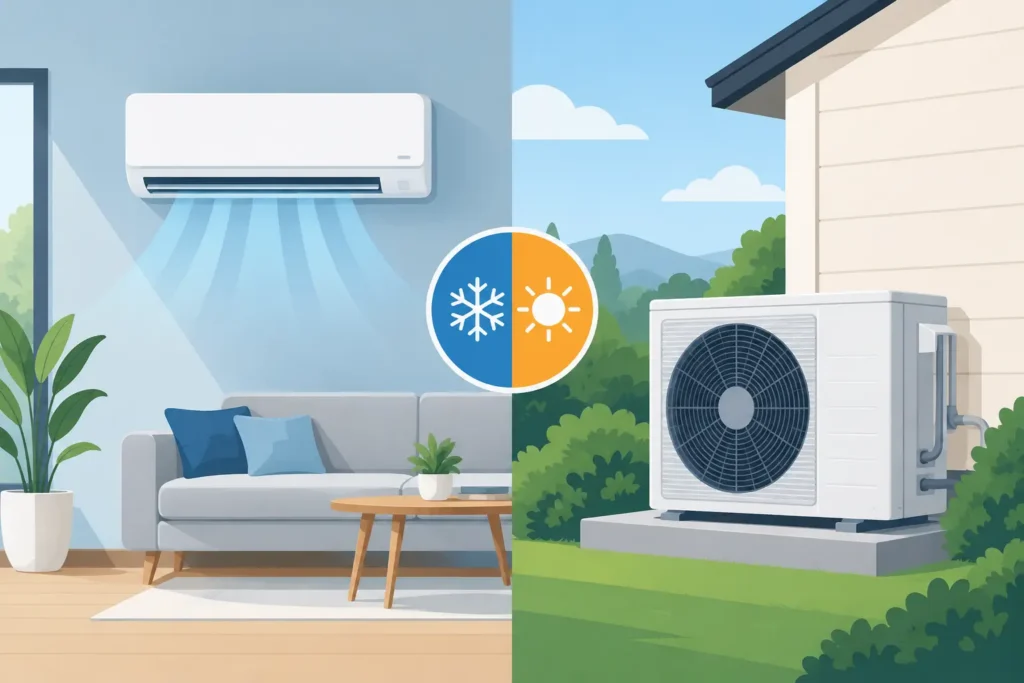
A central heat pump uses one outdoor unit connected to an indoor air handler. That air handler sends heated or cooled air through supply ducts to rooms throughout the house. If your home already has sound, properly sized ductwork, a central heat pump can replace an older split system while maintaining the familiar whole-home setup.
A ductless mini-split also has an outdoor unit, but it connects directly to one or more indoor units through small refrigerant lines. The indoor units are commonly mounted high on a wall, though ceiling cassette and low-wall options are available. Each indoor unit serves a particular room or zone and has its own temperature control.
That is why this is not simply a matter of one system being better than the other. A central heat pump is designed for whole-home distribution through ducts. A ductless system is designed for flexible, targeted comfort without ducts.
When a Ductless Mini-Split Makes Sense
Ductless equipment is especially useful when adding or improving conditioned space would otherwise require major ductwork changes. It can cool and heat areas that are difficult for a central system to reach without tearing into walls or ceilings.
A mini-split may be a strong fit for a finished room over the garage, a home addition, a detached office, a converted porch, or a bedroom that is consistently warmer or colder than the rest of the house. It can also be practical in older homes with limited space for ducts.
The biggest advantage is zoning. If one family member prefers a cooler bedroom while another wants a warmer office, each zone can be set independently. You are not forced to cool unused rooms simply to make one occupied room comfortable.
Ductless systems can also be very efficient. Because conditioned air does not travel through long duct runs, they avoid the energy losses associated with leaky or poorly insulated ducts. Many systems use variable-speed inverter technology that adjusts output gradually instead of repeatedly cycling at full blast.
There are trade-offs. Indoor wall units are visible, and their placement matters for both appearance and airflow. A multi-zone system with several indoor heads can become more expensive than a basic central replacement. It also requires regular filter cleaning, and every indoor unit needs clear airflow to perform correctly.
When a Central Heat Pump Is the Better Choice
For many homes in Mount Pleasant and Charleston, a central heat pump remains the most straightforward whole-home answer. If your ductwork is in good condition and your current system generally keeps rooms comfortable, replacing an aging central unit may deliver the best balance of comfort, appearance, and long-term value.
A central system keeps equipment out of sight, aside from the thermostat and supply vents already built into your home. It can also work with whole-home accessories such as advanced filtration, dehumidification solutions, and certain indoor air quality products. In our humid climate, proper humidity control is every bit as important as reaching the thermostat setting.
Central heat pumps are particularly sensible when you need to condition most or all of the house on the same schedule. One correctly sized system can provide consistent airflow across the home without adding individual units to multiple walls.
Still, central comfort depends heavily on the ducts. A new outdoor unit cannot fix undersized returns, disconnected runs, poor insulation, or ducts that leak into an attic or crawlspace. Before recommending replacement, a qualified technician should evaluate the system as a whole, including airflow, electrical components, refrigerant performance, and duct condition.
Comfort, Humidity, and Room-by-Room Control
Both systems transfer heat rather than create it by burning fuel, which is why heat pumps can be an efficient choice for heating and cooling. Modern equipment can handle the winter temperatures common along the coast, though supplemental heat may be needed during colder stretches depending on the system and home.
The comfort difference often comes down to control. A ductless mini-split offers precise room-by-room settings. This is valuable for a guest suite, nursery, upstairs room, or area with unusual heat gain from windows and sun exposure.
A central heat pump creates a more unified indoor environment. It is often better for families who want consistent temperatures throughout the home and prefer one thermostat schedule. Zoned central systems are possible, but they require additional design, equipment, and controls.
Humidity deserves attention in either case. Oversized HVAC equipment can cool the air too quickly and shut off before removing enough moisture. That can leave a home feeling clammy even when the temperature looks right on the thermostat. Proper load calculations and equipment sizing are more valuable than simply choosing the largest unit available.
Installation Cost and Long-Term Value
Upfront price varies widely because every home presents different installation conditions. A single-zone mini-split for one problem room is often less disruptive and less costly than extending ducts to that space. A larger multi-zone ductless system can cost more, especially when it serves several rooms and requires multiple indoor heads.
A central heat pump replacement may be more cost-effective when existing ducts, electrical service, and indoor equipment are compatible. Costs can rise if the project requires duct repair, a new air handler, electrical upgrades, drainage work, or changes to accommodate the correct system size.
Operating cost should be considered alongside installation cost. A ductless system can reduce waste when you primarily use a few rooms, since you can condition occupied zones. A central system may be the better value when the entire house is occupied throughout the day and the ductwork is tight and properly designed.
The most reliable way to compare options is not a rough price over the phone. It is an in-home evaluation that accounts for square footage, insulation, window exposure, room use, duct performance, existing equipment, and your comfort goals.
Maintenance Matters for Both Systems
Neither option is maintenance-free. Central systems need clean filters, clear drain lines, properly functioning electrical components, and seasonal service. Ductless systems need their filters cleaned regularly, along with professional cleaning and inspection of the indoor and outdoor units.
Coastal conditions add another consideration. Salt air, pollen, high humidity, and heavy summer use can take a toll on outdoor equipment. Routine maintenance helps catch drainage problems, corrosion, airflow restrictions, and declining performance before they lead to an inconvenient breakdown.
If your current system is not keeping up, do not assume replacement is the only answer. A failed capacitor, clogged drain, refrigerant issue, dirty coil, or airflow problem can sometimes be repaired and restore performance. A careful diagnosis should come before a major equipment decision.
How to Choose for Your Home
Choose a ductless mini-split when you need to solve comfort problems in a specific area, add heating and cooling without extensive ductwork, or want independent temperature control in key rooms. Choose a central heat pump when your home has usable ductwork and you want consistent, discreet comfort across most or all of the house.
In some homes, the best answer is both. A central system can handle the main living areas while a ductless unit serves a difficult addition, upstairs suite, or garage conversion. This approach can correct a stubborn comfort issue without replacing or redesigning a working whole-home system.
A professional assessment can turn a confusing equipment comparison into a practical plan. Mt Pleasant Heating & Air can evaluate what is causing the comfort issue, explain the repair and replacement options clearly, and help you choose equipment that fits your home rather than forcing your home to fit the equipment.