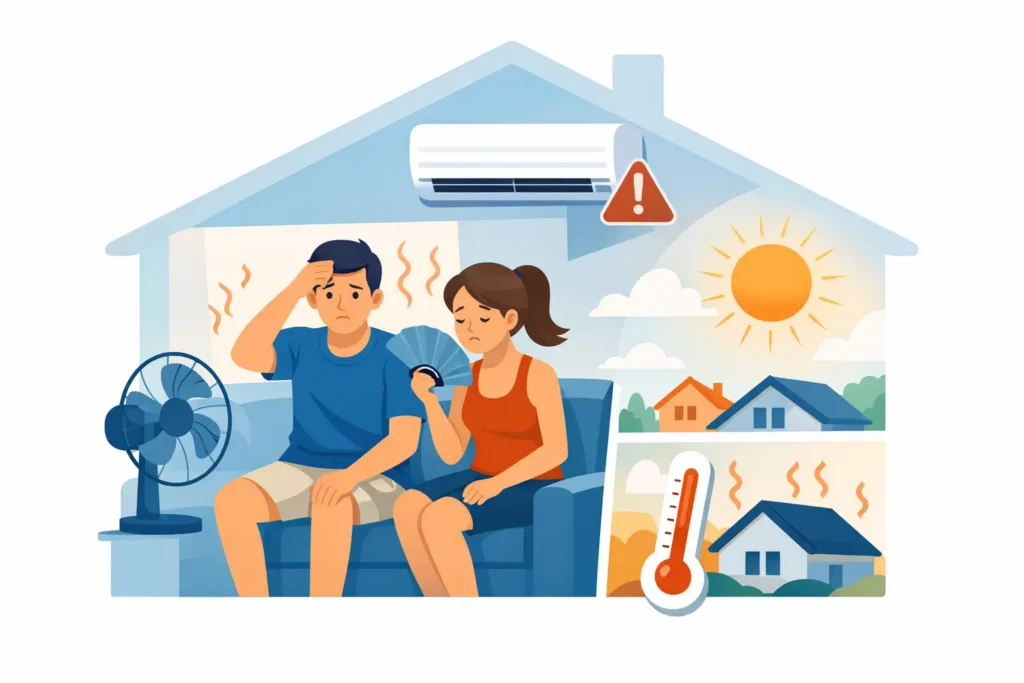
When your air conditioner quits on a July afternoon in Mount Pleasant, the question gets real fast: is no AC an emergency? Sometimes the answer is yes, and sometimes it depends on who is in the home, how hot it is indoors, and what caused the system to stop working.
For many homeowners, a cooling outage is more than an inconvenience. South Carolina heat and humidity can make indoor conditions uncomfortable in a hurry, especially in homes with young children, older adults, pets, or anyone with health concerns. Even when it is not a life-threatening situation, going without AC can still call for same-day professional attention.
Is no AC an emergency in every situation?
Not always. If the temperature outside is mild, the indoor temperature is still manageable, and everyone in the house is safe, a no-cooling issue may be urgent without being a true emergency. In that case, you still want fast service, but it may not require an after-hours dispatch.
The situation changes when indoor heat starts rising into an unsafe range or when the people in the home are especially vulnerable to heat stress. That includes infants, seniors, people with asthma or heart conditions, and anyone recovering from illness. In those cases, no AC can absolutely become an emergency.
There is also the question of what caused the shutdown. Some AC problems are limited to cooling performance. Others involve electrical issues, burning smells, water leaks, or frozen components that can damage the system if it keeps trying to run. When safety or property damage enters the picture, the urgency goes up.
When no AC should be treated as an emergency
A cooling outage deserves emergency service when the conditions inside your home are becoming unsafe or when the system shows signs of a more serious failure. If the house is getting dangerously hot and there is no practical way to cool it down, that is not something to wait on.
You should treat the problem as urgent if you notice dizziness, nausea, headaches, confusion, or other signs of heat exhaustion in anyone in the home. The same applies if indoor temperatures continue climbing and your home is holding heat overnight.
Certain equipment symptoms also point to a more serious issue. If you smell something burning, hear loud buzzing or popping, see ice covering the system, or find water pooling around the indoor unit, turn the system off and call for help. Those are not symptoms to ignore until the next business day.
If your AC outage happens during a heat wave, that matters too. A house can get uncomfortable quickly in coastal humidity, and upstairs rooms usually become unbearable first. Emergency service exists for a reason, and this is one of the clearest reasons to use it.
Households that should call sooner
Some homes should never take a wait-and-see approach. If you have a newborn, an elderly family member, a medically fragile person, or pets that cannot tolerate heat, it makes sense to call right away. The same is true if someone works from home in an environment where overheating is a serious problem, or if you have a sealed-up modern home that traps heat quickly.
Comfort is one part of the issue. Health and safety are the bigger concern.
When it may be urgent, but not an emergency
There are plenty of cases where your AC stops cooling and you still have a little breathing room. Maybe the thermostat is blank because of a tripped breaker. Maybe the drain line is clogged and shut the system down to prevent overflow. Maybe the outdoor unit is not running, but the indoor temperature is still reasonable and you can stay comfortable with fans for a few hours.
That does not mean you should delay service for days. It simply means you may have time to troubleshoot safely and schedule repair as soon as possible rather than assuming the worst.
The key is to be honest about the conditions inside your home. If the temperature is climbing, the humidity is rising, and your family is getting uncomfortable fast, it is better to act early than wait for a bad situation to get worse.
What to check before calling for emergency AC service
A few simple checks can save time and may even solve the problem. Start with the thermostat. Make sure it is set to cool, the temperature setting is below the room temperature, and the screen has power.
Next, check your electrical panel for a tripped breaker. If one has tripped once, you can reset it. If it trips again, stop there. Repeated breaker trips can signal an electrical problem that needs professional diagnosis.
Then look at the air filter. A severely clogged filter can restrict airflow enough to cause cooling issues or even freeze the evaporator coil. If the filter is dirty, replace it and give the system a little time to recover.
It is also worth checking the condensate drain area near the indoor unit. Some systems shut down when the drain line backs up, especially in humid weather. If you see standing water near the unit, turn the system off and call for service.
These checks are useful because they address common issues without putting you at risk. Beyond that, avoid taking panels off or working around electrical components. AC systems are not a good place for guesswork.
Why waiting can make the problem worse
A lot of homeowners hope the system will start working again on its own. Sometimes it does. More often, the delay turns a smaller repair into a bigger one.
If the system is low on refrigerant, continuing to run it can strain the compressor. If airflow is restricted and the coil is freezing, the unit can stop cooling entirely and stay down longer. If a condensate problem is causing shutdowns, water damage becomes a real possibility.
There is also the wear-and-tear issue. An older unit that has been limping along often gives warning signs before a complete failure. Weak airflow, warm air from the vents, short cycling, and rising energy bills are all signs that something is off. Addressing those issues early can extend the life of the equipment and help you avoid being forced into a replacement decision at the worst possible time.
That practical approach matters. A good HVAC company should look for the actual cause of the problem and repair what makes sense, not push you toward a new system before it is necessary.
What an HVAC technician will likely look for
When a technician arrives for a no-AC call, the goal is to find out whether the problem is electrical, mechanical, airflow-related, or refrigerant-related. That might include checking the thermostat, contactor, capacitor, blower motor, safety switches, drain system, and refrigerant pressures.
Sometimes the fix is straightforward. A failed capacitor, clogged drain line, dirty filter, or faulty thermostat can knock out cooling and be repaired quickly. Other times, the issue is deeper, such as a compressor problem, blower failure, or refrigerant leak.
The difference is in the diagnosis. Fast service matters, but accurate diagnosis matters more. If the first person misses the root cause, you end up paying for temporary relief instead of a real repair.
For homeowners in the Lowcountry, that is a big deal during peak summer weather. You do not just want someone to show up. You want someone who can identify the issue correctly and get your comfort restored with a practical recommendation.
How to stay safe while you wait
If your AC is out and service is on the way, focus on keeping the house as cool as possible. Close blinds on the sunny side of the home, avoid using the oven, and run ceiling fans if you have them. Drink water and move vulnerable family members to the coolest part of the house.
If indoor temperatures keep climbing, consider staying with family, visiting a cooled public place, or relocating pets temporarily. That is especially wise if the outage happens late in the day and the home is still holding heat into the evening.
There is no prize for toughing it out in an overheated house. The smart move is the safe move.
The real answer to is no AC an emergency
The most honest answer is that it depends on the heat, the household, and the symptoms your system is showing. No AC is not automatically a 911-level emergency in every home, but it can become one quickly in South Carolina weather. If health, safety, or potential system damage is involved, treat it like an emergency and call right away.
If the situation is uncomfortable but stable, it is still worth getting professional help as soon as possible. Fast action can protect your comfort, prevent bigger repairs, and give you a clear answer before the house gets hotter. For local homeowners, that peace of mind is exactly why experienced companies like Mt Pleasant Heating & Air make emergency service available when it matters most.
When your home stops cooling, trust what the conditions are telling you and do not wait longer than you should.