

A Charleston-area summer can expose an air conditioning problem fast. If your home feels warmer than the thermostat setting, the system runs for hours, or your energy bill suddenly climbs, you may be wondering how to spot refrigerant leaks before a small issue turns into compressor damage.
Refrigerant is not a fuel that an air conditioner simply uses up. It circulates in a closed loop, absorbing heat indoors and releasing it outside. When the level is low, there is usually a leak somewhere in the system. Adding more refrigerant without finding and repairing that leak may restore cooling temporarily, but it does not solve the underlying problem.
The Most Common Signs of a Refrigerant Leak
A refrigerant leak does not always cause a dramatic breakdown. Small leaks can develop slowly at a coil, fitting, or refrigerant line and become more noticeable over weeks or months. Pay attention when several of these symptoms appear together.
Your AC Is Blowing Warm or Weakly Cool Air
Air coming from a supply vent may still feel cooler than the room, but it should provide steady, meaningful cooling. When refrigerant is low, the indoor coil cannot absorb enough heat. The result is air that feels lukewarm, less forceful than usual, or simply incapable of bringing your home to the set temperature.
This symptom can also come from dirty filters, duct problems, thermostat issues, or a failing blower motor. That is why warm air alone is not enough to confirm a leak. It is a reason to schedule a professional diagnosis, especially if the problem continues after replacing a clogged filter.
The System Runs Longer Than It Used To
Your AC will naturally run more during a hot, humid Mount Pleasant afternoon. The concern is a change from its normal behavior. If it runs almost constantly, struggles to shut off, or cannot keep up with temperatures it handled easily last season, low refrigerant may be reducing its capacity.
Long run times raise utility costs and place added strain on electrical components. More importantly, they can leave the compressor working under conditions that shorten its service life. The compressor is one of the most expensive parts of an HVAC system to replace.
Ice Forms on the Refrigerant Line or Indoor Coil
A frozen air conditioner is one of the more visible warning signs. Look at the insulated copper line near the outdoor unit. Frost or ice on that line can point to low refrigerant, particularly when paired with poor cooling. In more advanced cases, ice can build on the indoor evaporator coil, restricting airflow and eventually stopping cooling altogether.
However, frozen equipment does not automatically mean there is a leak. Restricted airflow from a dirty filter, blocked return grille, failing blower, or dirty coil can create similar icing. Turn the system off at the thermostat and set the fan to ON to help it thaw. Do not chip at ice or keep running a frozen unit. Once it has thawed, a technician can determine why it froze.
You Hear Hissing, Bubbling, or Gurgling
A larger leak may create a faint hissing sound near refrigerant lines or the indoor coil. A bubbling or gurgling sound can occur when refrigerant and oil move through a damaged line. These noises are not always easy to locate, and they can be confused with normal condensation drainage or airflow sounds.
If a new sound appears along with reduced cooling, take note of when and where you hear it. That information can help speed up the diagnostic visit, but avoid touching refrigerant lines or attempting a repair yourself.
Your Energy Bills Rise Without a Clear Reason
A higher bill can reflect hotter weather, rate changes, or more people at home. But when usage climbs while your cooling performance drops, the AC may be working harder to compensate for lost refrigerant. Compare your bill to the same month last year when possible, rather than judging one unusually hot week.
Where Refrigerant Leaks Usually Start
Most residential refrigerant leaks are not caused by one obvious puncture. They often develop at vulnerable points over time. Vibration can loosen connections, corrosion can damage copper coils, and age can wear down service valves or fittings.
The indoor evaporator coil is a frequent source, particularly in humid coastal environments where formicary corrosion can create tiny pinhole leaks in copper tubing. Outdoor condenser coils, line-set connections, flare fittings on ductless systems, and refrigerant service ports can also leak. A prior repair or installation issue may contribute, but leaks can happen even in well-maintained equipment as it ages.
The location matters because repair options vary. Tightening or replacing a leaking service valve is very different from replacing a severely corroded coil. An experienced technician should explain what failed, whether the repair is likely to hold, and how the cost compares with the remaining life of your system.
How Professionals Confirm a Refrigerant Leak
Homeowners can recognize warning signs, but confirming a leak requires the right tools and training. Refrigerant should only be handled by a qualified HVAC professional. It must be recovered and managed properly, and releasing it into the air is unsafe and against federal regulations.
During a service call, the technician will first check the basics: airflow, filter condition, blower operation, coil cleanliness, electrical performance, and thermostat operation. These steps matter because many AC complaints look like a refrigerant issue at first.
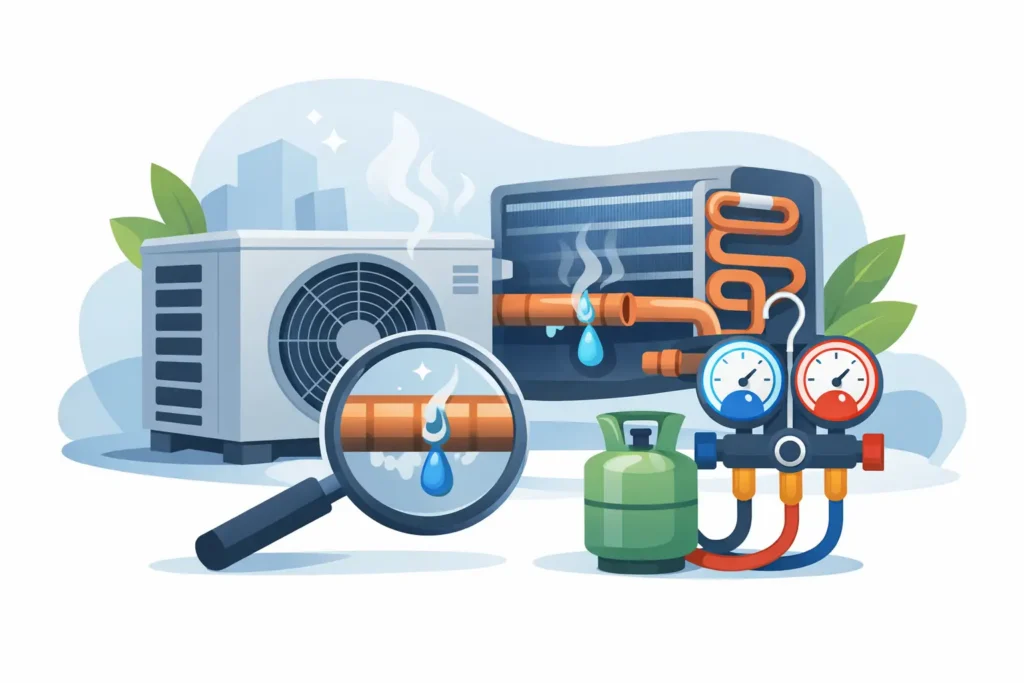
If low refrigerant is suspected, the technician may measure system pressures and operating temperatures, inspect accessible connections for oil residue, and use an electronic leak detector. Depending on the system and leak location, they may use a soap-bubble solution at fittings, ultraviolet dye, or a pressure test with dry nitrogen. The best method depends on the equipment, the size of the suspected leak, and whether the system can be safely tested in its current condition.
A proper repair includes fixing the leak, pressure-testing the repair, evacuating moisture and air from the system, and charging it to the manufacturer’s specifications. Simply adding refrigerant can mask the problem for a short time while the leak continues.
What to Do When You Suspect a Leak
Start with the simple checks that protect your equipment. Make sure the thermostat is set to COOL, confirm the air filter is clean, and ensure supply and return vents are open and unobstructed. If the unit is iced over, shut off cooling and let it thaw before scheduling service.
Do not buy a refrigerant recharge kit or try to seal a leak with an over-the-counter product. These products can damage equipment, complicate professional repairs, and create safety concerns. Refrigerant diagnosis is not a guess-and-fill service. The correct charge depends on the exact system, refrigerant type, line length, and manufacturer specifications.
If your AC is cooling poorly but is not frozen or making unusual noises, you can usually turn it off and arrange a prompt service visit. If the system is frozen, repeatedly tripping a breaker, producing a burning odor, or leaving your home dangerously hot during severe weather, treat it as a more urgent repair need.
Repair or Replace? It Depends on the Leak
A refrigerant leak does not automatically mean you need a new air conditioner. A newer system with a repairable leaking fitting, valve, or accessible line can often be restored reliably. Repairing the issue early may prevent much larger costs later.
Replacement becomes more worth considering when the system is older, the evaporator coil has widespread corrosion, the refrigerant is obsolete or costly, or the compressor has already been damaged by extended low-charge operation. The right choice should account for repair cost, energy efficiency, warranty coverage, and how long the equipment has served your home. A trustworthy recommendation is based on those facts, not a rush to replace equipment that can still be repaired.
At Mt Pleasant Heating & Air, the goal is to identify the actual cause of poor cooling and give homeowners a practical path forward. If your system is running longer, freezing up, or no longer keeping your home comfortable, getting it checked early can protect both your comfort and your investment.