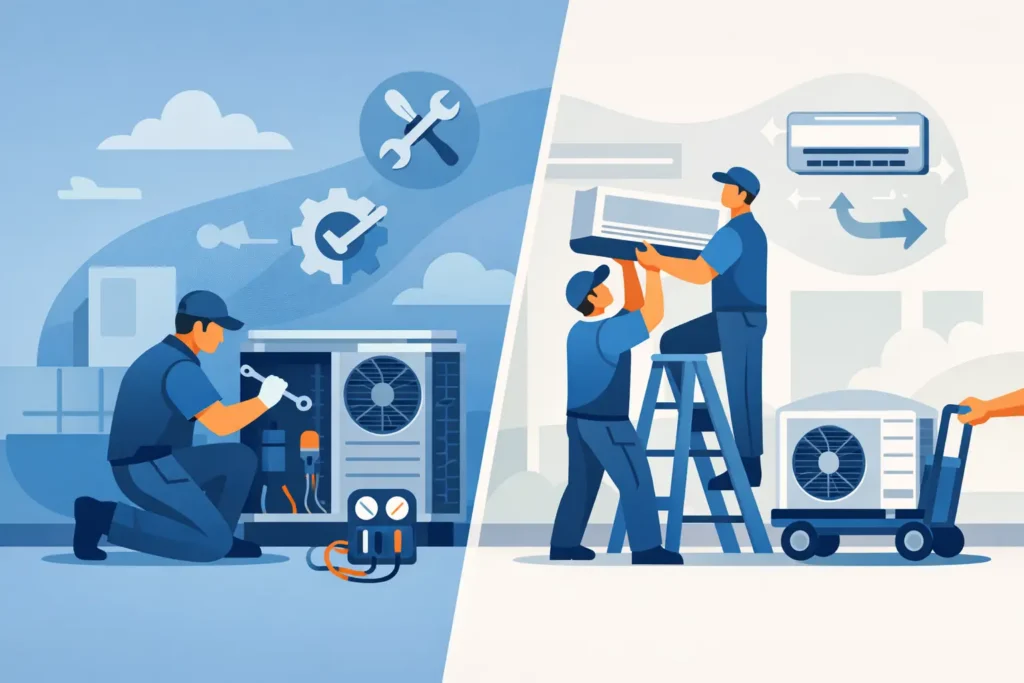
A failing air conditioner in a Mount Pleasant summer can make every hour at home feel longer. When the system stops cooling, starts making unfamiliar noises, or leaves rooms unevenly comfortable, the repair versus replacement HVAC system decision becomes urgent. The right answer is not always a new system, and it is not always another repair. It depends on what failed, the condition of the equipment, and whether a repair will deliver dependable comfort when you need it.
A qualified technician should diagnose the problem before recommending either path. Some issues look serious from the outside but have a straightforward fix. Others are warning signs that an aging system is becoming expensive, inefficient, and unreliable. A clear assessment protects both your comfort and your budget.
Start With the Actual Problem
Before considering the age of your HVAC equipment or shopping for new units, find out exactly what is wrong. A system that will not cool may have a failed capacitor, a worn contactor, a clogged drain line, a thermostat issue, a refrigerant leak, a damaged blower component, or a much larger mechanical problem. Those situations do not carry the same cost or long-term risk.
For example, replacing a small electrical component or correcting an airflow problem can often restore a system that still has years of useful service left. On the other hand, a major compressor failure, a failed indoor coil, or recurring refrigerant leaks may point to a more costly decision.
Good diagnostics matter because replacement should not be the default recommendation. At the same time, a low-cost repair is not a bargain if it only delays another breakdown by a few weeks. The goal is a solution that is practical, dependable, and appropriate for the system in your home.
When HVAC Repair Usually Makes Sense
Repair is often the best choice when the equipment is relatively young, has been maintained well, and has not had a pattern of major failures. Many common HVAC repairs are worthwhile because they address one isolated problem rather than a system-wide decline.
A repair may be the sensible route if your system is under 10 years old, the repair cost is reasonable compared with replacement, and it has otherwise delivered consistent heating and cooling. It can also make sense when the system uses a current refrigerant, has no significant corrosion, and still meets your household’s comfort needs.
Regular maintenance changes this equation. A well-maintained system can often run longer because coils stay cleaner, drainage issues are caught early, electrical connections are inspected, and airflow problems are corrected before they strain expensive components. In coastal South Carolina, that attention is especially valuable. Humidity, salt air, long cooling seasons, and heavy system use can all take a toll on equipment that is neglected.
A repair is also a strong option when the issue is not truly with the HVAC unit. Poor airflow may come from a dirty filter, blocked return vents, duct leakage, an incorrect thermostat setting, or insulation problems in part of the home. Replacing equipment will not fix every comfort complaint.
Signs Replacement May Be the Better Investment
There is a point where continued repairs become harder to justify. Most central air conditioners and heat pumps last roughly 10 to 15 years, though actual lifespan varies based on installation quality, maintenance, runtime, and local conditions. Furnaces may last longer, but they still need careful evaluation as they age.
Replacement deserves serious consideration when the system is approaching or beyond its expected service life and requires an expensive major component. A compressor, coil, or refrigerant-related repair on older equipment can be a difficult investment, particularly if another component may fail soon after.
Frequent service calls are another important signal. One isolated repair is normal. Multiple repairs over a short period suggest the system may be losing reliability. If you are repeatedly arranging service, paying for parts, and worrying whether the unit will make it through the next heat wave, replacement can provide more predictable comfort and expenses.
Energy use matters, too. Older equipment may run longer than it should, struggle to control humidity, and create higher utility bills. A new, properly sized system can improve efficiency, reduce cycling problems, and offer more even temperatures. That does not mean every older system must be replaced for efficiency alone. The projected energy savings should be weighed honestly against the installed cost and the remaining useful life of your current unit.
The Refrigerant Question
The refrigerant in your existing system can affect the decision. Older units that rely on R-22 are more expensive to repair when they develop a refrigerant leak because R-22 is no longer produced or imported for new use. If an R-22 system needs a major refrigerant repair, replacement is often worth discussing.
Newer systems use currently available refrigerants, but a leak still needs proper attention. Simply adding refrigerant without identifying the source of the leak is not a lasting repair. A technician should explain the condition of the coil or line set, the expected repair cost, and the likely outlook for the equipment.
Compare the Full Cost, Not Just Today’s Invoice
Homeowners naturally look at the immediate price first. If a repair costs a few hundred dollars and replacement costs several thousand, repair may feel like the obvious answer. Sometimes it is. But the better comparison includes the next few years, not just the service call in front of you.
Consider the system’s age, the cost of the proposed repair, its service history, expected efficiency, warranty status, and the risk of another major failure. Also consider your plans for the home. If you expect to sell soon, a dependable repair may be the appropriate choice. If this is your long-term home and the equipment is aging out, investing in a properly designed replacement may create better comfort and fewer disruptions.
A useful rule of thumb is to pause when a major repair on an older system costs a significant share of replacement. It is not a strict formula. A 12-year-old system with one repair may still be worth fixing, while an 8-year-old system with repeated failures may need a deeper evaluation. The details matter more than a single rule.
Comfort Problems Can Point Beyond the Equipment
Replacement decisions should include the entire comfort system, not just the outdoor unit. A new air conditioner cannot overcome undersized ducts, leaking ductwork, poor return airflow, attic heat gain, or a thermostat installed in the wrong location. In high-end homes with multiple zones, additions, or large open spaces, proper system design is especially important.
If certain rooms stay hot, indoor humidity remains high, or the equipment turns on and off too frequently, ask for an evaluation of sizing and airflow. An oversized unit can cool quickly but may not run long enough to remove humidity effectively. An undersized unit can run constantly during peak weather and still fall behind. Both situations affect comfort, energy use, and equipment life.
Ductless mini-splits can also be a practical alternative in some cases. They may help condition a finished room over a garage, a home addition, or an area that existing ductwork does not serve well. The best solution depends on the layout of the home and the source of the comfort problem.
Ask for a Clear, Pressure-Free Recommendation
You deserve more than a vague statement that your system is old. Ask what failed, why it failed, whether the repair is expected to hold, and what future repairs are likely. Request a straightforward comparison between fixing the existing equipment and replacing it with a properly sized new system.
A dependable HVAC company will explain the trade-offs without pushing you toward the most expensive option. Mt Pleasant Heating & Air focuses on experienced diagnostics because preserving a repairable system can be the right outcome. When replacement is the better path, homeowners should receive clear options and workmanship designed for long-term performance.
Protect the Decision With Preventive Maintenance
Whether you repair or replace, maintenance is the best next step for protecting your investment. Seasonal service helps catch worn electrical parts, drainage problems, dirty coils, refrigerant concerns, and airflow restrictions before they turn into an emergency call. Change filters regularly, keep outdoor equipment clear of leaves and debris, and address unusual sounds or performance changes early.
When your HVAC system gives you trouble, do not let a rushed decision made in the middle of a hot afternoon determine years of comfort. Get a thorough diagnosis, look at the full condition of the equipment, and choose the option that gives your home the most dependable path forward.