It’s a chilly Lowcountry evening, and instead of a cozy living room, you’re met with a persistent, icy draft. You check the vents, only to realize your furnace blowing cold air in Mount Pleasant is turning your sanctuary into a refrigerator. It’s incredibly frustrating to deal with a heating system that seems to be working against you, especially when you start worrying about expensive emergency repair bills or potential safety risks. You just want your family to be warm without the stress of a total system replacement.
The good news is that many heating issues are simpler than they first appear. This guide will help you identify the root cause of that cold air and show you which simple fixes can restore your home’s comfort before you even think about calling for a technician. We’ll walk through a logical, safety-first checklist covering everything from thermostat settings to pilot lights. By the end, you’ll know exactly when a DIY fix works and when it’s time to bring in a professional to ensure your system stays reliable all winter long.
Key Takeaways
- Check your thermostat and circuit breaker first, as a simple setting change or a flipped switch can often resolve the issue without a service call.
- Learn to recognize the “click-click-whoosh” sound of a healthy ignition sequence to help identify exactly where your system is failing to start.
- Understand why your furnace might be blowing cold air in Mount Pleasant, possibly due to local salt air corrosion or high humidity affecting your heat exchanger.
- Prioritize your safety by knowing when to stop troubleshooting, especially if you notice the smell of gas or hear unusual banging noises.
- Discover how a fix-first philosophy helps you avoid the cost of an unnecessary system replacement while restoring your home’s comfort quickly.
The First 5 Minutes: Simple Fixes for a Furnace Blowing Cold Air
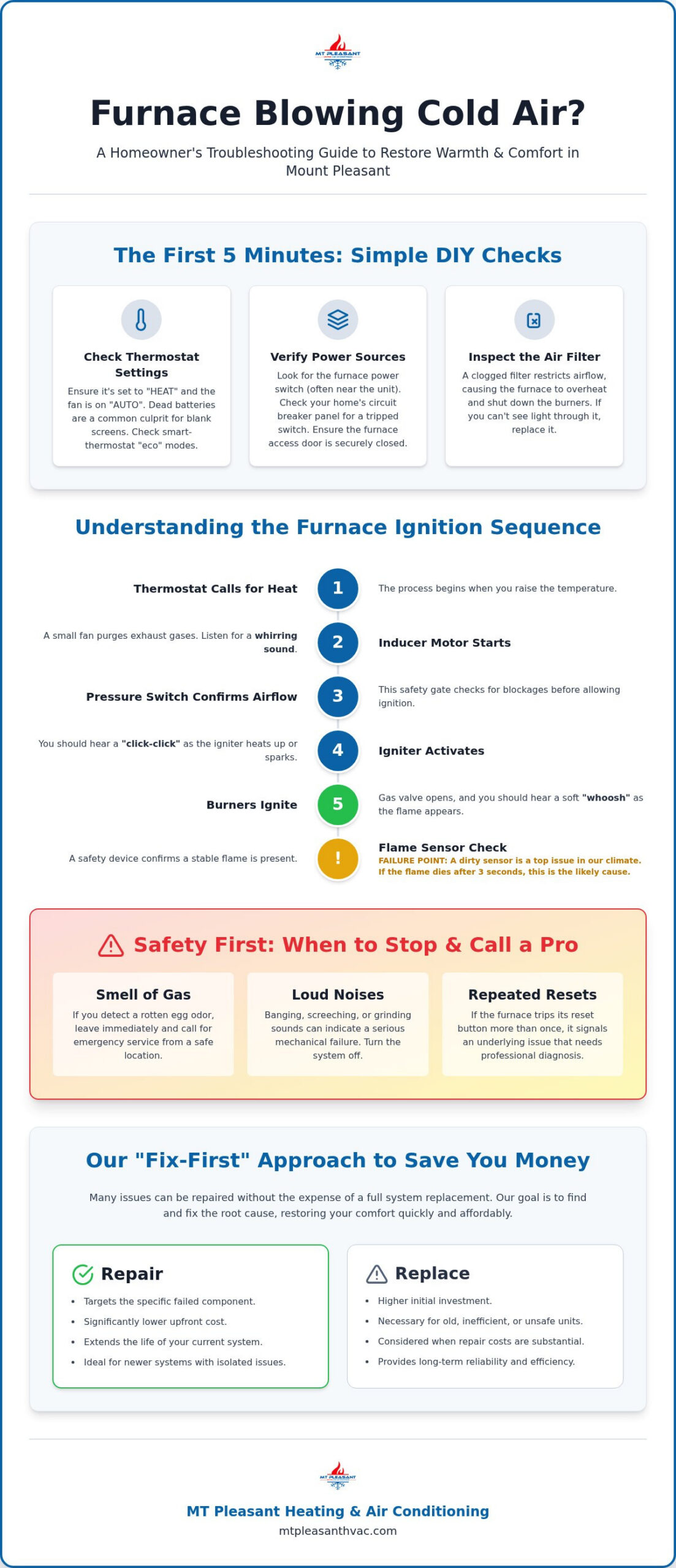
When you realize you have a furnace blowing cold air mount pleasant, the initial reaction is often a mix of shivers and stress. Don’t panic just yet. Before you assume you need a total system replacement, let’s walk through a few basic checks that solve a surprising number of heating calls. These steps are designed to be safe, logical, and easy for any homeowner to perform in just a few minutes.
Thermostat Troubleshooting 101
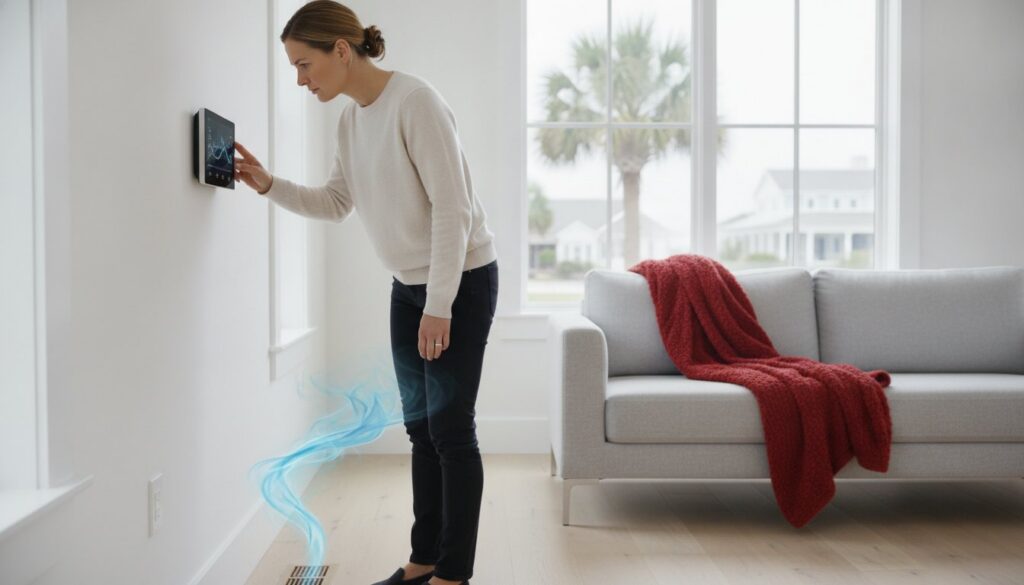
Is your thermostat screen blank? Dead batteries are the single most common cause of a furnace that won’t kick on. Even if the display seems fine, check your fan settings. If the fan is set to “On” rather than “Auto,” the blower will run constantly, even when the furnace isn’t actually heating. This results in room-temperature air circulating through your vents, which feels icy when you’re expecting a warm breeze. Smart thermostats can also have “eco-mode” or scheduling conflicts that override your manual settings, so double-check your app for any active “away” modes that might be lowering the temperature.
Beyond the thermostat, look for the furnace power switch. It often looks like a standard light switch located on the side of the unit or a nearby wall. If it was accidentally flipped while someone was reaching for a storage box, your system won’t run. Similarly, check your circuit breaker panel for any tripped switches. Another sneaky culprit is the furnace door. Most units have a safety interlock switch that cuts power if the panel isn’t seated perfectly. If you’ve recently looked at your system, ensure that door is clicked firmly into place.
The Critical Role of the Air Filter
A dirty air filter does more than just lower air quality. When a filter is clogged with dust or pet dander, it restricts the airflow needed to keep the heat exchanger at a safe operating temperature. Most modern types of central heating furnaces are equipped with a high-limit switch. This safety device shuts down the burners if the system gets too hot, but the blower fan keeps running to cool the internal components down. This is a primary reason why you feel cold air blowing. If your filter looks gray, fuzzy, or you can’t see light through it, replace it immediately to see if the heat returns.
Finally, you might see a red “Reset” button on your furnace. If the system has shut down due to a minor glitch, you can try pressing it once. However, if it trips again immediately, do not keep pushing it. Repeatedly resetting a furnace can cause unburned fuel to build up, which creates a safety hazard. If one reset doesn’t do the trick, it’s time to move on to the next step of the diagnostic process.
Inside the Ignition Sequence: Why Your Heater Fails to Fire
If the basic power and filter checks didn’t solve the problem, we need to look at the internal logic of your system. A furnace follows a very specific “order of operations” before it releases a single ounce of heat. When you have a furnace blowing cold air mount pleasant, the blower fan might be running, but the fire never actually started. Stand near your unit and listen closely. First, you should hear a small motor whirring. This is the draft inducer motor, which clears the exhaust path. If this motor fails or the pressure switch doesn’t sense the proper airflow, the sequence stops immediately for your safety.
After the inducer motor clears the way, the pressure switch acts as a gatekeeper. If there’s a clog in the vent pipe or a leak in the vacuum tubing, this switch stays open. The furnace won’t proceed to the “click-click-whoosh” phase where the gas actually ignites. Silence at this stage usually means a safety sensor has detected a problem and blocked the gas valve from opening. It’s a frustrating situation, but it’s exactly how the system is designed to prevent dangerous malfunctions.
The Flame Sensor: The Lowcountry’s Silent Saboteur
The flame sensor is a safety probe that detects heat to prevent dangerous gas buildup. Does your furnace start for exactly three seconds and then shut off? This is the classic sign of a dirty sensor. In our humid coastal climate, dust and moisture create a thin layer of oxidation on the metal rod. The sensor can’t “see” the flame through the grime, so it tells the system to kill the gas. Because this is such a common local issue, regular Heating Repair services often include a quick sensor cleaning to prevent these mid-winter lockouts.
Igniter and Pilot Light Failures
Most modern systems use a Hot Surface Igniter (HSI) rather than a traditional pilot light. Think of it like the filament in a light bulb; it glows white-hot to light the gas. Over time, these components become brittle and eventually crack. If you look through the sight glass and don’t see a bright orange glow before the fan starts, the igniter has likely reached the end of its life. Never attempt to touch these internal gas components or the igniter itself. The oils from your skin can cause the part to fail prematurely once it heats up. If you’re still stuck in the cold, it’s worth having a professional check these delicate electrical parts to get your home’s comfort back on track.
Safety First: When to Stop Troubleshooting and Call for Repair
While we’ve explored several DIY checks, there comes a point where your safety must take priority over home maintenance. If your furnace blowing cold air mount pleasant is accompanied by certain physical symptoms or sounds, it’s time to step back. Troubleshooting is helpful, but certain mechanical failures require a professional eye to prevent dangerous situations like gas leaks or electrical fires. How do you know when to put down the tools and pick up the phone?
Start by looking at the flame itself through the sight glass. A healthy furnace flame should be a crisp, steady blue. If you see a flickering yellow or orange flame, your system isn’t burning fuel cleanly. This is a primary sign of incomplete combustion, which can lead to carbon monoxide buildup in your home. Before you do anything else, ensure your Carbon Monoxide detectors are functioning and that they haven’t passed their typical ten year expiration date. If those sensors go off, evacuate immediately.
Warning Smells and Their Meanings
Your sense of smell is one of your best diagnostic tools. On the first cold night of the year, a brief “burning dust” smell is perfectly normal as the heat burns off settled debris. However, if you notice a sharp, metallic odor or a scent like burning plastic, you might have a cracked heat exchanger or failing electrical components. These issues aren’t just inconvenient; they’re safety risks that can compromise your home’s air quality.
The most critical scent is the “rotten egg” smell of mercaptan, which gas companies add to natural gas to make leaks detectable. If you smell this, do not attempt to turn the furnace on or off. Do not flip any light switches or use a phone inside the house, as even a tiny spark could be dangerous. Leave the house immediately and call for professional assistance from a safe distance.
Unusual Noises and Mechanical Stress
What is your furnace telling you? A booming or banging sound during startup is often “delayed ignition,” where gas builds up before finally catching. This can eventually crack your heat exchanger. You should also listen for high pitched squealing or a heavy grinding sound. Squealing often points to a worn fan belt, while grinding typically means the bearings in your blower motor are failing. Ignoring these mechanical protests today often leads to more extensive heat pump repair charleston sc or furnace overhauls later. Catching these sounds early allows for a simple repair rather than a stressful, expensive emergency.
Lowcountry Challenges: How Charleston’s Climate Affects Your Heat
Living in the Lowcountry means enjoying the ocean breeze, but your HVAC system pays a price for that proximity. Salt air isn’t just a threat to your car; it’s a silent corrosive force that eats away at the delicate electrical contacts inside your heating unit. When you find your furnace blowing cold air mount pleasant, the culprit might be a “sticky” relay or a corroded igniter that can’t quite make the connection. These small metal parts are highly sensitive to the salt particles that drift inland from the coast, which can lead to unexpected failures on the first cold night of the year.
Then there’s our signature humidity. In the Charleston area, moisture doesn’t just disappear when the temperature drops. High humidity can cause premature rust on heat exchangers, which are the heart of your furnace. This rust can eventually lead to hairline cracks. We also deal with a “dual-threat” winter: sudden freezes that immediately follow long, humid stretches. This weather puts immense strain on systems that have been sitting idle. Interestingly, condensate drainage issues aren’t just for summer. High-efficiency furnaces produce liquid as they run, and if your drain line is backed up from summer debris, your furnace will shut down to prevent a flood, leaving you with cold vents.
Salt Air and Electrical Component Failure
Mount Pleasant homes near the coast see component degradation significantly faster than those further inland. Salt particles settle on circuit boards and gas valves, creating a layer of grime that traps moisture. This leads to electrical shorts or valves that refuse to open. Professional cleaning during annual maintenance is the only way to clear this salt buildup before it causes a total failure. Without it, the coastal moisture continues to act as a conductor, leading to “ghost” issues where the furnace starts and stops for no apparent reason.
Gas Furnace vs. Heat Pump in South Carolina
Many local homeowners aren’t sure if they have a traditional gas furnace or a heat pump. If you have a heat pump, you might see “Emergency Heat” or “Auxiliary Heat” kick on during a Charleston cold snap. This is normal, but if the air stays cold, your outdoor unit might be iced over or the reversing valve might be stuck. While we specialize in “fix-first” heating solutions, many heat pump issues actually stem from the cooling components. If your system struggles to switch between seasons, it might be time for AC repair Mount Pleasant SC to ensure your year-round comfort.
Don’t let the coastal climate cut your system’s life short or leave you shivering. Visit mtpleasanthvac.com to schedule a local expert who understands the unique challenges of Lowcountry heating and can restore your peace of mind quickly.
Professional Solutions: MT Pleasant Heating & Air Conditioning’s Fix-First Approach
When you’ve tried the basic checks and your system is still struggling, you need a partner who values your budget as much as your comfort. If you have a furnace blowing cold air mount pleasant, many companies might immediately push for a total system replacement. We take a different path. Our “fix-first” philosophy means we prioritize repairing your existing equipment whenever it’s safe and cost-effective to do so. We believe in building long-term relationships with our neighbors rather than chasing a quick sale on a new installation.
What does our diagnostic process look like? When our technician arrives, they perform a comprehensive 21-point furnace diagnostic. We don’t just look at the part that failed; we examine the entire ecosystem of your heating system. This includes testing safety limits, checking gas pressure, and inspecting the heat exchanger for those coastal rust issues we discussed earlier. You can expect transparent, jargon-free communication throughout the visit. We’ll explain exactly what we found using sensory terms you can understand, such as showing you a corroded sensor or explaining a specific sound, so you can make an informed decision about your home.
The ‘Trustworthy Local Guide’ Experience
Heating emergencies don’t always happen during business hours. Because MT Pleasant Heating & Air Conditioning is locally owned and operated in the Lowcountry, we understand the urgency of a sudden freeze. We offer 24/7 emergency response to ensure your family stays safe and warm when the temperature drops. Being a local fixture also means we have a deep understanding of how Charleston’s salt air and humidity affect manufacturer warranties. We handle the paperwork and the technical details to ensure your coverage is protected while focusing on long-term efficiency rather than a “quick patch” that might fail again in a month.
Next Steps to Restore Your Warmth
Ready to get your home back to a comfortable temperature? Preparing for a technician visit can help us restore your heat even faster. Before we arrive, try to have a few pieces of information ready. Knowing the approximate age of your system, the brand name, and a quick list of observed symptoms-like that “click-click-whoosh” silence or a specific whistling sound-helps our team arrive prepared with the right tools and parts. You can book a priority service appointment online or by phone to get an expert on the way to your door.
Don’t spend another night in a cold house wondering if your system is safe. The team at MT Pleasant Heating & Air Conditioning is standing by to provide the honest, expert guidance you deserve. Contact us for reliable heating repair today!
Restoring Your Home’s Warmth with Confidence
Dealing with a furnace blowing cold air mount pleasant doesn’t have to be a source of stress. By starting with simple checks like your air filter and thermostat settings, you can often resolve minor issues on your own. Remember that our unique coastal environment, with its salt air and high humidity, requires a proactive approach to prevent corrosion and mechanical failure. Most importantly, always prioritize your family’s safety by recognizing when a symptom requires professional expertise rather than a DIY fix.
As your neighborly HVAC experts, we’re here to help you navigate these challenges with our signature fix-first philosophy. We are locally owned and operated right here in Mt. Pleasant, and we offer 24/7 emergency service to ensure you never have to shiver through a cold night. Whether you need a quick sensor cleaning or a more complex repair, our goal is to restore your comfort quickly and honestly without pushing for unnecessary replacements. Ready to get your heat back? Schedule Your Furnace Diagnostic Now and let us handle the rest. Your comfort is just a click away.
Frequently Asked Questions
Why is my furnace blowing cold air instead of hot?
Your furnace is likely blowing cold air because the blower fan is running while the burners are extinguished. This often happens if your thermostat fan is set to “On” instead of “Auto,” which keeps air moving even when the heat isn’t active. Other common causes include a clogged air filter triggering a safety shutdown or a failed ignition component. If you have a furnace blowing cold air mount pleasant, check these simple settings before assuming a major mechanical failure.
How do I reset my furnace if it won’t turn on?
You can reset your furnace by flipping the power switch off and then back on after 30 seconds. Most units also have a dedicated red reset button located near the motor or inside the blower compartment. If the system doesn’t restart after one attempt, don’t keep pressing it. Repeated resets can cause dangerous fuel buildup or electrical strain. If it stays off, it’s best to call for a professional diagnostic to find the underlying safety lockout.
Is it safe to leave my furnace on if it is making a loud banging noise?
No, you should turn your furnace off immediately if you hear loud banging or booming noises. This sound often indicates “delayed ignition,” where gas accumulates before finally catching fire, which can damage the heat exchanger or even cause a small explosion within the unit. These vibrations put immense stress on the entire system. It’s much safer and cheaper to have a technician address the ignition timing now than to replace a cracked heat exchanger later.
Can I clean my own furnace flame sensor to fix cold air?
Yes, a handy homeowner can clean a flame sensor with a light abrasive like steel wool or a clean dollar bill. However, you must be extremely careful not to touch the metal rod with your bare hands, as skin oils can cause it to fail prematurely. If you aren’t comfortable opening the cabinet or identifying the sensor, a professional cleaning is a standard part of a routine maintenance visit. This simple step often restores heat instantly in our humid climate.
How long should a typical furnace last in the Charleston area?
In the Charleston area, a well-maintained furnace typically lasts between 15 and 20 years. However, our coastal humidity and salt air can accelerate corrosion on metal components, potentially shortening that lifespan if the system is neglected. Regular maintenance is essential to reach that 20-year mark. If your system is approaching 15 years and requires frequent repairs, it might be time to weigh the cost of a “fix-first” repair against the efficiency of a newer model.
What should I do if I smell gas near my heating unit?
If you smell a “rotten egg” scent, you must leave your home immediately and call your gas provider from a safe distance. Do not flip light switches, use your phone inside, or attempt to shut off the furnace, as any spark could ignite the leaking gas. Once the gas company confirms the area is safe, contact us for an emergency repair. We provide 24/7 emergency response to address gas valve leaks or ignition failures safely and quickly.
Why does my furnace keep tripping the circuit breaker in my home?
Your furnace trips the breaker when it draws more electricity than the circuit can safely handle. This is often caused by a failing blower motor or a short circuit in the internal wiring. A clogged air filter can also contribute by forcing the motor to strain against restricted airflow. If your furnace blowing cold air mount pleasant is also tripping the breaker, stop resetting it. Continuous electrical surges can damage your control board or lead to a fire.
Does every furnace need a pilot light to start properly?
No, most modern furnaces manufactured in the last 20 years use electronic ignition rather than a standing pilot light. These systems utilize a Hot Surface Igniter (HSI) or an intermittent spark to light the burners only when the thermostat calls for heat. This technology is much more energy-efficient and safer than an older pilot light that stays lit all day. If you don’t see a small flame burning constantly inside your unit, you likely have a modern electronic ignition system.