A heat pump may be one of the most practical comfort upgrades for a Lowcountry home, but it is not a one-size-fits-all purchase. This homeowner guide to heat pumps explains what the equipment does, where it shines in Mount Pleasant and Charleston, and what to ask before you agree to a repair or replacement.
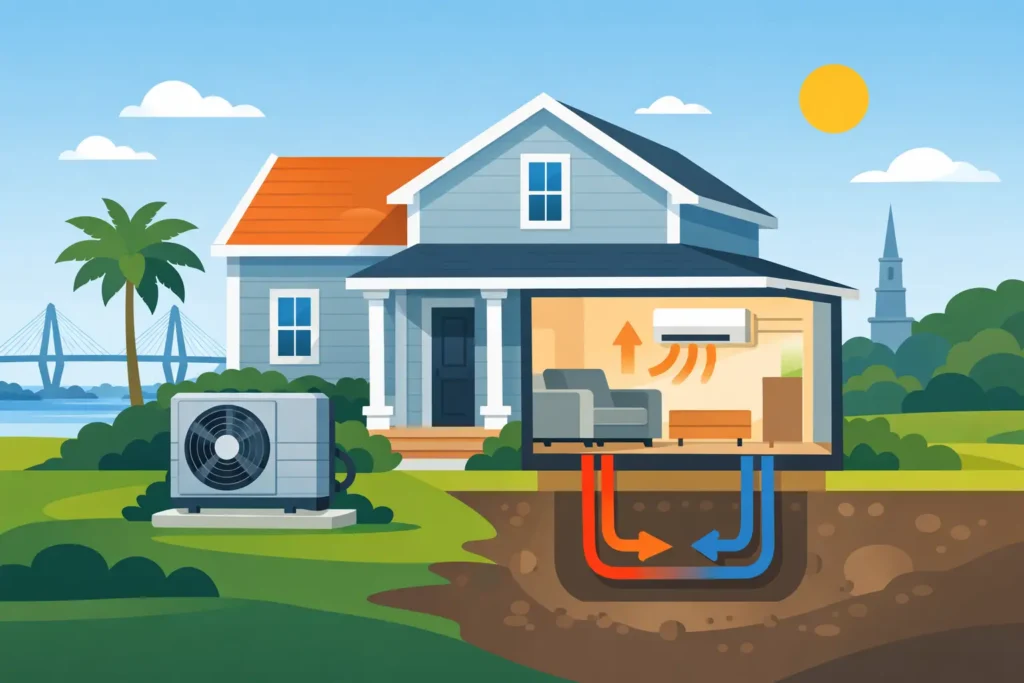
For many homeowners, the biggest surprise is simple: a heat pump provides both cooling and heating. Rather than creating heat by burning fuel, it moves heat from one place to another. In summer, it pulls heat out of your home like a central air conditioner. In winter, it draws available heat from outdoor air and moves it inside.
That process is especially well suited to our generally mild winters. The right system can provide dependable year-round comfort, efficient cooling through humid summers, and a more streamlined alternative to maintaining separate air conditioning and heating equipment.
How Heat Pumps Work in Coastal South Carolina
A split-system heat pump has an outdoor unit, an indoor air handler or coil, refrigerant lines, and controls that tell the system when to heat or cool. When the thermostat calls for cooling, the cycle resembles a conventional AC system. When it calls for heat, a reversing valve changes the direction of refrigerant flow.
Heat pumps still work when outdoor temperatures feel cold because outdoor air contains heat energy above absolute zero. As temperatures fall, however, the system has less available heat to collect and must work harder. Most homes in the Charleston area will not face severe winter conditions for long stretches, which is one reason heat pumps are a sensible option here.
Many systems include auxiliary heat, often electric heat strips, for unusually cold weather or rapid temperature recovery. Auxiliary heat is useful, but it costs more to operate than the heat pump itself. If your thermostat frequently shows “aux heat” during ordinary cool weather, it is worth having a technician check the settings, system performance, and insulation levels.
Is a Heat Pump Right for Your Home?
A heat pump can be an excellent fit for a home that needs both a new air conditioner and a heating solution. It is also worth considering when replacing an older electric furnace, upgrading from an inefficient heat pump, adding comfort to a renovated space, or moving away from fuel-based heating.
Still, the best answer depends on your home. A well-built newer home with properly sized ductwork may be a straightforward installation. An older home with leaky ducts, limited electrical capacity, moisture concerns, or uneven rooms may need additional work before a new system can perform as intended.
Homeowners with natural gas furnaces sometimes choose a dual-fuel setup. In this arrangement, the heat pump handles mild weather efficiently while the gas furnace takes over at lower temperatures. It can be a strong option, though the added equipment and controls may increase installation cost. The right choice comes down to energy prices, existing equipment condition, comfort expectations, and the home itself.
Central Heat Pump or Ductless Mini-Split?
A central heat pump uses ductwork to condition the entire home. It is usually the natural replacement choice when your home already has a functional duct system.
A ductless mini-split uses a compact outdoor unit connected to one or more indoor heads. It can be ideal for a room addition, garage conversion, sunroom, guest suite, or an older area where extending ductwork would be difficult. Because each indoor unit has its own controls, ductless systems can also help solve persistent hot-and-cold room problems.
Neither option is automatically better. Central systems offer a familiar whole-home solution, while ductless equipment offers targeted comfort and zoning. A qualified evaluation should account for the rooms you use, how your home is laid out, and whether the existing ducts are actually in good shape.
The Homeowner Guide to Heat Pump Sizing
System size is one of the most important parts of a heat pump installation. Bigger is not better. An oversized unit may cool quickly but shut off before it removes enough moisture from the air. In a humid coastal climate, that can leave your home feeling clammy even when the thermostat setting is satisfied.
An undersized system can run for long periods and struggle on the hottest afternoons or coldest mornings. That strain can raise utility costs and shorten equipment life.
A professional should not select a system based only on the square footage listed in a real estate record. Proper sizing considers insulation, windows, ceiling height, sun exposure, occupancy, duct condition, air leakage, and the home’s layout. A two-story home with west-facing windows may need a very different solution than a similarly sized shaded ranch home.
Ask your contractor how the load calculation was performed and whether duct repairs, returns, or airflow adjustments are needed. Correct airflow is just as important as the equipment label. Even a high-efficiency heat pump cannot deliver its rated performance through undersized, disconnected, or poorly sealed ducts.
What Efficiency Ratings Actually Mean
You will likely see SEER2 for cooling efficiency and HSPF2 for heating efficiency. Higher numbers generally mean lower energy use, but they also tend to raise the upfront price. The most expensive system is not always the most cost-effective choice.
For homeowners who plan to stay in their home for many years, a higher-efficiency variable-speed system may be worthwhile. These units can run at lower output for longer periods, helping with steady temperatures and humidity control. For a rental property, a home you expect to sell soon, or a budget-sensitive replacement, a dependable mid-efficiency system may make better financial sense.
Focus on total value rather than a rating alone. Installation quality, correct sizing, duct performance, thermostat setup, warranty coverage, and routine maintenance all influence your real operating costs.
Repair or Replace: How to Make the Call
A heat pump does not need replacement simply because it is older. Many issues, including failed capacitors, contactors, electrical components, drainage problems, thermostat faults, and some refrigerant-related concerns, can be repaired effectively when caught early.
Replacement deserves serious consideration when repair costs are substantial, breakdowns are becoming frequent, the system cannot maintain comfort, or major components such as the compressor have failed. Age matters too. Systems approaching or beyond their expected service life may be less efficient and more likely to need expensive repairs, but age should not be the only factor.
A dependable HVAC company should diagnose the problem first, explain the condition of the equipment plainly, and give you repair and replacement options when both are reasonable. You should understand what is wrong, what the repair addresses, and what future risks remain before making a decision.
Maintenance That Protects Comfort and Equipment Life
Heat pumps work throughout the year, so they need consistent attention. Replace or clean filters on schedule, keep vegetation and debris away from the outdoor unit, and make sure supply and return vents are not blocked by furniture or rugs. If you notice ice buildup, weak airflow, unusual noises, musty odors, water near the indoor unit, or a sudden jump in utility bills, schedule service before a minor issue becomes a system failure.
Professional maintenance should include more than a quick look at the equipment. A thorough visit checks electrical connections, refrigerant performance, condensate drainage, safety controls, coils, blower operation, and overall airflow. It also gives a technician a chance to spot worn parts before a summer heat wave or cold snap puts the system under pressure.
For Mount Pleasant homeowners, humidity management deserves special attention. Indoor humidity affects comfort, mold risk, and the way your home feels at a given temperature. A well-maintained, properly sized heat pump can help, but major humidity problems may also point to duct leakage, inadequate ventilation, oversized equipment, or drainage issues.
Questions to Ask Before You Approve Installation
Before choosing a new heat pump, ask whether the contractor completed a load calculation, inspected the duct system, and reviewed electrical requirements. Confirm what equipment is included, whether the thermostat is compatible, how the condensate drain will be handled, and what warranty terms apply.
It is also smart to ask how the installer will address your specific comfort concerns. If an upstairs bedroom is always warm, if one side of the home feels humid, or if your current system is noisy, say so before the proposal is finalized. Those details can affect equipment selection, airflow design, and whether zoning or a ductless solution should be considered.
The best heat pump decision is not about chasing the highest rating or replacing equipment before it is necessary. It is about getting a clear diagnosis, a system sized for your home, and workmanship that supports dependable comfort year after year. If your system is struggling or you are weighing replacement, Mt Pleasant Heating & Air can help you understand the practical options before the next uncomfortable day turns into an urgent problem.