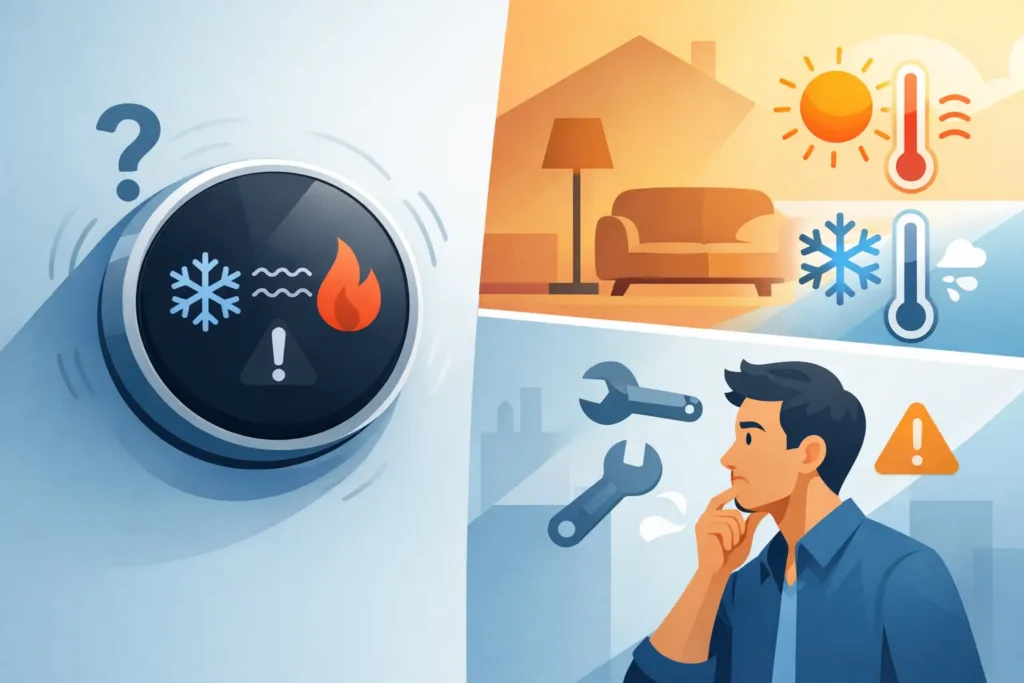
Your air conditioner is running, but the house still feels warm. Or the heat comes on long after you raise the setting. Before assuming the entire HVAC system has failed, homeowners often ask how to tell if thermostat is bad. A thermostat is a small device with a major job: it tells your heating and cooling equipment when to start, stop, and maintain the temperature you selected.
A thermostat problem can look a lot like an AC, furnace, heat pump, electrical, or airflow problem. That is why a few basic checks are useful, but a professional diagnosis matters when comfort is affected or the system is behaving unpredictably. Replacing a thermostat may be simple in some homes, but replacing the wrong part will not solve an underlying equipment issue.
8 Signs a Thermostat May Be Bad
1. The display is blank or unresponsive
A blank screen is one of the clearest warning signs, especially if the thermostat is normally powered by the HVAC system. Start with the simple possibilities. If it uses batteries, install fresh batteries and make sure they are seated correctly. Then check whether a tripped breaker, blown low-voltage fuse, or power switch near the indoor unit has interrupted power.
If new batteries do not restore the display, or a hardwired thermostat remains blank, the thermostat itself may have failed. However, damaged wiring or an issue at the air handler can produce the same symptom. Avoid opening electrical panels or handling exposed wiring unless you are trained to do so.
2. The room temperature does not match the setting
If your thermostat says it is 72 degrees but the room clearly feels much warmer or cooler, its temperature sensor may be inaccurate. Place a reliable indoor thermometer near the thermostat for about 15 minutes, away from direct sun, vents, lamps, or exterior doors. A small difference is normal, but a reading that is consistently off by several degrees deserves attention.
Location can also be the culprit. A thermostat installed on a sunny wall, near a kitchen, or directly in the path of a supply vent may sense the wrong conditions and cycle the system poorly. In that case, the unit may work properly but need to be relocated.
3. Your HVAC system will not turn on
Set the thermostat to cooling and lower the target temperature at least three to five degrees below the current room temperature. For heating, raise the target temperature several degrees above the room temperature. Make sure the system is set to the correct mode and allow a few minutes for normal equipment delays.
If nothing happens, the thermostat could be failing to send the call for heating or cooling. It could also be a tripped breaker, a clogged condensate drain safety switch, a failed capacitor, a furnace safety issue, or a problem with the outdoor unit. This is one of the most common situations where professional diagnostics can save time and prevent guesswork.
4. The system runs constantly or short-cycles
A thermostat that turns the HVAC system on and off every few minutes can drive up energy use and put unnecessary strain on equipment. This pattern is called short-cycling. It can happen when a thermostat has a faulty sensor, loose wiring, incorrect programming, or a poor location.
Still, short-cycling is not automatically a thermostat failure. Oversized equipment, refrigerant problems, dirty filters, blocked airflow, and heat pump issues can all cause similar behavior. If your AC or heat is cycling repeatedly, it is best to schedule service rather than letting the system continue to operate under stress.
5. The thermostat ignores schedule changes or settings
Programmable and smart thermostats should respond when you adjust the temperature, change modes, or update a schedule. If the screen accepts a setting but the system does not follow it, restart the thermostat according to the manufacturer instructions and check for battery or Wi-Fi issues if applicable.
Persistent problems may point to a failed control board, software problem, incompatible thermostat, or wiring issue. This is especially common after a homeowner upgrades to a smart thermostat without confirming that the existing HVAC system has the right wiring. A missing common wire, often called a C-wire, can cause power loss, connection trouble, or erratic operation on some models.
6. Heating works but cooling does not, or the reverse
Your thermostat has separate signals for heating, cooling, fan operation, and in some cases heat pump functions. A failed terminal or damaged wire can affect only one mode. For example, the furnace may work normally while the air conditioner does nothing.
That symptom can also come from the equipment itself. A cooling-only issue could be related to the outdoor condenser, contactor, capacitor, refrigerant level, or condensate safety switch. A heating-only issue may involve the furnace ignition system, heat pump defrost controls, or safety switches. The thermostat should be tested as part of the diagnosis, not assumed to be the cause.
7. The fan runs when it should not
First, look at the fan setting. If it is set to “On,” the blower will run continuously even when the system is not actively heating or cooling. Set it to “Auto” and wait a few minutes. If the fan keeps running, there may be a stuck relay, control board problem, wiring issue, or thermostat fault.
Continuous fan operation can be useful for circulation in some homes, but it should be a choice. If the blower will not shut off, it can increase wear and leave indoor air feeling more humid during a South Carolina summer.
8. The thermostat is old, damaged, or inconsistent
Thermostats do not have a fixed expiration date, but older models can become less reliable over time. Cracked housings, loose buttons, corrosion around battery contacts, flickering displays, and intermittent operation are all legitimate reasons to consider replacement.
A new thermostat may improve control and convenience, but it will not make an aging system produce more heating or cooling capacity. The right choice depends on your equipment, wiring, household schedule, and comfort goals. A basic programmable thermostat may be a practical fit for one home, while another may benefit from a compatible smart thermostat with humidity-aware settings.
How to Check Whether the Thermostat Is the Problem
A few homeowner checks can rule out simple issues. Confirm the thermostat is set to the correct mode, with the fan set to Auto. Replace batteries if your model uses them. Check that the HVAC breaker is on, the outdoor disconnect has not been disturbed, and the air filter is not severely clogged.
Then compare the thermostat reading with a separate thermometer and listen for the system response after changing the set point. Do not repeatedly switch from cooling to heating or back again. Wait at least five minutes between mode changes to protect the equipment from rapid cycling.
If you have a smart thermostat, check whether it is offline, displaying an error code, or losing power. Wi-Fi trouble can affect remote controls and scheduling, but it usually should not prevent basic manual heating or cooling commands. A thermostat that repeatedly reboots or goes blank may have a power or wiring issue that requires service.
When It Is Not a Bad Thermostat
The toughest part of thermostat troubleshooting is that many HVAC failures create thermostat-like symptoms. A dirty filter can restrict airflow and cause poor cooling. A clogged condensate line can shut down the system to prevent water damage. A failed outdoor component can leave the thermostat calling for cooling while warm air continues to blow indoors.
For heat pumps, the situation can be even less obvious. Normal defrost operation, auxiliary heat, reversing valve issues, and thermostat setup all affect how the system behaves. If a heat pump is not heating or cooling correctly, a technician should verify both the thermostat configuration and the equipment operation before recommending repairs.
There is also a safety consideration. If you smell burning, see smoke, notice sparking, hear loud buzzing, or suspect damaged wiring, turn the system off at the thermostat and breaker if it is safe to do so. Call for professional help right away. Do not bypass safety switches or attempt to jump thermostat wires to force equipment on.
When to Call for Professional Thermostat Service
Call for service when basic checks do not restore normal operation, when the system is short-cycling, or when you are unsure whether the problem is the thermostat or the HVAC equipment. A qualified technician can test voltage, inspect low-voltage wiring, confirm thermostat compatibility, check system safeties, and evaluate whether repair or replacement makes the most sense.
For homeowners in Mount Pleasant and Charleston, fast diagnostics matter when heat and humidity are building indoors. Mt Pleasant Heating & Air can identify whether the thermostat is truly at fault or whether another part of the system needs attention, helping you avoid unnecessary replacement and get your comfort back sooner.
A thermostat should make comfort feel automatic. If yours is sending mixed signals, responding inconsistently, or leaving your home too warm or too cold, address the issue early. A careful diagnosis now can protect your equipment, control energy costs, and prevent a small control problem from turning into a no-cooling or no-heat emergency.