A July afternoon in Mount Pleasant can expose a small air conditioning problem fast. A weak capacitor, clogged drain line, or dirty outdoor coil may not seem urgent during a mild week, but it can leave your home warm and uncomfortable when the heat and humidity settle in. This guide to seasonal HVAC tune ups explains what preventative service does, when to schedule it, and how to get more dependable performance from the system you already own.
A tune-up is not a sales appointment and should not automatically lead to a replacement recommendation. It is a detailed check of your equipment’s condition, safety, airflow, and operating performance. The goal is practical: catch developing problems early, reduce strain on the system, and help you avoid a breakdown when dependable heating or cooling matters most.
Why Seasonal HVAC Service Matters in Coastal South Carolina
Your HVAC system works harder here than it would in a milder, drier climate. Long cooling seasons, high humidity, heavy pollen, salt air, and summer storms all create conditions that can affect comfort and equipment life. Air conditioners and heat pumps must remove moisture as well as heat, which means a drainage or airflow issue can quickly become a comfort issue.
Seasonal maintenance gives a technician a chance to find problems while they are still manageable. A worn electrical component can often be replaced before it causes a no-cool call. A clogged condensate drain can be cleared before it overflows into a ceiling, closet, or utility area. Low airflow can be corrected before it contributes to frozen coils, uneven temperatures, or higher utility use.
There is also a financial reason to stay ahead of service. Maintenance cannot guarantee that a part will never fail, especially on older equipment. It can, however, reduce preventable wear and provide a clearer picture of whether a repair is sensible or whether a system is nearing the point where replacement deserves consideration.
When to Schedule Seasonal HVAC Tune Ups
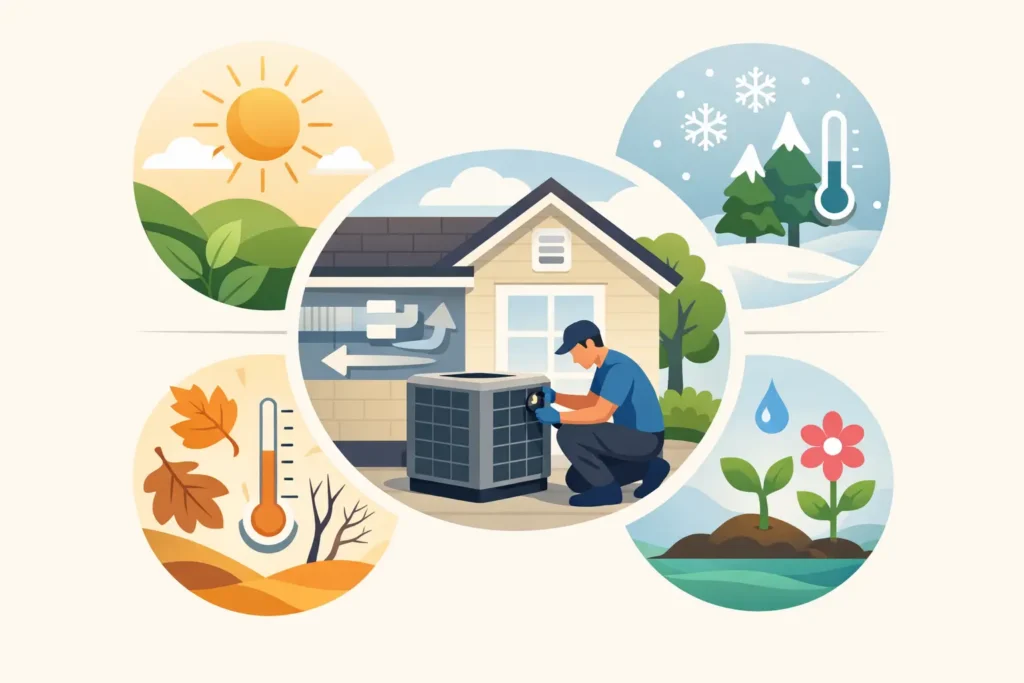
For most homes, two service visits each year are a sensible baseline: one in spring for cooling equipment and one in fall for heating equipment. Scheduling before the busiest weather arrives is usually better than waiting for the first hot or cold day. You have more flexibility, and any needed repair can be handled before comfort becomes urgent.
Spring: Prepare for Cooling Season
Spring service should focus on the air conditioning side of your system. In many local homes, that means an AC system or heat pump that will soon run for long stretches. A technician can inspect the outdoor unit, verify refrigerant performance, test electrical components, check airflow, and make sure condensate drainage is working correctly.
This visit is especially valuable if your system struggled last summer, had trouble holding temperature, made new noises, or left some rooms noticeably warmer than others. Do not assume those symptoms will disappear on their own when the weather changes.
Fall: Prepare for Heating Season
Fall maintenance confirms that your heating equipment can operate safely and reliably. The exact work depends on what you have. A gas furnace needs a careful safety inspection of components related to combustion and venting. A heat pump needs its heating operation checked, along with defrost performance and electrical controls. Homes with dual-fuel systems need both sides evaluated.
Heating may not run as many hours as cooling in the Charleston area, but that does not make fall service optional. A system that has sat unused for months can reveal problems the first time you ask it to heat your home.
What a Professional Tune-Up Should Include
A proper tune-up is more than changing a filter and looking at the thermostat. The details vary by system type, age, and condition, but the technician should inspect the equipment methodically and explain what they find in plain language.
For cooling equipment, that commonly includes checking the thermostat, air filter condition, blower operation, electrical connections, capacitors, contactors, refrigerant operation, supply and return airflow, indoor and outdoor coils, and the condensate drain system. The outdoor unit should also be checked for debris, corrosion, damage, and proper operation.
For heating equipment, service should include testing the thermostat and sequence of operation, checking electrical components, inspecting the blower, and evaluating safety controls. Gas furnaces require additional attention to the burner area, ignition system, heat exchanger, flue connection, and carbon monoxide safety. Heat pumps require performance checks in heating mode and a review of the reversing valve and defrost controls.
The best outcome is not a vague statement that everything is “fine.” You should leave with a clear understanding of your system’s condition, any repairs that are needed now, items worth monitoring, and steps that can improve day-to-day performance. If a repair is recommended, ask what problem it addresses, how urgent it is, and what could happen if you wait. A trustworthy technician should be able to answer directly.
What Homeowners Can Do Between Visits
Professional maintenance handles the diagnostic work, but a few regular habits protect your equipment between appointments. Check the air filter monthly and replace it when it looks dirty or according to the filter manufacturer’s guidance. A heavily loaded filter restricts airflow, which can increase operating strain and make rooms feel less comfortable.
Keep the outdoor unit clear of leaves, pine straw, mulch, and overgrown landscaping. It needs open space to move heat efficiently. Do not cover the unit tightly or stack items around it. After storms, take a quick look for fallen limbs, visible damage, or standing water near the equipment.
Inside, pay attention to changes in how the system runs. Longer cycles, new rattling or buzzing sounds, repeated thermostat adjustments, musty odors, and water around the indoor unit all deserve attention. Closing too many supply vents can also disrupt airflow and may create pressure issues, so it is usually better to address the reason a room is uncomfortable than to force air elsewhere.
Maintenance Is Not the Same as Repair
A seasonal visit may uncover a repair need, but the two services have different purposes. Maintenance checks and protects a working system. Repair restores a system that has a failed component, performance issue, leak, or safety concern.
That distinction matters when you own older equipment. Age alone does not mean replacement is the right answer. Many systems can continue to serve a home well when the issue is isolated, the repair is reasonable, and overall performance remains solid. On the other hand, recurring failures, major refrigerant problems, poor humidity control, and rising repair costs can change the calculation.
A good HVAC professional will look at the full picture: the equipment’s age and condition, repair history, comfort concerns, efficiency, and the cost of the proposed work. That approach helps homeowners make informed decisions instead of being pressured into replacing equipment that may still have useful life left.
Signs You Should Not Wait for a Tune-Up
Seasonal scheduling is ideal, but some symptoms call for service sooner. Contact an HVAC professional if the system blows warm air in cooling mode, will not start, trips a breaker, leaks water, produces burning or gas-like odors, makes loud mechanical sounds, or cannot keep up with a normal thermostat setting.
For gas heating equipment, treat unusual odors, repeated shutoffs, visible soot, or a carbon monoxide alarm as urgent concerns. Turn the system off if you believe it may be unsafe and seek professional help. Comfort can wait. Safety cannot.
Make Maintenance Part of Home Care
The easiest way to protect your HVAC system is to schedule service before you need it. Put spring and fall maintenance on the same calendar as roof inspections, gutter cleaning, and other routine home care. Keep a simple record of repairs, filter changes, and any comfort issues you notice. That history gives your technician useful context and can help identify patterns over time.
For homeowners who value straightforward answers and dependable service, Mt Pleasant Heating & Air can inspect your system, explain its condition clearly, and help keep your home ready for the next change in weather. A well-timed tune-up is a small appointment that can spare you a long, uncomfortable day without heating or cooling.