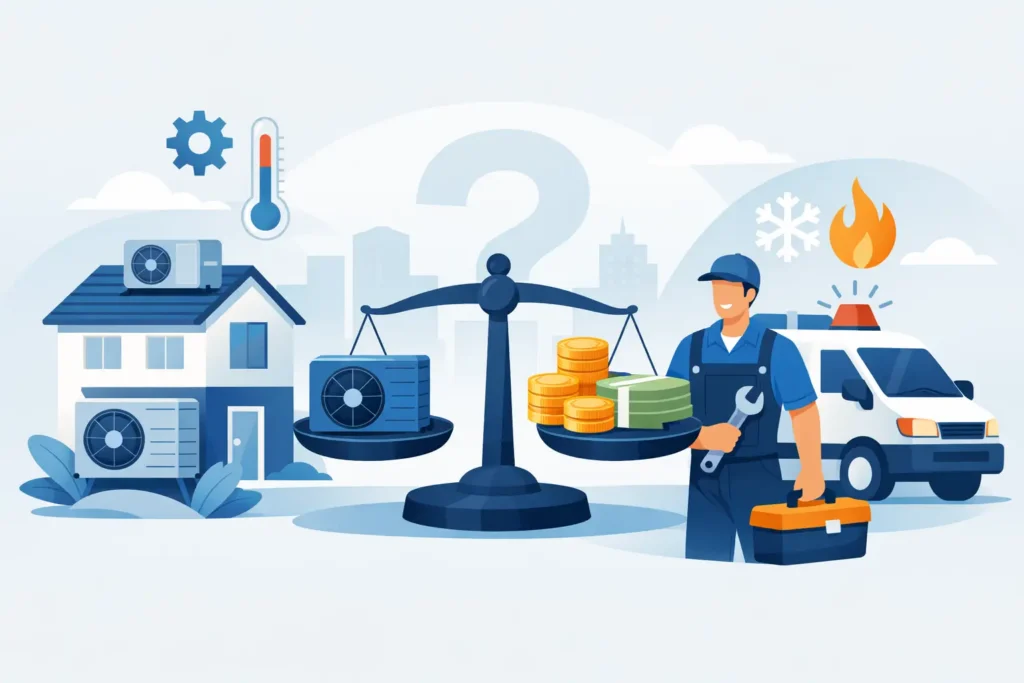
When your AC quits at 9 p.m. in a South Carolina summer, the question gets real fast: how much does emergency HVAC service cost, and what are you actually paying for? Most homeowners are not just worried about the bill. They are worried about getting the system running again without being talked into work they do not need.
Emergency HVAC service usually costs more than a standard daytime appointment, but the total can vary quite a bit depending on the problem, the timing, and the repair itself. In most cases, homeowners can expect to pay an after-hours diagnostic or emergency dispatch fee plus the cost of any parts and labor needed to complete the repair. That means one emergency call might stay relatively manageable, while another turns into a larger repair if a major component has failed.
How much does emergency HVAC service cost on average?
For many homeowners, emergency HVAC service starts with a service call or diagnostic fee that can range from about $150 to $350 after hours. If the issue is minor and quick to fix, the total bill may land somewhere between $250 and $600. If the technician finds a failed capacitor, contactor, thermostat issue, clogged drain line, or another common repair, pricing often stays in that general range.
Costs rise when the repair is more involved. A blower motor issue, refrigerant leak, condenser fan motor failure, ignitor problem, control board replacement, or compressor-related concern can push the total much higher. In those cases, emergency HVAC repairs can run from $600 to $1,500 or more, depending on the equipment, parts availability, and labor required.
That wide range is exactly why honest diagnosis matters. Two systems can show the same symptom – warm air, no airflow, strange noise, system not starting – and have very different underlying causes.
What drives the cost of emergency HVAC service?
The biggest factor is usually not the emergency visit itself. It is the actual repair. After-hours service adds a premium because you are asking a technician to respond outside regular scheduling hours, often at night, on weekends, or on holidays. But once they arrive, the real cost depends on what failed and how difficult it is to fix.
Time of day matters
A weekday evening call is often less expensive than a major holiday emergency. The later the hour and the more limited the parts supply, the more likely your cost will increase. Emergency rates reflect staffing, scheduling strain, and the urgency of the call.
The type of system matters
A standard central air conditioning system and furnace may be straightforward to diagnose and repair. A variable-speed system, heat pump, ductless mini-split, or high-end communicating equipment can take more time and specialized parts. Homes in Mount Pleasant often have larger comfort systems or zoning setups, and those can add complexity.
The failed part matters even more
Some repairs are relatively affordable because the parts are common and the labor is limited. Others are more expensive because they involve costly components, refrigerant handling, deeper electrical work, or longer labor time. A tripped float switch is very different from a bad blower motor or control board.
Accessibility can change the bill
If the unit is easy to reach, the job tends to move faster. If the air handler is buried in a hot attic, the outdoor unit has limited clearance, or the system has installation issues that make testing and repair harder, labor can increase.
Common emergency repairs and where pricing often lands
A lot of emergency calls involve a short list of familiar problems. Capacitors, contactors, drain line clogs, thermostat failures, and certain electrical issues are common. These can often be repaired without replacing the entire system, which is good news for homeowners trying to control costs.
Repairs involving motors, refrigerant leaks, boards, compressors, or heat pump components tend to cost more. Refrigerant issues can be especially variable because the total depends on leak location, repair difficulty, and how much refrigerant the system needs afterward. If a leak is small and accessible, the repair may be reasonable. If the coil is failing or the leak is hard to reach, the cost can climb fast.
Furnace emergency calls in colder weather often involve ignitors, flame sensors, pressure switches, inducer motors, or safety controls. Some are simple fixes. Others require more extensive testing because heating systems have multiple safety sequences that need to be evaluated carefully.
Why emergency service costs more than regular service
There is a practical reason emergency HVAC service costs more. You are paying for immediate access to trained help when most service companies are closed or fully booked. That availability has real overhead behind it: on-call staffing, stocked trucks, dispatch support, and technicians with the experience to diagnose under pressure.
For a homeowner, the value is not just speed. It is avoiding bigger problems. During peak summer heat, a failed AC can quickly turn into an indoor comfort and humidity issue. In some homes, that can affect elderly family members, children, pets, electronics, and even wood finishes or humidity-sensitive interiors. In winter, loss of heat can become a safety issue.
That said, not every after-hours problem needs immediate repair. If your system is limping along but still cooling, or if the issue is isolated and safe to wait on, you may choose to schedule standard service the next morning and avoid some after-hours cost. A reputable HVAC company should help you think through that decision instead of pushing every call into full emergency mode.
How to avoid overpaying during an HVAC emergency
The fastest way to lose money is to confuse urgency with replacement. When a system fails suddenly, some homeowners assume they need a new unit. Sometimes that is true, especially with older systems and major component failure. But many emergencies are repairable, even on equipment that has a few years on it.
That is why experienced diagnostics matter so much. A good technician should be able to explain what failed, what the repair involves, whether there are multiple options, and when replacement actually makes more financial sense. You want clear recommendations, not pressure.
It also helps to ask a few direct questions before approving major work. Is this a repair that safely restores operation? Is the failed part common or a sign of a larger system problem? If the system is older, how much life is realistically left after the repair? Those questions often lead to better decisions than focusing on the emergency fee alone.
How much does emergency HVAC service cost if replacement is recommended?
Sometimes the answer to how much does emergency HVAC service cost includes a bigger conversation. If a compressor has failed on an aging AC system, or if a furnace has multiple safety-related issues, a repair may not be the best use of your money. In that case, the emergency visit may still include diagnostic and temporary recommendations while you weigh replacement options.
A trustworthy contractor should not treat every breakdown as a sales opportunity. The right approach is to repair when repair makes sense, and recommend replacement when repair is no longer cost-effective or dependable. That kind of practical judgment saves homeowners money over time, especially in a market where home comfort and property protection matter year-round.
What Mount Pleasant homeowners should keep in mind
Coastal conditions can be hard on HVAC equipment. Salt air, high humidity, long cooling seasons, and heavy system use all increase wear. That means emergency calls in this area are often tied to electrical component failure, drainage issues, airflow problems, and age-related breakdowns that show up during extreme weather.
For local homeowners, the smartest move is usually to work with a company that understands the region, responds quickly, and takes repair seriously before jumping to replacement. Mount Pleasant Heating & Air Conditioning serves homeowners who want exactly that – fast help, skilled diagnosis, and a practical fix when one is available.
Preventative maintenance also plays a real role here. It will not stop every emergency, but it can reduce the odds of surprise failures during the hottest and coldest stretches of the year. Catching a weak capacitor, blocked drain, dirty coil, or failing motor before it becomes an after-hours call is usually far less expensive than dealing with a system shutdown at the worst possible time.
If your system fails after hours, focus on getting a clear diagnosis first. The emergency fee gets the technician to your door. The real value comes from knowing exactly what is wrong, what it will take to fix it, and whether the repair is truly worth making. That is how you protect your comfort without paying for more than you need.
Related: how service call and diagnostic fees work, typical AC repair costs, and our 24-hour AC repair service in Mount Pleasant.
Need a hand with this? Mount Pleasant Heating & Air Conditioning has served Lowcountry homes and businesses since 2007, with 24/7 emergency service.
Call (843) 714-0863 or request service online. Related service: AC repair in Mount Pleasant.