

A heat pump that suddenly stops heating or cooling can make a Mount Pleasant home uncomfortable fast. Knowing how to reset a heat pump can restore operation after a minor electrical interruption or control error, but it is not a cure for every problem. A careful reset is worth trying once. Repeated resets, strange sounds, or a system that trips a breaker need professional attention.
Heat pumps work year-round in coastal South Carolina, often switching between cooling, heating, and defrost operation as conditions change. That constant use puts pressure on electrical components, thermostats, outdoor units, and drainage systems. The goal is to reset the equipment safely without overlooking a problem that could cause a bigger breakdown.
Before You Reset the Heat Pump
Start with a few quick checks. Make sure the thermostat is set to the correct mode – Heat when you want warmth, Cool when you want air conditioning – and set the temperature several degrees beyond the current indoor temperature. For example, set the thermostat to 68 degrees if the house is 64 degrees and you are testing heat.
Check that the thermostat screen is on and that fresh batteries are installed if it uses batteries. A blank or unresponsive thermostat may be the issue, not the heat pump itself. Also confirm that the air filter is clean enough for air to pass through easily. A severely clogged filter can restrict airflow, cause the system to shut down on a safety control, and make a reset ineffective.
Walk outside and look at the heat pump cabinet from a safe distance. Do not remove panels or reach inside. If you see smoke, smell burning electrical insulation, notice damaged wiring, or hear loud grinding, do not reset the unit. Turn it off at the thermostat and call for service. The same applies if water is standing around electrical equipment.
How to Reset a Heat Pump at the Thermostat
The simplest reset begins at the thermostat. Turn the system setting from Heat or Cool to Off. Leave it off for at least five minutes. This pause allows pressures inside the refrigerant system to equalize and helps protect the compressor from trying to restart too quickly.
After five minutes, switch the thermostat back to the desired mode and adjust the temperature to call for heating or cooling. Give the system several minutes to respond. Many modern heat pumps have built-in time delays, so the outdoor unit may not start immediately even when everything is working normally.
If warm or cool air begins moving through the vents and the outdoor unit operates normally, monitor the system over the next hour. A one-time interruption may have been caused by a brief power fluctuation or thermostat communication issue. If the problem returns, a technician should identify the underlying cause rather than relying on another reset.
Resetting a Heat Pump at the Breaker
If the thermostat reset does not work, you can perform a full power reset at the electrical panel. This process is appropriate only when there are no signs of electrical damage, burning odors, or repeated breaker trips.
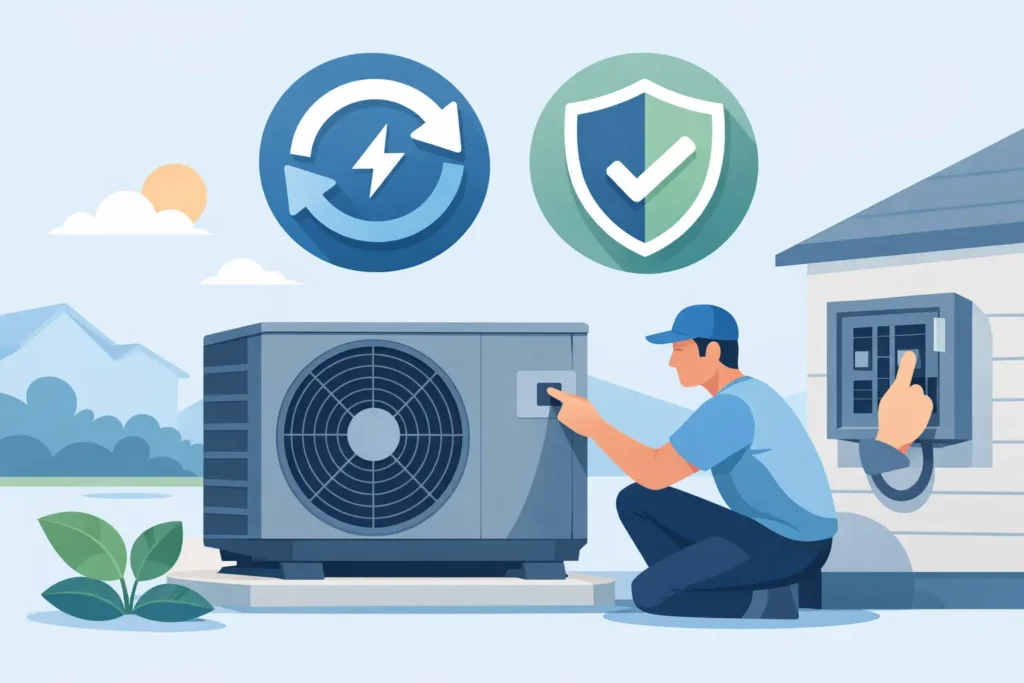
First, turn the thermostat to Off. Find the breakers labeled for the air handler, indoor unit, heat pump, or condenser. Many systems have more than one breaker, so look carefully. Turn the relevant breakers fully to the Off position. If a breaker appears to be in the middle position, move it firmly all the way off before turning it back on later.
Leave power off for five to ten minutes. Then turn the breakers back on, one at a time, and return to the thermostat. Set it to the appropriate mode and give the system time to restart.
Do not keep resetting a breaker that trips again. A tripped breaker is a safety device doing its job. It can point to a failing capacitor, compressor issue, damaged wiring, blower motor problem, or another electrical fault. Forcing repeated resets can damage equipment and create a safety risk.
What About the Outdoor Disconnect?
Most outdoor heat pump units have a disconnect box mounted nearby. It provides a local way for technicians to shut off power during service. Homeowners can use it for a reset only if the disconnect is clearly labeled, easily accessible, and in good condition.
Turn the thermostat off first. Then remove or switch off the disconnect according to its labeled design, wait five to ten minutes, and restore power. Never open the heat pump cabinet, touch exposed wires, or attempt to repair parts in the disconnect box. If anything looks corroded, loose, wet, or damaged, stop and schedule service.
In coastal areas, electrical connections can be affected by humidity and salt air over time. What appears to be a simple reset issue may be a worn connection that needs proper inspection and repair.
What a Reset Can and Cannot Fix
A reset may help after a temporary power outage, an electronic control glitch, or a thermostat issue. It can also clear some minor operational faults after the cause has passed. That said, a reset does not repair worn mechanical or electrical components.
For example, your heat pump may start after a reset but shut down again because the drain line is clogged, the outdoor coil is dirty, the capacitor is weak, or the system is low on refrigerant. During heating season, a unit may also have trouble completing its defrost cycle. Frost on the outdoor coil can be normal during cold, damp weather, but a coil that becomes completely encased in ice is not.
If your heat pump is running but not keeping up, do not assume it needs a reset. Heat pumps generally deliver air that feels less hot than furnace air, especially during milder weather. However, the house should still reach the temperature set on the thermostat under normal conditions. Cool air from the vents in Heat mode, no airflow, frequent short cycling, or unusually high energy bills are signs that a diagnostic visit is the better next step.
When to Call for Heat Pump Repair Instead
A reset should be a single troubleshooting step, not a regular routine. Call an HVAC professional if the heat pump fails to restart after you reset it, shuts off again soon afterward, trips a breaker, or displays an error code. You should also request service if the unit is making banging, screeching, grinding, or buzzing sounds.
Other warning signs include ice that does not clear after a defrost cycle, water leaking from the indoor unit, weak airflow from multiple vents, or a thermostat that cannot hold the selected temperature. If auxiliary heat or emergency heat runs constantly, it may keep the home warm, but it can increase energy costs significantly. A technician can determine whether the heat pump itself is operating correctly or whether the backup heat is covering for a system problem.
For older systems, repair is not automatically the wrong answer. Many issues can be corrected with targeted service that extends equipment life. The key is an accurate diagnosis that considers the condition of the compressor, refrigerant circuit, electrical controls, airflow, and overall efficiency before anyone recommends replacement.
Prevent Resets With Basic Seasonal Care
The best way to avoid an unexpected heat pump shutdown is regular maintenance. Replace or clean the filter on schedule, keep leaves and debris away from the outdoor unit, and avoid stacking items around it. Keep at least a couple of feet of open space around the cabinet so it can move air properly.
Professional maintenance adds another layer of protection. A seasonal visit can catch loose electrical connections, drainage issues, worn capacitors, dirty coils, refrigerant concerns, and thermostat problems before they turn into a no-heat or no-cooling call. This is particularly valuable for heat pumps because they carry the workload in both summer and winter.
If a careful reset does not bring your comfort back, do not spend the day cycling power and hoping for a different result. Mt Pleasant Heating & Air can provide experienced diagnostics and dependable repair for homeowners in Mount Pleasant and Charleston, helping you get the system running safely and keep it that way.