Your air conditioner should run long enough to pull heat and humidity out of the house, then rest once the thermostat is satisfied. If it turns on, shuts off after only a few minutes, and starts again soon after, you may be dealing with a problem. Knowing how to know AC short cycling can help you protect your comfort, avoid higher power bills, and address a small repair before it becomes a major breakdown.
In Mount Pleasant and Charleston, AC systems work hard through long stretches of heat and humidity. A unit that repeatedly starts and stops is not just annoying. It puts extra strain on the compressor, blower motor, electrical components, and thermostat controls.
What AC Short Cycling Looks Like
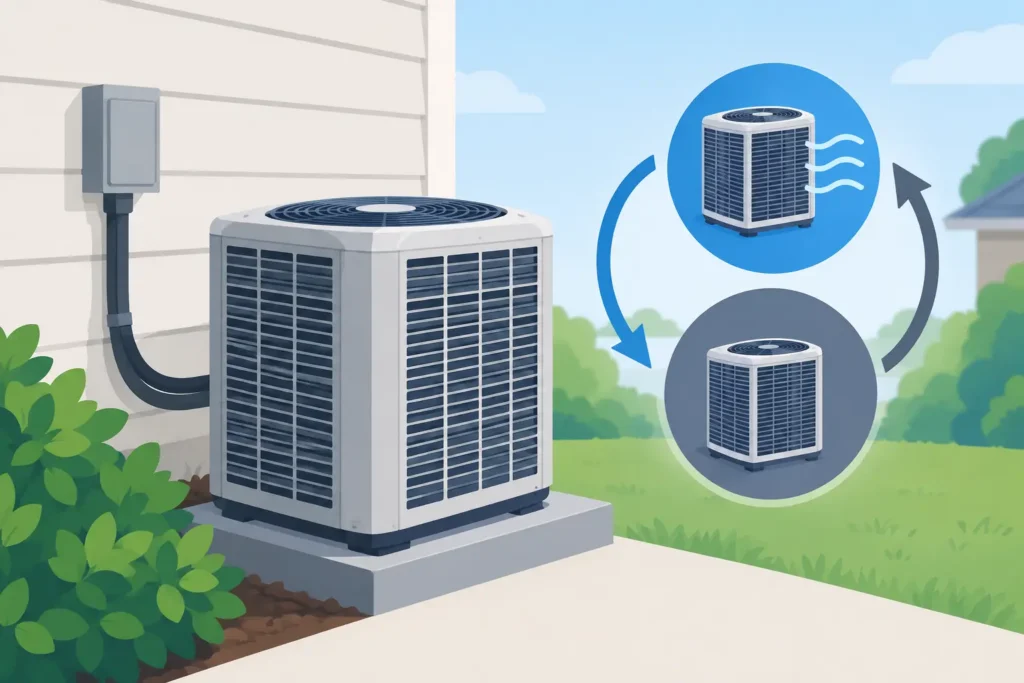
Short cycling means an air conditioner shuts down before completing a normal cooling cycle, then restarts again much sooner than it should. Most central AC systems run for roughly 10 to 20 minutes at a time during warm weather, although the exact run time depends on outdoor conditions, insulation, thermostat settings, and how much heat is entering your home.
A single short run does not automatically mean there is a problem. Your system may turn on briefly after someone adjusts the thermostat, opens an exterior door, cooks a large meal, or returns home on a hot afternoon. The concern is a repeated pattern: the AC runs for three to eight minutes, turns off, and comes back on again within a few minutes without bringing the home to the set temperature.
You may also notice that some rooms feel damp or warm even though the unit seems to be running all day. Because short cycles do not last long enough to remove much moisture, the home can feel sticky and uncomfortable despite a reasonable thermostat setting.
How to Know AC Short Cycling Is a Real Problem
The easiest way to check is to observe the system for 30 to 60 minutes when outdoor temperatures are warm and the thermostat is set several degrees below the indoor temperature. Listen for the outdoor unit and indoor blower to start. Note how long the system runs, when it shuts down, and how quickly it starts again.
Short cycling is likely if you see the same rapid on-and-off pattern several times in an hour. A struggling system may also show related warning signs, including uneven cooling, rising electric bills, weak airflow, water around the indoor unit, ice on the refrigerant line, or unusual clicking, buzzing, and grinding sounds.
Pay attention to what shuts off. Sometimes the outdoor condenser turns off while the indoor blower keeps moving air. Other times, the entire system stops. That detail helps a technician narrow down whether the issue involves the thermostat, electrical controls, airflow, refrigerant, or the equipment itself.
Do not keep lowering the thermostat in an attempt to force longer cycles. If the system has a mechanical or airflow problem, demanding more cooling can add stress without fixing the cause.
Why an Air Conditioner Starts and Stops Too Often
Several different issues can cause short cycling. Some are straightforward maintenance concerns. Others require professional diagnosis because they involve electrical components or refrigerant.
A dirty filter or blocked airflow
A severely clogged air filter restricts the air moving across the indoor evaporator coil. The coil can become too cold and freeze, or the system can overheat and trip a safety control. Closed supply vents, blocked return grilles, a dirty coil, or duct problems can create similar airflow restrictions.
Before assuming the worst, check the filter. If it looks gray, packed with dust, or has not been changed according to the manufacturer’s recommendation, replace it with the correct size and type. Then make sure return grilles and supply vents are open and clear of furniture, rugs, and drapes.
Thermostat trouble
A thermostat placed near a sunny window, kitchen, supply vent, lamp, or other heat source can read the room temperature incorrectly. It may satisfy too quickly and shut the system down before the rest of the home is comfortable. Loose wiring, aging batteries, calibration issues, or a failing smart thermostat can also send inconsistent signals to the AC.
If the thermostat screen flickers, resets, shows an incorrect temperature, or does not respond consistently, leave the diagnosis to a qualified HVAC technician. Electrical issues should not be handled by trial and error.
Low refrigerant or a refrigerant leak
Refrigerant does not get used up during normal operation. If the level is low, there is usually a leak that needs to be located and repaired. Low refrigerant can cause the evaporator coil to freeze and may trigger pressure safety controls that shut the system down prematurely.
Warning signs can include ice on the larger copper line near the outdoor unit, hissing sounds, reduced cooling, and noticeably warmer air from the vents. Turn the system off if you see ice, and schedule service rather than continuing to run it. Running a frozen system can lead to more damage.
An oversized AC system
Bigger is not always better. An oversized air conditioner can cool the area around the thermostat very quickly, shut off, and restart before the home has been evenly cooled or dehumidified. This is especially noticeable in humid Lowcountry weather, where moisture removal matters as much as temperature.
Oversizing is often related to an installation or equipment-selection issue, but it can also become more noticeable after renovations, insulation upgrades, or changes to how part of the home is used. A professional load calculation and system evaluation can determine whether sizing is contributing to the problem.
Electrical or mechanical failures
A failing capacitor, contactor, control board, compressor, pressure switch, or blower motor can interrupt a cooling cycle. These failures may cause clicking, humming, breaker trips, burning odors, or inconsistent operation. They can look similar from the homeowner’s perspective, which is why accurate diagnostics matter.
An experienced technician can test the system safely and determine whether a targeted repair can restore dependable operation. Replacement may be appropriate in some cases, particularly with an older system facing several expensive failures, but short cycling alone does not mean you automatically need new equipment.
Safe Checks You Can Make Before Calling
There are a few useful checks that do not involve opening electrical panels or handling refrigerant. Confirm that the thermostat is set to Cool and that the fan is set to Auto. Replace a dirty filter, clear debris from around the outdoor unit, and make sure all accessible vents and return grilles have airflow.
Outside, remove leaves, pine straw, and loose debris from around the condenser. Keep shrubs and stored items away so the unit can release heat. Do not spray components with a pressure washer, bend coil fins, or remove access panels.
If your AC is frozen, turn the cooling mode off. You can set the fan to On to help thaw the indoor coil, but do not restart cooling until the cause has been checked. If the circuit breaker trips more than once, do not reset it repeatedly. That is a reason to call for service promptly.
When to Schedule AC Repair Right Away
Short cycling is worth scheduling as soon as you notice a repeated pattern, particularly during summer. Call for professional help sooner if the AC is not cooling, ice is visible, water is leaking indoors, the unit makes loud or unusual noises, a burning smell is present, or a breaker will not stay on.
A technician should examine the full system rather than guessing at one part. Proper diagnosis includes checking airflow, filter condition, thermostat operation, electrical readings, refrigerant pressures, drainage, coil condition, and safety controls. That process identifies the real cause and helps avoid paying for a repair that does not solve the issue.
For homeowners who want to keep an older system running reliably, preventative maintenance is one of the best defenses against short cycling. Clean coils, correct airflow, secure electrical connections, and a properly operating drain system reduce the conditions that often lead to rapid cycling and avoidable wear.
Your air conditioner should deliver steady, quiet comfort, not start-stop stress throughout the day. If the pattern continues after basic checks, have it inspected before a hard-working component is pushed past the point of a practical repair.
Related guides: what causes AC short cycling. For professional help, see AC repair in Mount Pleasant.
Need a hand with this? Mount Pleasant Heating & Air Conditioning has served Lowcountry homes and businesses since 2007, with 24/7 emergency service.
Call (843) 714-0863 or request service online. Related service: AC repair in Mount Pleasant.