


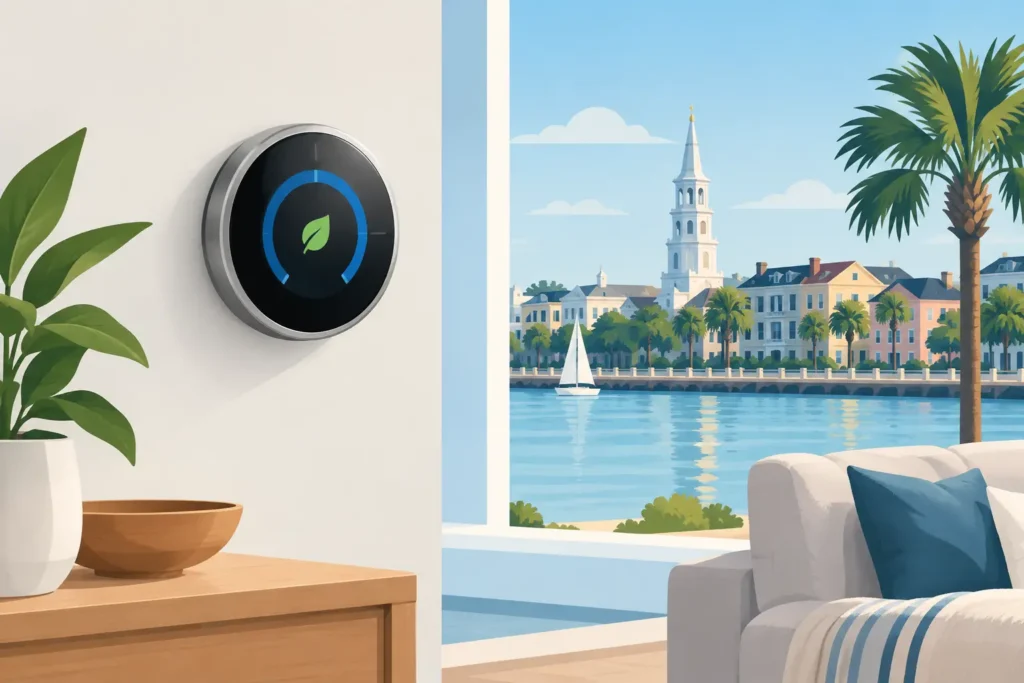
A smart thermostat can be a worthwhile comfort upgrade, but it is not a cure for an aging air conditioner, uneven airflow, or high indoor humidity. This Nest thermostat review for homeowners looks at where Nest models provide real value, where expectations should stay realistic, and why correct installation matters for Charleston-area HVAC systems.
What a Nest Thermostat Does Well
Nest thermostats are designed to make temperature control simpler without requiring homeowners to constantly adjust the system. Depending on the model, features can include app-based controls, programmable schedules, occupancy-based setbacks, energy-use reports, and compatibility with remote room sensors. The Nest Learning Thermostat is known for learning temperature preferences over time, while the standard Nest Thermostat offers a more straightforward, lower-cost smart control option.
For busy households, remote access is often the biggest advantage. If you are heading home early, leaving town for a weekend, or want to confirm the system is not running unnecessarily in an empty house, you can check and adjust the temperature from your phone. That practical control can be more useful than complicated automation.
Nest also gives many homeowners a clearer view of their HVAC habits. Seeing how often the system runs can encourage small changes, such as raising the cooling setpoint a degree or two during work hours. In Mount Pleasant summers, those adjustments can reduce run time without making the home feel uncomfortably warm.
Nest Thermostat Review for Homeowners: The Real Benefits
The right Nest thermostat can improve convenience, consistency, and potentially energy use. The key word is potentially. Savings depend far more on the home, the equipment, insulation, ductwork, thermostat settings, and family routines than on the thermostat itself.
A homeowner with a predictable weekday schedule may benefit from programmed setbacks and automatic scheduling. A household where someone is home most of the day may see less savings but still appreciate easier controls and the ability to manage temperatures by room with compatible sensors.
Remote sensors are particularly useful in two-story homes and homes with stubborn hot or cold rooms. Rather than relying only on the temperature at the central hallway thermostat, a compatible system can prioritize a selected room during certain parts of the day. For example, a homeowner may want the upstairs bedroom sensor to guide cooling overnight.
That said, a sensor cannot correct an undersized system, blocked return, leaky ducts, poor attic insulation, or a failing blower motor. It only gives the thermostat better temperature information. If one room stays far warmer than the rest of the house, professional diagnostics should come before assuming a smart thermostat will solve the problem.
Where Nest May Fall Short
Nest is a polished consumer product, but it is not the best fit for every HVAC setup. The most common issue is compatibility. Many conventional heating and cooling systems work well with Nest, but heat pumps, dual-fuel systems, multi-stage equipment, whole-home humidifiers, dehumidifiers, and zone controls require closer review.
This matters in coastal South Carolina. Cooling is not only about lowering the temperature. During humid weather, homeowners also need the system to remove moisture effectively. Aggressive temperature setbacks can sometimes create a comfort problem if the home warms up substantially and the AC must work hard to recover. The house may reach the desired temperature while still feeling damp.
A properly configured thermostat can help support efficient operation, but it cannot make an air conditioner dehumidify beyond its capabilities. Homes with persistent humidity may need an HVAC assessment, airflow adjustment, duct repair, or dedicated dehumidification rather than a new thermostat alone.
There is also a learning curve. Some homeowners prefer a thermostat that simply follows a schedule they set. The learning features can be convenient, but they are not always desirable in a household with changing routines, frequent guests, or specific temperature preferences. In those cases, a manually programmed schedule may be more predictable.
Compatibility Is the First Question
Before buying a Nest thermostat, identify the equipment it will control. A basic single-stage air conditioner and furnace are usually simpler than a variable-speed heat pump with auxiliary heat, zoning, and indoor air quality accessories.
The wiring behind the existing thermostat deserves special attention. Many older homes do not have a dedicated common wire, often called a C-wire. Some Nest models can operate without one under certain conditions, but that does not automatically mean it is the best long-term setup. Insufficient power can contribute to charging issues, interrupted Wi-Fi connections, or inconsistent operation.
Professional thermostat installation is especially worthwhile when your system includes any of the following:
- A heat pump with auxiliary or emergency heat
- Two-stage or variable-capacity heating and cooling
- Multiple thermostats or a zoning panel
- A whole-home humidifier, dehumidifier, or ventilator
- An older system with limited or unclear thermostat wiring
These systems can be controlled incorrectly if terminals are misidentified or settings are rushed. A thermostat that appears to work may still cause unnecessary auxiliary heat operation, short cycling, poor humidity control, or reduced comfort.
Installation Quality Affects Performance
A Nest thermostat installation is often presented as a simple do-it-yourself project. For a straightforward system with clearly labeled wiring, that may be true. Still, homeowners should know what is at stake. The thermostat is the command center for the HVAC system. A small wiring or configuration error can lead to bigger operating problems.
During a professional installation, the technician should verify wiring, confirm equipment type, set up the correct heating and cooling stages, test the system’s response, and make sure the thermostat is placed appropriately. Location matters more than many people realize. A thermostat near a sunny window, exterior door, kitchen, supply vent, or lamp can read the room inaccurately.
It is also a good opportunity to evaluate whether the thermostat is masking an existing issue. If the system runs constantly, struggles to maintain temperature, produces uneven cooling, or has rising utility costs, a new control is not the first answer. Experienced HVAC diagnostics can identify whether the problem is refrigerant-related, airflow-related, electrical, mechanical, or caused by duct leakage.
Is Nest a Good Choice for Your Home?
For many homeowners, yes. Nest is a strong choice when convenience, remote access, and flexible scheduling are the priorities. It can be especially helpful for households that travel, own second homes, or want a clearer picture of how often their equipment runs.
It is less compelling when the home already has a proprietary communicating thermostat designed specifically for the installed HVAC brand. Replacing a manufacturer-matched communicating control with a universal smart thermostat can mean giving up some advanced equipment functions. Before making that change, confirm what features your existing system uses and whether Nest supports them.
Homeowners should also be realistic about energy savings. A smart thermostat can reduce waste created by unnecessary runtime, but it does not make inefficient equipment efficient. If an AC system is near the end of its life, has neglected maintenance, or cannot keep up during the hottest afternoons, maintenance or repair may deliver more value first.
A Practical Recommendation
Choose a Nest thermostat if your system is compatible and you want useful control without constantly managing a wall thermostat. Start with comfort goals: Do you need better scheduling, remote monitoring, or temperature readings from a problem room? Those are good reasons to consider one.
If your main concern is humidity, uneven cooling, frequent repairs, or a system that cannot hold temperature, schedule an HVAC evaluation before buying a thermostat. Mt Pleasant Heating & Air can confirm compatibility, install the control correctly, and make sure the equipment behind it is operating as it should.
A thermostat should make your home easier to live in, not become another device to troubleshoot. The best choice is the one that matches your equipment, your routine, and the comfort your family expects every day.