Your air conditioner can be cooling normally while water quietly collects where it should not. That is why recognizing condensate drain line clog symptoms early matters. In Mount Pleasant’s humid climate, a blocked drain can turn from a minor maintenance issue into ceiling damage, mold concerns, or an unexpected AC shutdown.
Every central air conditioner and heat pump removes moisture from indoor air as it cools. That moisture drains through a small pipe called the condensate line. Algae, mildew, dust, rust particles, and airborne debris can build up inside it over time. Once the line cannot drain freely, the water has to go somewhere else.
Water Around the Indoor HVAC Unit
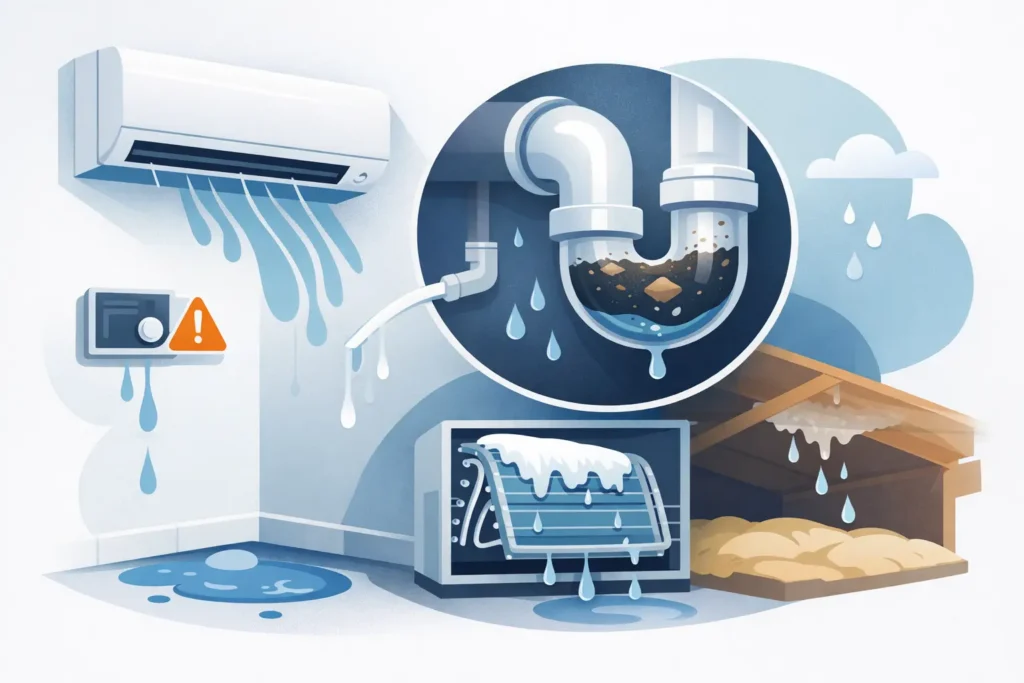
A puddle near the indoor air handler is one of the clearest signs of a drainage problem. In many homes, the air handler is located in an attic, closet, garage, or utility room. If the drain line is clogged, the condensate pan beneath the evaporator coil can overflow.
Do not assume every puddle means a clogged line. A frozen evaporator coil that is thawing, a damaged drain pan, or a disconnected drain fitting can also produce water. Still, the right response is the same: turn the system off if water is actively leaking and have the source diagnosed before running it again.
Water and HVAC equipment are a bad combination. Beyond flooring or drywall damage, standing water can reach electrical components and create a more expensive repair.
Ceiling Stains or Drips From an Upper Floor
When an attic air handler has a blocked condensate drain, the first visible warning may appear in the room below it. Brownish ceiling stains, soft drywall, bubbling paint, or a slow drip from the ceiling should never be ignored, particularly during a stretch of hot, humid weather when the AC is running often.
A ceiling leak does not automatically mean the HVAC system is responsible. Roof leaks and plumbing leaks can look similar. The timing offers a useful clue: if the stain worsens only when cooling is running, condensate drainage should be high on the list of possible causes.
This is a situation where waiting can cost far more than the HVAC repair. Water can spread across insulation, framing, drywall, and light fixtures before it becomes visible.
Musty Odors Near Vents or the Air Handler
A clogged drain line holds water, and stagnant water creates an environment where organic growth can develop. You may notice a damp, musty smell near the indoor unit, in the return-air area, or when the system first starts.
That odor can also come from dirty ductwork, a wet filter, a coil issue, or moisture elsewhere in the home. It is not a stand-alone diagnosis. But when musty odors appear along with water around the unit, visible drain-pan water, or repeated AC shutoffs, a clogged condensate line becomes much more likely.
In coastal South Carolina, indoor humidity is already a comfort concern. A drainage problem that allows moisture to linger can make that concern worse.
Your AC Shuts Off but the Thermostat Is Still Calling
Many newer systems have a safety float switch near the drain pan or drain line. When water rises because it cannot drain, the switch shuts down cooling before the pan overflows. This protection can prevent serious water damage, but it can leave you with a warm house and a thermostat that seems to be working normally.
If the thermostat is set to cool, the indoor temperature is climbing, and the system will not start, check for signs of water around the air handler. Do not bypass or remove the float switch to force the system to run. The switch is doing its job.
A tripped float switch does not always mean the line itself is clogged. A cracked pan, failed condensate pump, or improper drain-line slope can produce the same result. An experienced technician can determine which component is actually causing the shutdown.
Visible Water in the Drain Pan
If you can safely see standing water in the primary drain pan under the evaporator coil, drainage is not working as it should. Some systems also have a secondary pan beneath the entire air handler. Water in either location deserves attention, especially if it is close to overflowing.
Avoid reaching into the cabinet or removing electrical panels. HVAC equipment contains wiring, sharp metal edges, and components that should be handled by a qualified professional. Taking a photo of the water level or the area around the pan can be helpful when you call for service.
Water Dripping From the Outdoor Drain Outlet
A drain outlet outside your home may release a steady amount of water while the AC runs on humid days. That is usually normal. It means the system is removing humidity and the drain line is carrying it away.
The concern is a sudden change. If you normally see drainage but it stops during heavy AC use, water may be backing up inside. Conversely, if an auxiliary drain outlet begins dripping from a conspicuous location near an eave or exterior wall, it may be warning you that the primary drain is blocked.
The setup varies by home. Some drain outlets are hard to spot, and some systems use a condensate pump rather than a gravity drain. That is why exterior drainage alone cannot confirm the problem, but it can provide a useful early clue.
Higher Indoor Humidity and Reduced Comfort
A clogged drain line does not usually cause poor cooling on its own. However, the moisture conditions that lead to a clogged line often show up alongside other HVAC maintenance needs. If your home feels clammy, temperatures are uneven, or the system runs longer than usual, the evaporator coil, filter, blower performance, and drainage system should all be checked.
Replace a visibly dirty air filter on schedule, but do not expect a new filter to clear a blocked drain. Likewise, pouring chemicals into a drain line without understanding its configuration can damage components, create fumes, or push debris deeper into the line. A simple problem can become a mess when the wrong cleaning method is used.
What to Do When You Suspect a Clogged Drain Line
Start by protecting your home. If water is leaking, the drain pan is full, or the float switch has shut the system down, turn off cooling at the thermostat. If water is near electrical equipment or coming through a ceiling, shut off the system and avoid the affected area until it can be assessed.
Then schedule professional service. Proper drain-line service is more than flushing a pipe. A technician should clear the obstruction, inspect the primary and secondary pans, verify the drain trap and line slope, check the float switch, and confirm that water flows properly before leaving. If algae buildup is recurring, the underlying cause may be related to drain design, maintenance intervals, or persistent debris around the indoor unit.
Mt Pleasant Heating & Air can diagnose whether the issue is truly a clogged condensate line or another water-related HVAC problem. That distinction matters because repairing the actual cause helps protect both your comfort and your home.
A little moisture outside is normal for a working air conditioner. Moisture inside the cabinet, on the floor, or in your ceiling is your cue to act quickly – before a drain problem becomes a home repair project.