What if an HVAC inspection isn’t a pass-or-fail verdict, but a way to decide what needs attention now and what can wait? For homeowners, an HVAC inspection can bring clarity when a system sounds different, rooms feel uneven, or a repair recommendation raises questions. It’s understandable to wonder whether an inspection is the same as routine maintenance and whether a small warning sign could turn into a breakdown.
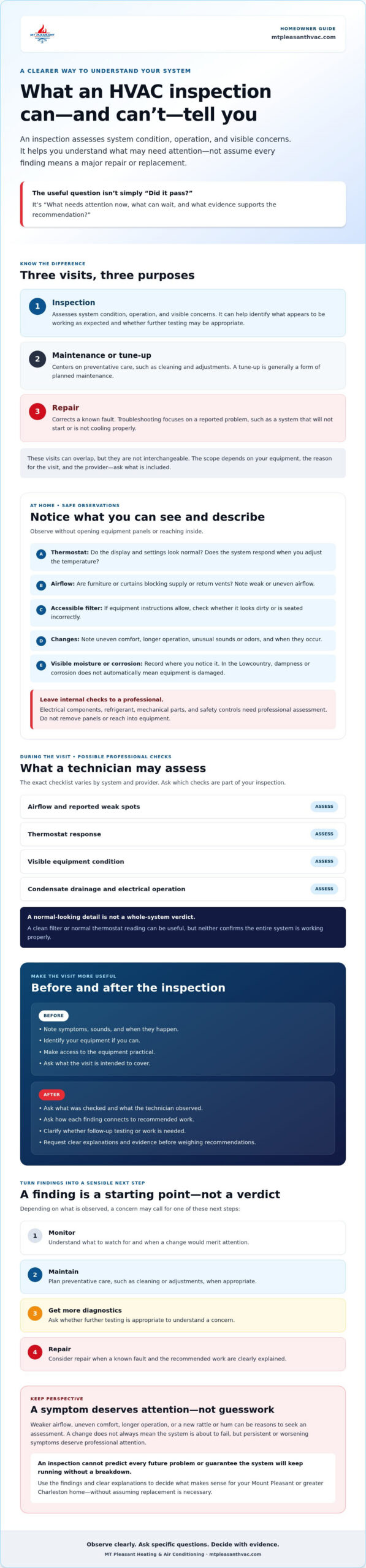
An inspection focuses on assessing your system’s condition and identifying concerns. A tune-up or maintenance visit centers on preventative care, such as cleaning and adjustments. Some simple checks are safe to do yourself, but electrical components, refrigerant, mechanical parts, and safety controls need professional assessment.
This guide explains what a home HVAC inspection may cover, what to look and listen for before a visit, and how to sort findings by urgency without guessing. You’ll also learn how to ask clear questions about recommended work, so you can make informed next steps for your Mount Pleasant or Charleston home without assuming every finding means a major repair or replacement.
Key Takeaways
- An HVAC inspection for homeowners assesses system condition, operation, and visible concerns, but it isn’t automatically the same as a maintenance tune-up.
- Notice airflow, thermostat response, equipment condition, and drainage, then leave internal components and safety checks to a professional.
- A clean filter or normal thermostat reading can be useful, but neither confirms the whole system is working properly.
- Before an inspection, note symptoms, identify your equipment, and make access practical. Afterward, ask what was checked and what needs follow-up.
- Use clear explanations and evidence to weigh recommendations, and prioritize repair or maintenance without assuming replacement is necessary.
What Is an HVAC Inspection for Homeowners, and What Can It Tell You?
Is your system working normally, or is something being missed? An HVAC inspection for homeowners assesses a system’s condition, operation, and visible concerns. It can help you understand what appears to be working as expected, what may need attention, and whether further testing is appropriate. It can’t predict every future problem or guarantee the system will keep running without a breakdown.
If the terminology is unfamiliar, the Heating, ventilation, and air conditioning (HVAC) system describes equipment that supports indoor heating, ventilation, and cooling. An inspection looks at the particular system in your home, but its scope depends on the equipment, reason for the visit, and provider. There isn’t one universal checklist for every home.
How an HVAC inspection differs from maintenance or repair
An inspection assesses condition, maintenance is planned care, and repair corrects a known fault. These visits can overlap, but they aren’t interchangeable. A tune-up is generally a form of preventative maintenance, while troubleshooting focuses on a reported problem, such as a system that won’t start or isn’t cooling properly. Ask what the visit is intended to cover, since specific tasks vary by system and provider.
Inspection findings are a starting point for decisions, not an automatic reason to replace equipment. A concern may call for monitoring, maintenance, additional diagnostics, or repair. Ask what the technician observed and how it connects to the recommendation. A clear explanation of the findings can help you decide on a sensible next step without guessing.
When homeowners commonly consider an inspection
Seasonal planning is one reason to have the system assessed, especially if you’re unsure of its condition before a period of heavier use. Homeowners also seek an inspection when they notice a change: weaker airflow, uneven comfort, longer operation, or a new rattle or hum. An unfamiliar service history can be another reason to get a clearer picture of the equipment.
A change in performance or an unusual sound doesn’t always mean the system is about to fail, but persistent or worsening symptoms deserve professional attention rather than guesswork. Heat pumps provide both heating and cooling, so their condition can matter across the year, not only before one season. In Mount Pleasant or the greater Charleston area, an inspection can help turn your observations into informed maintenance or repair decisions without assuming replacement is necessary.
What Does a Home HVAC Inspection Check in a Lowcountry House?
A useful inspection connects what you notice at home with what a technician can assess safely. The exact scope depends on your equipment and the purpose of the visit, so ask the provider what the inspection will cover rather than assuming every system gets the same checklist.
Homeowner-visible checks before a service visit
Start with what you can see and observe without opening equipment panels. Check whether the thermostat display and settings look normal, and note if the system responds when you adjust the temperature. Look for furniture or curtains blocking supply or return vents. If the filter is accessible according to the equipment instructions, check whether it appears dirty or isn’t seated correctly.
Also pay attention to changes in comfort, unusual sounds or odors, and visible moisture around accessible equipment. In the Lowcountry, humidity and coastal conditions make it sensible to notice dampness or corrosion, but their presence doesn’t automatically mean equipment is damaged. Record what you see, where you saw it, and when it occurs. Don’t remove panels or reach into equipment to investigate.
System areas a technician may assess
Depending on the visit, a technician may assess airflow, thermostat response, visible equipment condition, condensate drainage, and electrical operation. These checks may require tools, training, or access to internal components. Refrigerant diagnosis and internal electrical work should be left to a qualified professional. Ask which checks are included, since the inspection scope can vary by system and provider.
- Airflow: A technician can investigate reported weak or uneven airflow beyond what you can tell by looking at vents.
- Thermostat response: A normal display doesn’t confirm that the system is responding correctly throughout its operation.
- Equipment and drainage: The technician may assess accessible equipment condition and drainage, while you can report visible moisture or changes you’ve noticed.
- Heating and cooling: For a heat pump, both modes may be relevant because the system serves both heating and cooling needs.
These observations help focus the assessment, but they aren’t a diagnosis. If you’re arranging a visit, Consumer Affairs’ guide on how to choose an HVAC contractor offers additional guidance for evaluating providers. Homeowners in Mount Pleasant and greater Charleston can also explore residential HVAC inspections when they need help interpreting system concerns.
DIY HVAC Checks vs. Professional Inspection: What Should You Handle?
Home checks can help you spot changes, but they can’t confirm what’s happening inside the system. A clean filter or thermostat display that looks normal doesn’t prove every component is operating properly. Think of DIY observations as useful clues to share during an HVAC inspection for homeowners, not a substitute for professional assessment.
| Safe homeowner observations | Technician-only assessment |
|---|---|
| Check or replace an accessible filter according to the equipment manual. If it feels stuck or unfamiliar, don’t force it. | Inspect internal components or diagnose issues that require tools, training, or access inside the equipment. |
| Keep the area around outdoor equipment visibly clear of leaves and obvious obstructions without taking the unit apart. | Assess electrical operation, wiring, refrigerant concerns, and other internal system conditions. |
| Note changes in comfort, thermostat behavior, sounds, odors, or visible moisture, including when they occur. | Determine the cause of recurring symptoms and recommend appropriate diagnostics or repairs. |
Don’t open HVAC equipment or handle refrigerant or wiring. Stick to accessible observations, and follow the equipment manual for simple tasks such as checking a filter. Basic checks can reveal a visible concern, but they can’t verify internal operating condition or rule out a developing fault.
When to stop troubleshooting and call a technician
Contact a professional if performance problems keep returning, moisture persists, or an unexplained odor continues. Electrical concerns, suspected refrigerant issues, and anything that requires reaching inside equipment also belong with a qualified technician. If the system has stopped working, seek a professional assessment rather than repeatedly changing settings or attempting repairs. For an active cooling failure, an HVAC professional can assess whether the issue calls for diagnostics or repair.
For planned care, maintenance is a separate step from occasional homeowner checks. A maintenance plan can help organize recurring attention, while an inspection or diagnostic visit can address system condition or reported symptoms. Ask what a provider’s maintenance plan includes rather than assuming the scope. In Mount Pleasant and greater Charleston, MT Pleasant Heating & Air Conditioning offers residential HVAC maintenance and diagnostics when observations call for professional attention.
How to Prepare for an HVAC Inspection and Understand the Findings
A little preparation can make an inspection more useful. Before the visit, organize what you’ve noticed and make it easy for the technician to understand the concern. Afterward, ask for clear findings and next steps so you can make decisions without feeling rushed.
- Note symptoms. Write down what changed, such as uneven comfort, a new sound, or moisture, and when it happens. Mention whether the issue is constant or comes and goes.
- Identify your equipment. If you can do so safely, note whether you have a heat pump, central air conditioner, or ductless system. Share any service records or details you know about the system’s history.
- Clear access where practical. Move items away from equipment or access points if it’s safe and convenient. Don’t take equipment apart to prepare for the visit.
Questions to ask before and during the visit
Before the appointment, ask what the inspection includes for your specific system and whether anything you’re concerned about falls outside that scope. During the visit, ask the technician to explain observations in plain language: What was checked? What was found? What should happen next? If additional diagnostic or repair work is recommended, clarify what it involves and why before approving it.
How to prioritize inspection findings
Written findings can give you a useful record for comparing the system’s condition over time and weighing future decisions. They don’t mean every recommendation is necessary or that equipment must be replaced. Ask for the observation or evidence behind each suggested repair, what could happen if you defer it, and whether the issue affects safe or reliable operation.
- Immediate operating concerns: Ask whether the finding affects safe operation or the system’s ability to run, and what prompt next step is recommended.
- Planned maintenance: Clarify which tasks address upkeep and whether they’re part of the visit or separate work.
- Items to monitor: Ask what change to watch for and when it would warrant follow-up.
For a heat pump, make sure the discussion addresses any concerns related to its heating or cooling operation. If you’re in Mount Pleasant or greater Charleston and would like a professional assessment, contact MT Pleasant Heating & Air Conditioning about an HVAC inspection.
Choosing a Local HVAC Professional for a Home Inspection
A good inspection conversation should leave you with a clearer picture of your system, not more pressure to make a quick decision. For an HVAC inspection for homeowners, look for a provider who explains what was assessed, what couldn’t be confirmed, and how each recommendation relates to an observed concern.
What to look for in an inspection conversation
Before scheduling, ask what the inspection covers for your equipment and whether a reported symptom needs a separate diagnostic visit. During the appointment, ask the technician to distinguish an inspection observation from a repair diagnosis. If something is recommended, ask what was found, what evidence supports the recommendation, and what the next step would involve. A clear explanation should connect the work to the system’s condition, not jump straight to replacement without discussing the findings.
It’s reasonable to ask for findings in writing, including any limitations of the assessment and suggested follow-up. If a recommendation is unclear, ask for it to be explained in everyday language. You can also ask what might happen if you wait, and whether the concern affects current operation or is something to monitor. Compare the quality of explanations and evidence rather than choosing based on pressure or unsupported promises.
What to do after the inspection
Keep the inspection notes with your system’s service records. Add any work completed, concerns that remain, and follow-up the technician suggested. Then weigh the findings alongside how the system is behaving and what matters most for your household. A documented recommendation is information to consider, not an automatic instruction to approve every task.
If equipment replacement is genuinely being considered, ask what findings support that option and whether repair or maintenance could address the concern. A provider should be able to explain the basis for a recommendation without relying on pressure.
For homeowners in Mount Pleasant and greater Charleston, MT Pleasant Heating & Air Conditioning is a local option for residential HVAC diagnostics and maintenance. The company aims to keep systems running efficiently without unnecessary equipment replacement. If you have inspection questions or want to discuss maintenance for your system, contact the team to talk through your needs and possible next steps.
Turn Inspection Findings Into a Clear Next Step
A useful HVAC inspection for homeowners gives you a clearer view of system condition, not a guarantee about what will happen next. Keep your own observations, ask what the technician assessed, and request plain-language explanations for recommended work. Then prioritize urgent operating concerns, planned maintenance, and items that can be monitored instead of treating every finding as a reason to replace equipment.
For Mount Pleasant and the greater Charleston area, locally owned MT Pleasant Heating & Air Conditioning provides residential HVAC diagnostics, repair, and preventative maintenance. The goal is to understand what your system needs and address problems without unnecessary replacement.
If you’re unsure how to act on a concern or want to discuss an inspection or maintenance visit, talk with a local HVAC professional about your inspection needs. A clear conversation can help you choose a sensible next step and feel more confident about your home’s comfort.
Frequently Asked Questions
What does an HVAC inspection include?
An HVAC inspection may assess how your heating and cooling equipment operates, its visible condition, airflow, thermostat response, drainage, and signs of concern. Exact checks vary with the system type and reason for the visit, so confirm the scope with the provider. Homeowner observations, like uneven comfort or unusual sounds, can help focus the assessment. Internal electrical and refrigerant checks require professional tools and training. Findings inform next steps but don’t guarantee future performance.
How often should a homeowner schedule an HVAC inspection?
There isn’t one schedule that fits every system and household. Follow the equipment manufacturer’s guidance and ask an HVAC professional what inspection or maintenance timing makes sense for your system. Homeowners often plan a visit before a season of heavier use, or arrange an assessment if performance changes or the service history is unclear. A new sound, recurring comfort issue, or persistent moisture may call for attention sooner than a routine check.
Can I inspect my HVAC system myself?
You can make simple observations, but you can’t confirm the full internal operating condition yourself. Check thermostat settings, look for blocked vents, and inspect an accessible filter according to the equipment manual. Note changes in comfort, sounds, odors, or visible moisture. Don’t open equipment panels or handle wiring or refrigerant. If a component is inaccessible or the system keeps behaving unusually, share what you noticed with a qualified HVAC professional.
Is an HVAC inspection the same as a tune-up?
No. An inspection primarily assesses the system’s condition and operation, while a tune-up is a form of preventative maintenance that may involve planned care to support system operation. Troubleshooting targets a reported fault, and repair corrects a diagnosed problem. These services can overlap, but their scope varies by equipment and provider. Ask what the appointment includes and whether additional diagnostic or repair work would be separate before approving it.
What happens if an HVAC inspection finds a problem?
The technician should explain what they observed, what it may mean for system operation, and what next steps are available. Depending on the finding, that could mean monitoring, planned maintenance, further diagnostics, or repair. Ask what evidence supports a recommendation, whether it affects current operation, and what could happen if you wait. An inspection finding doesn’t automatically mean the system needs replacement, so request a clear explanation before deciding.
Should I get my HVAC system inspected before summer in Mount Pleasant?
A pre-summer inspection may be helpful if you want to understand your system’s condition before warmer weather brings heavier cooling use, especially if you’ve noticed weak airflow, unusual sounds, or inconsistent comfort. It’s also reasonable to ask about maintenance timing for your particular equipment. In Mount Pleasant and greater Charleston, discuss the visit’s scope with a local HVAC professional, since checks can vary by system and the concerns you report.
What should I ask an HVAC technician during an inspection?
Ask what the inspection covers for your specific equipment and whether any concern falls outside that scope. During the visit, ask what was checked, what the technician found, and what couldn’t be confirmed. If work is recommended, ask how it relates to the findings, whether it’s urgent, and what may happen if it’s deferred. Request a written summary when available, and clarify any additional diagnostic or repair work before approving it.
Can an HVAC inspection tell me whether my system needs replacement?
An inspection can document system condition and identify concerns, but it shouldn’t be treated as an automatic replacement verdict. Ask the technician to explain the evidence, whether a repair or maintenance step could address the problem, and why replacement is being considered. The decision also depends on your system’s history and household priorities. Clear findings help you compare options and make an informed choice without feeling pressured to replace equipment unnecessarily.