
That thin layer on furniture is more than a housekeeping frustration. Indoor dust can include pollen, pet dander, fabric fibers, skin cells, soil tracked in from outside, and fine particles that circulate through your heating and cooling system. In a coastal area like Mount Pleasant, open windows, high pollen seasons, and humidity can all make the problem feel constant. The best ways to reduce dust indoors combine smarter cleaning habits with better control of the air moving through your home.
A spotless-looking room can still collect dust quickly if the source is not addressed. The goal is not to eliminate every particle – that is not realistic – but to keep dust from building up on surfaces and recirculating through the air your family breathes.
Start by Reducing What Enters the House
A good dust-control plan begins at the doors. Shoes carry in dirt, pollen, and other outdoor debris, especially after yard work, beach trips, or rainy days. Place durable mats outside and inside each main entrance, and make taking off shoes at the door part of the routine when practical.
Windows are another common entry point. Fresh air can be welcome during mild weather, but open windows also invite pollen and fine outdoor particles inside. During heavy pollen days or when nearby construction is producing dust, keep windows closed and let a properly maintained HVAC system handle indoor comfort.
Pet owners should also plan for the dust that comes with daily life. Regular grooming, washing pet bedding, and keeping pets off upholstered furniture when possible can reduce the amount of hair and dander that settles into rugs, vents, and return-air grilles.
Clean in an Order That Keeps Dust From Coming Back
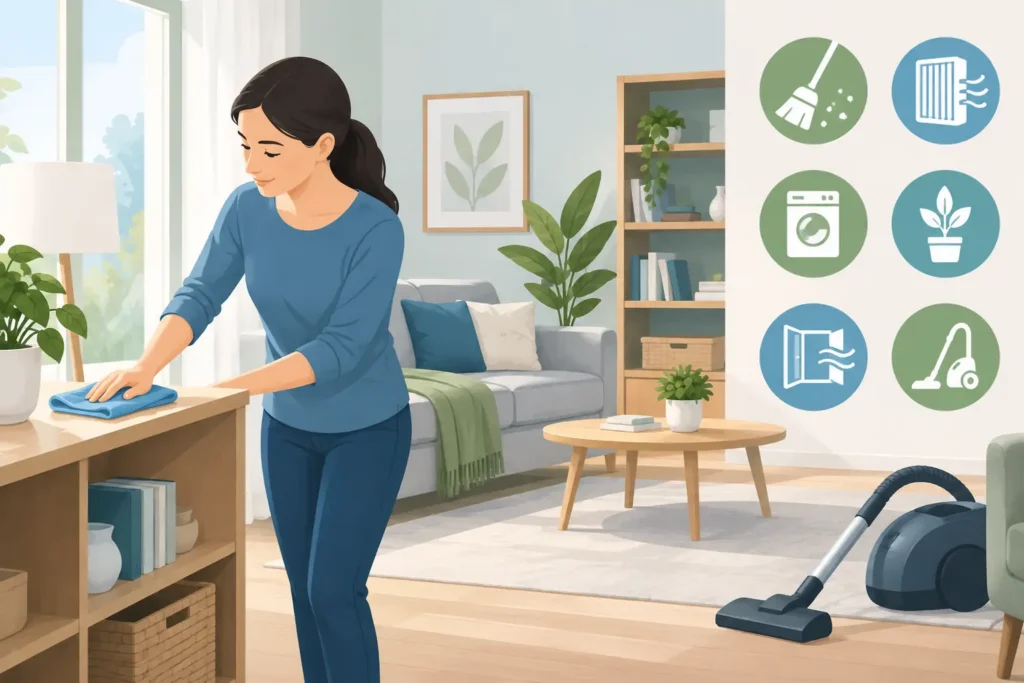
Cleaning works best when it removes dust instead of sending it into the air. Dry dusting with a feather duster may look effective, but it often moves particles from one surface to another. Use a microfiber cloth that captures dust, lightly dampened if the surface allows it.
Work from high areas to low ones. Ceiling fan blades, top shelves, blinds, and light fixtures should be cleaned before tables, counters, and floors. Otherwise, dust from above simply lands on the areas you just finished.
Vacuuming matters, but the type of vacuum and the condition of its filter make a difference. A vacuum with a sealed system and HEPA filtration is often a strong choice for households dealing with allergies, pets, or frequent dust buildup. Vacuum carpets, area rugs, upholstery, and along baseboards regularly. For high-traffic homes, once a week may not be enough for the rooms used most often.
Hard floors need attention too. Sweep gently with a tool designed to collect fine debris, then mop as appropriate for the flooring. Aggressive dry sweeping can stir particles upward, where they may settle again within hours.
Use the Right Air Filter for Your HVAC System
Your HVAC filter is one of the most practical tools for reducing airborne dust. It protects the equipment by catching particles before they reach sensitive components, and it can help improve the air circulating throughout the house.
For many homes, a pleated filter with a MERV rating in the 8 to 11 range offers a sensible balance between filtration and airflow. Higher-rated filters can capture smaller particles, but they are not automatically the right answer. A filter that is too restrictive for an older or improperly sized system can reduce airflow, strain equipment, and affect comfort.
This is where professional judgment matters. The right filter depends on your system, the number of pets in the home, allergy concerns, and how often the system runs. A qualified HVAC technician can recommend a filter that improves air quality without creating an avoidable airflow problem.
Replace filters on schedule, not only when they look dirty. Many homes need a new filter every one to three months, although households with pets, renovations, heavy system use, or allergy concerns may need more frequent changes. Write the replacement date on the filter frame or set a reminder. A neglected filter is a small issue that can contribute to dusty air, higher energy use, and unnecessary wear on the system.
Keep Dust From Building Up in the HVAC System
Your heating and cooling system moves a large volume of air every day. If return grilles are coated in dust, vents are blocked by furniture, or the system has not received routine maintenance, dust can become more noticeable throughout the home.
Start with the easy checks. Keep return-air grilles clear, vacuum their covers carefully, and make sure supply vents are open and unobstructed. Closing too many vents does not usually solve a dust problem and can interfere with balanced airflow.
Routine HVAC maintenance is equally important. During a maintenance visit, a technician can inspect the filter setup, blower area, coils, drain components, and overall system operation. These visits are not just about preventing breakdowns in summer heat or winter cold. They also help identify airflow issues that may be affecting comfort and indoor air cleanliness.
Duct cleaning is sometimes useful, but it is not a cure-all for ordinary household dust. Consider an inspection if you see visible debris blowing from vents, have recently completed a dusty renovation, notice signs of pests or moisture in ductwork, or have excessive buildup that returns shortly after cleaning. In many cases, correcting a filtration, return-air, or humidity issue will provide more lasting results than scheduling duct cleaning alone.
Manage Humidity, Especially in Coastal Homes
Humidity does not create dust, but it can make indoor air problems more complicated. When humidity is high, dust can cling to surfaces and combine with moisture, while damp conditions can encourage mold growth. When air is very dry, fine particles may stay airborne longer and become more noticeable.
Most homes are comfortable at an indoor relative humidity level around 40% to 50%. In Charleston-area summers, an air conditioner that is oversized, short-cycling, or not operating correctly may cool the house without removing enough moisture. That can leave rooms feeling clammy and make indoor air feel less fresh.
A dehumidifier may help in a problem area such as a basement, crawlspace-adjacent room, or laundry area. However, if humidity is elevated across the home, it is worth having the HVAC system evaluated rather than relying on portable equipment in every room.
Focus on the Places Dust Hides
Some household materials hold onto dust and release it slowly every time they are disturbed. You do not need to remove every fabric surface, but you should give the biggest dust collectors regular attention:
- Wash bedding weekly, including pillowcases and blankets.
- Launder curtains when the fabric allows, or vacuum them using an upholstery attachment.
- Clean or replace washable throw pillows, pet beds, and fabric chair covers.
- Vacuum under beds, behind furniture, and beneath large area rugs where dust gathers unnoticed.
- Reduce clutter on open shelves, mantels, and counters so surfaces are easier to clean thoroughly.
If allergies are a major concern, consider whether heavy drapes, wall-to-wall carpeting, and multiple decorative textiles are contributing to the issue. The right choice depends on your household. A room does not need to look bare to be easier to keep clean, but fewer dust-catching materials can make a noticeable difference.
Know When Persistent Dust Calls for Help
If dust returns almost immediately after cleaning, the issue may be more than a busy household. Check for a poorly fitting filter, gaps around return grilles, dirty vents, attic or crawlspace air leaks, or an HVAC system that is not moving air correctly. Renovation work, aging insulation, and damaged ductwork can also introduce fine debris into living spaces.
For homeowners who are unsure where the problem starts, an HVAC inspection provides a practical next step. An experienced technician can assess system airflow and filtration without pushing a replacement that may not be necessary. Mt Pleasant Heating & Air helps local homeowners identify comfort and air-quality concerns with the same careful diagnostics used for heating and cooling repairs.
A cleaner home starts with consistent habits, but your HVAC system should support those efforts, not work against them. If dust, humidity, or uneven airflow keeps getting in the way, addressing the cause can make every room easier to enjoy.