


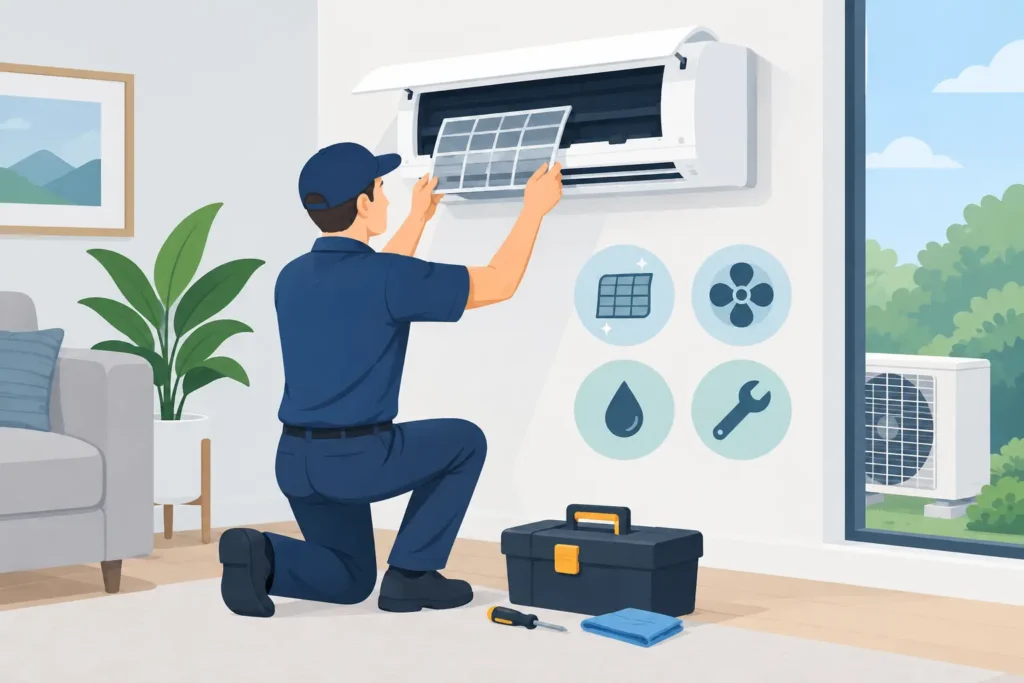
A ductless mini-split can make one hard-to-cool bedroom, sunroom, garage conversion, or entire home noticeably more comfortable. But in the Lowcountry, where long humid summers put cooling equipment to work, a neglected indoor unit can lose airflow, develop odors, and waste energy faster than many homeowners expect. This guide to ductless mini split maintenance explains what you can safely handle at home, what requires a technician, and when a small warning sign deserves prompt attention.
Why Mini-Split Maintenance Matters
Ductless systems do not use the same network of ducts, but they still move a large volume of air across a coil. That air carries dust, pet hair, pollen, and moisture. The washable filters inside the wall-mounted unit catch some of it, while the rest can collect on the coil, blower wheel, condensate pan, and drain line.
When those components get dirty, the system has to work harder to deliver the same comfort. You may notice weak airflow, uneven temperatures, higher electric bills, or a musty smell when the unit starts. Over time, restricted airflow can contribute to frozen coils and unnecessary wear on the compressor.
Routine care also protects a major benefit of ductless equipment: zone control. A mini-split should let you condition the rooms you use without overcooling the rest of the house. If one head is dirty or not draining properly, that zone can become unreliable even when the outdoor unit still appears to run normally.
A Homeowner’s Monthly Mini-Split Routine
Most homeowner maintenance centers on keeping airflow clear and watching for changes in performance. Turn the system off before opening the indoor unit or cleaning its filters.
Clean the indoor air filters
Open the front panel on each indoor head and slide out the mesh filters. If they have a light coating of dust, vacuum them gently with a soft brush attachment. For heavier buildup, rinse them with lukewarm water and let them dry completely before reinstalling them.
During peak cooling season, check filters about once a month. A home with shedding pets, frequent open windows, construction nearby, or residents with allergies may need more frequent cleaning. Do not put wet filters back in the unit, and do not use harsh cleaners that can damage the mesh or leave behind residue.
Keep the indoor unit clear
Leave enough open space around the wall unit for air to circulate. Furniture, tall shelving, curtains, or decorative items placed directly beneath or in front of the head can interfere with airflow and make the room feel less comfortable.
While the cover is open, look for visible dust on the louvers and casing. Wipe exterior surfaces with a soft, lightly damp cloth. Avoid spraying cleaner or water into the unit. The internal coil, blower wheel, electrical components, and drain system need more careful service than a surface wipe can provide.
Check the outdoor condenser
The outdoor mini-split condenser needs clear space to reject heat. Remove leaves, pine straw, grass clippings, and loose debris from around the cabinet. Trim shrubs back so air can move freely around the unit, and make sure downspouts do not dump water directly onto it.
Do not pressure-wash the condenser or push tools through its delicate fins. Bent fins and damaged coil surfaces reduce heat transfer. If the cabinet is heavily soiled, if fins are bent, or if you see oil residue around refrigerant lines, schedule professional service rather than trying to force a fix.
Watch the condensate drain
In cooling mode, the indoor head removes moisture from the air. That water should travel through a drain line and exit outside or into an approved drain connection. In Charleston-area humidity, this system works hard for much of the year.
Check occasionally for water streaks below the indoor head, drips from the wall, staining near the line set, or an unexplained musty odor. These can point to a blocked drain line, dirty condensate pan, or a failed condensate pump. Shut the unit off if water is actively leaking indoors to limit damage, then call for service.
Seasonal Checks That Prevent Summer Problems
Before the hottest stretch of the year, run each indoor head in cooling mode and give it time to operate. Confirm that air feels cool, the fan responds to setting changes, and the unit reaches the selected temperature without running endlessly.
Listen as well. A normal mini-split makes a low fan sound and may make subtle operating noises as it adjusts capacity. Rattling, grinding, squealing, repeated clicking, or loud vibration is different. Do not assume a new noise will work itself out, especially when the system is heading into a busy summer season.
If you use the system for heating, test that mode before the first cold snap. Heat pumps can pause briefly for defrost during chilly, damp weather, which is normal. But poor heat output, persistent icing, or an error code deserves a professional diagnosis.
What Professional Mini-Split Maintenance Includes
A homeowner can clean filters and keep equipment accessible, but a complete tune-up goes further. Professional maintenance is designed to catch conditions that are easy to miss before they become a no-cooling call or a costly repair.
During a proper visit, a technician may clean the indoor coil and blower wheel, clear and flush the condensate system, inspect electrical connections, check operating pressures and temperature performance, and examine the outdoor coil and fan components. They can also evaluate mounting hardware, insulation on refrigerant lines, remote controls, and communication wiring between the indoor and outdoor equipment.
Refrigerant is one area where DIY work is not appropriate. Mini-splits are sealed systems. Low refrigerant usually indicates a leak, not a normal maintenance need. Adding refrigerant without locating and correcting the leak can lead to repeat problems and possible compressor damage.
For most homes, annual professional maintenance is a practical baseline. Systems that run nearly year-round, serve a high-use addition, or operate in a dusty or humid environment may benefit from a check twice a year. The right schedule depends on how the equipment is used, its age, and the conditions around it.
Signs Your Mini-Split Needs Service Now
A dirty filter is common, but not every performance issue is a filter issue. Call for professional help when you see a persistent change in operation, particularly if cleaning the filters does not restore normal airflow.
Pay attention to these warning signs:
- Water leaking from an indoor head or staining the wall beneath it.
- Ice forming on the indoor coil, refrigerant lines, or outdoor unit outside of normal brief defrost activity.
- A musty, sour, or burning odor when the system runs.
- Weak airflow, poor cooling or heating, or a room that will not reach the set temperature.
- Repeated error codes, breaker trips, loud noises, or unusual vibration.
- A sudden increase in electric bills without a clear change in weather or household use.
Waiting can turn a drainage problem into ceiling or wall damage, or turn an airflow problem into a frozen coil. Fast diagnosis is usually less disruptive than running the system until it stops altogether.
Common Maintenance Mistakes to Avoid
The most common mistake is assuming a ductless system needs little attention because it has no ductwork. In reality, each indoor head has its own filter, coil, blower, and drain path. A multi-zone system with three or four heads needs care at every head, not just at the outdoor unit.
Another mistake is covering the outdoor unit tightly for extended periods. If you want to protect it from falling debris during a short project, use a breathable cover designed for the purpose and remove it before operation. A sealed cover can trap moisture and create a home for pests.
Finally, resist the temptation to use coil chemicals, compressed air, or drain-line products without knowing whether they are safe for your equipment. Mini-splits have compact, sensitive components. A professional cleaning is the better choice when buildup is beyond what a filter rinse and exterior wipe can address.
Protect Comfort Before the Next Heat Wave
A few minutes spent cleaning filters and checking for leaks can help your mini-split deliver quieter, more efficient comfort when your home needs it most. If airflow has dropped, odors have appeared, or the unit is showing any sign of drainage or electrical trouble, Mt Pleasant Heating & Air can provide an experienced assessment and practical repair recommendation. Addressing the issue early gives you the best chance to protect your equipment, your comfort, and your home.