When homeowners compare an air handler versus furnace, they are usually trying to answer a practical question: what is actually heating my house, and what should I repair or replace when comfort slips? The answer affects your energy use, indoor comfort, installation options, and the kind of service your system needs.
In Mount Pleasant and Charleston, that distinction matters because many homes rely on heat pumps for efficient year-round comfort. A furnace may be the right fit for one home, while another is better served by an air handler paired with a heat pump. Neither is automatically better. The right choice depends on your existing equipment, fuel availability, home layout, budget, and how you use your heating system.
Air Handler Versus Furnace: The Core Difference
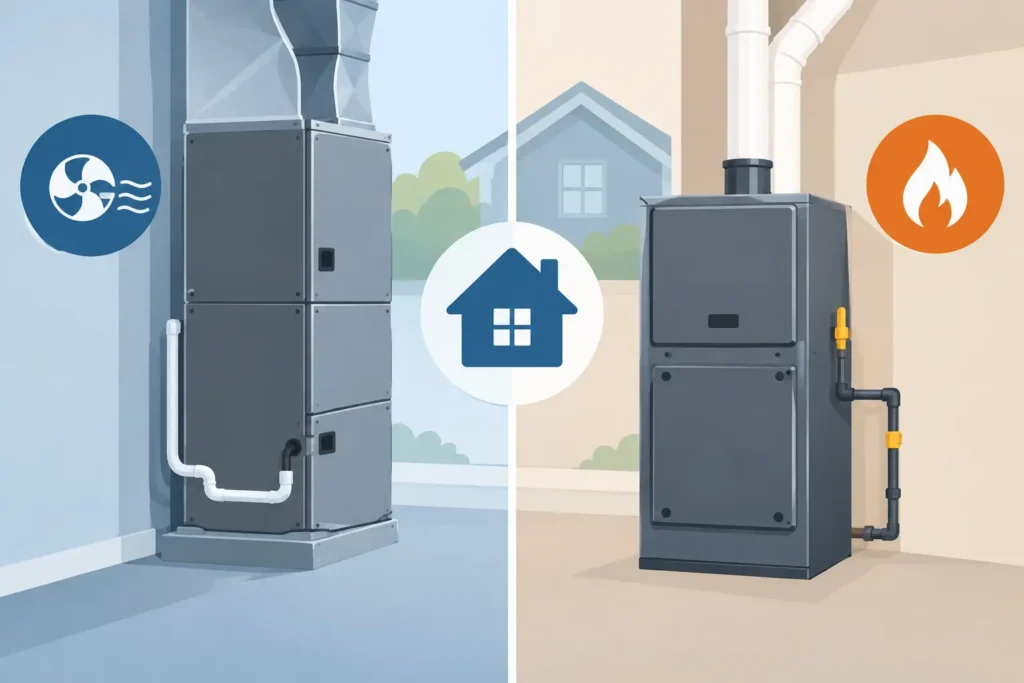
A furnace creates heat. It typically burns natural gas or propane, though electric furnaces are also available, and then uses a blower to move that heated air through your ductwork. In a traditional split HVAC system, the furnace is usually the indoor component connected to an outdoor air conditioner.
An air handler does not create heat by burning fuel. It is the indoor cabinet that contains the blower, evaporator coil, air filter, and other components that circulate and condition air. It most often works with a heat pump. During summer, the air handler helps distribute cooled, dehumidified air. During heating season, it distributes warmth produced by the heat pump.
Put simply, a furnace is primarily a heating appliance with a blower inside. An air handler is an air-moving and air-conditioning component that can support heating when paired with a heat pump or electric heat strips.
How a Furnace Heats Your Home
When your thermostat calls for heat, a gas or propane furnace ignites burners inside a sealed combustion chamber. A heat exchanger transfers that heat to the air moving across it, and the blower sends warm air through the ducts and into each room.
Furnaces can deliver strong, fast heat, especially during a cold snap. Gas furnaces are measured by AFUE, or annual fuel utilization efficiency. A higher AFUE generally means more of the fuel is converted into usable heat rather than lost through venting.
Because a fuel-burning furnace has combustion and venting components, it requires careful professional maintenance. A cracked heat exchanger, ignition problem, blocked condensate drain on a high-efficiency unit, or unsafe venting issue should never be ignored.
How an Air Handler Heats and Cools
An air handler is typically paired with a heat pump. Instead of generating heat, a heat pump transfers it. Even when outdoor air feels cool, a heat pump can collect available heat outdoors and move it inside.
The air handler’s blower circulates that warmth through the home. Many air handlers also include electric auxiliary heat strips. These strips provide supplemental heat when outdoor temperatures are low, when the system is in defrost mode, or when the heat pump needs help catching up after a large thermostat adjustment.
Heat strips are effective, but they cost more to operate than the heat pump itself. If auxiliary heat runs constantly, it may be a normal response to unusually cold weather, but it can also point to a system issue such as refrigerant loss, a malfunctioning outdoor unit, duct leakage, or a thermostat setting problem.
Which System Makes Sense in Coastal South Carolina?
For many local homeowners, a heat pump and air handler combination is an efficient, practical choice. Our winters are generally mild, while long, humid cooling seasons place heavy demand on air conditioning equipment. A heat pump handles both heating and cooling with one outdoor unit, and the air handler supports comfort through every season.
A furnace and central air conditioner can also be an excellent system, particularly for homes already equipped with natural gas or propane. Some homeowners prefer the quick, high-temperature heat a furnace provides. In a larger home, or in a household with specific comfort preferences, that may be worth considering.
The best fit is not based on a single feature or a neighbor’s recommendation. It starts with an accurate evaluation of your current equipment, ducts, insulation, thermostat, utility setup, and comfort concerns. Replacing only one component without checking the whole system can lead to poor performance and shorter equipment life.
Comfort, Efficiency, and Operating Costs
A furnace’s operating cost depends largely on its fuel source, efficiency rating, and local utility pricing. A high-efficiency gas furnace can be economical where natural gas is available, but installation may require gas piping, proper venting, and other home-specific considerations.
A heat pump with an air handler runs on electricity and can be very efficient in moderate weather. Rather than making heat from scratch, it moves heat. That is why it often costs less to operate than electric resistance heat alone. However, the cost picture changes when auxiliary heat strips operate frequently.
Comfort is about more than the equipment cabinet in a closet or attic. Correct sizing, airflow, duct condition, filtration, humidity control, and thermostat programming all affect how a system feels from room to room. An oversized system may heat or cool quickly but cycle too often. An undersized system may run continuously and struggle during extreme weather.
Signs Your Air Handler or Furnace Needs Service
A system does not have to stop completely before it needs attention. Addressing smaller problems early can prevent a more expensive breakdown and may extend the life of equipment that still has useful years left.
Call for professional diagnostics if you notice any of the following:
- Uneven temperatures, weak airflow, or rooms that never seem comfortable
- Rising energy bills without a clear change in household usage
- Loud rattling, grinding, squealing, or repeated clicking during operation
- A heat pump that frequently switches to auxiliary heat or blows cool air in heating mode
- A furnace with ignition failures, unusual odors, short cycling, or a yellow burner flame
- Water around the indoor unit, ice on refrigerant lines, or a clogged condensate drain
For a gas furnace, a carbon monoxide alarm should always be installed and working. If you smell gas, leave the home, avoid switches or open flames, and contact your gas utility or emergency services from a safe location before arranging HVAC service.
Repair or Replace? Start With the Diagnosis
Homeowners are sometimes told that replacement is the only answer when a system develops a problem. In reality, the right path depends on the specific failure, the equipment’s age and condition, repair history, efficiency, and cost of the repair compared with replacement.
A failed blower motor, capacitor, control board, thermostat, or condensate component may be repairable. With an air handler, technicians should also inspect the coil, blower assembly, electrical connections, drain system, and airflow. With a furnace, the heat exchanger, burners, ignition system, safety controls, and venting deserve close attention.
Replacement becomes more reasonable when a major component fails in an aging system, repair costs are mounting, comfort is consistently poor, or the equipment uses outdated refrigerant. But a careful diagnosis should come before a replacement recommendation. The goal is dependable comfort and sensible long-term value, not replacing equipment that can still be repaired safely and effectively.
Maintenance Protects Both Types of Equipment
Whether you have an air handler or furnace, regular maintenance helps preserve airflow, efficiency, and reliability. Homeowners can replace filters on schedule, keep supply and return vents clear, and watch for changes in performance. Beyond that, seasonal professional service is worth the investment.
A proper visit should include inspecting electrical components, checking airflow, cleaning critical parts as needed, verifying thermostat operation, evaluating drains, and looking for developing issues. Furnace maintenance also includes safety checks related to combustion and venting. Heat pump maintenance should cover both the indoor air handler and the outdoor unit.
If your system is making strange noises, failing to keep up, or leaving you unsure whether you have an air handler, furnace, or heat pump, do not guess at the fix. A qualified technician can identify the equipment, find the cause of the problem, and explain practical options so you can make a confident decision for your home.
Have a furnace that needs attention? See our furnace repair service. Have a heat pump with an air handler? See heat pump repair.