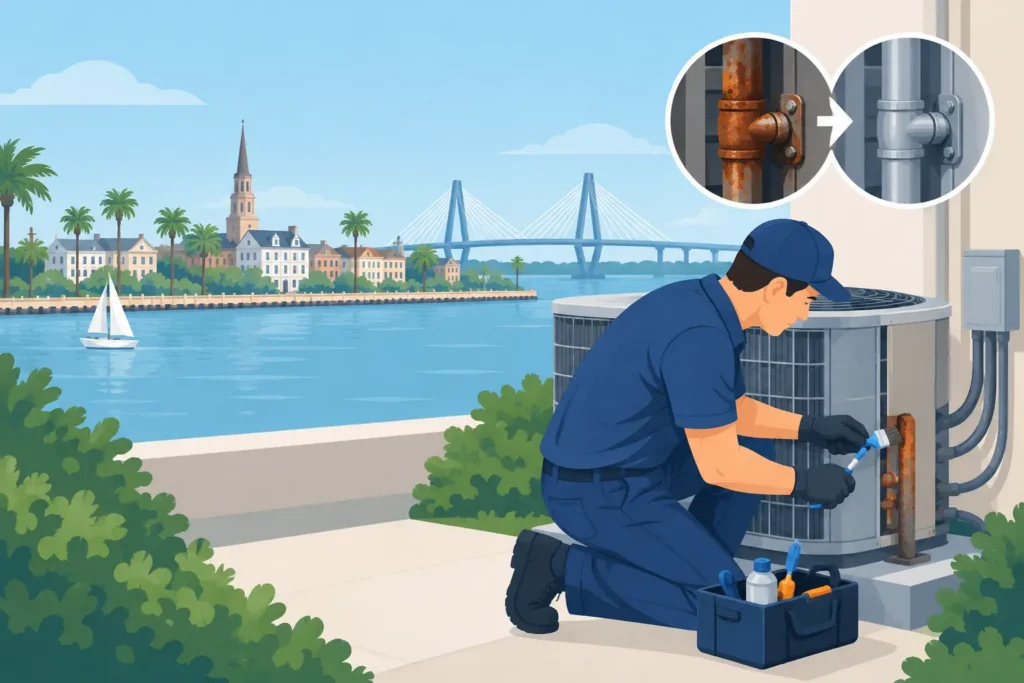
Salt air does not have to be visible to cause expensive damage. Around Charleston, an air conditioner can look normal from the outside while corrosion is slowly weakening its coil, electrical connections, cabinet, or drain components. Timely Charleston HVAC corrosion repair can often stop that damage before a small efficiency problem turns into a no-cooling call during the hottest part of summer.
For homeowners, the goal is not to replace equipment at the first sign of rust. It is to get an accurate diagnosis, understand which parts are affected, and make a practical repair decision based on safety, cost, and the remaining life of the system.
Why Charleston HVAC Systems Corrode Faster
Coastal humidity is hard on HVAC equipment. Moisture stays in the air for long stretches, and salt carried inland from the coast can settle on outdoor units, metal components, and electrical connections. Over time, that combination accelerates oxidation and corrosion, especially on equipment that is not regularly cleaned and inspected.
The outdoor condenser is usually the most exposed part of the system. Its coil has thin metal fins that need open airflow to release heat. When corrosion builds on the coil, heat transfer suffers. Your system may run longer, struggle to keep up in afternoon heat, and use more electricity to deliver the same comfort.
Indoor components are not immune. Condensate drains, evaporator coils, furnace cabinets, wiring terminals, and duct connections can all be affected by moisture. In some homes, a poorly insulated duct or a recurring drain issue creates a damp environment that speeds up damage from the inside out.
Age matters, but location and maintenance habits matter just as much. A newer unit near salt air without regular cleaning may corrode faster than an older, well-maintained system farther inland.
Common Signs You May Need HVAC Corrosion Repair
Some corrosion is easy to spot. Rust on a cabinet, flaking paint, green or white buildup around copper connections, and deteriorating screws are all visible warnings. The more serious issue is often hidden inside the equipment, where a homeowner cannot safely inspect it.
Performance changes are usually what bring the problem to light. You may notice that the air conditioner runs longer than it used to, rooms cool unevenly, the system trips a breaker, or the outdoor unit makes an unfamiliar humming or clicking sound. A refrigerant leak caused by a corroded coil can also lead to weak cooling, ice on refrigerant lines, or a system that cannot reach the thermostat setting.
Electrical corrosion deserves prompt attention. Corroded contactors, terminals, disconnects, and wire connections can create unreliable operation and, in some cases, a safety concern. If the unit will not start consistently, shuts off unexpectedly, or has a burning odor, turn it off and arrange professional service rather than repeatedly resetting a breaker.
A rusty cabinet alone does not always mean the system is failing. Surface rust can be manageable if the underlying structure is sound. The right answer depends on whether the corrosion has reached parts that control refrigerant, electrical operation, airflow, or structural support.
Charleston HVAC Corrosion Repair Starts With Diagnosis
A proper diagnosis goes beyond looking at the outside of the unit. A technician should inspect the condenser coil, refrigerant lines, electrical components, fan assembly, drain system, insulation, and cabinet condition. They should also check how the system is performing under operation, including temperatures, electrical readings, airflow, and refrigerant-related symptoms.
This matters because corrosion can imitate other HVAC problems. A unit that runs constantly may have a dirty coil, low refrigerant, a weak capacitor, undersized ductwork, thermostat issues, or more than one concern at once. Replacing a part without finding the underlying cause can leave you with the same problem a few weeks later.
If a coil is suspected of leaking, testing should confirm it. Refrigerant is not something to repeatedly add without addressing why the charge is low. A leak that is ignored can reduce comfort, increase operating costs, and place added strain on the compressor.
At Mt Pleasant Heating & Air, the focus is on experienced diagnostics and sensible options. That means looking for a repair that protects your investment when the equipment is otherwise in good condition, not treating every corroded component as an automatic reason to replace the whole system.
What Can Be Repaired and What May Need Replacement
Many corrosion-related repairs are straightforward when found early. A technician may be able to replace corroded electrical terminals, contactors, capacitors, disconnects, screws, insulation, drain fittings, or damaged sections of refrigerant line. Cleaning the coil and cabinet, correcting drainage, and addressing exposed metal can also slow further deterioration.
A corroded evaporator or condenser coil requires a closer cost comparison. If the coil has a small confirmed leak and the system is relatively new, coil replacement may be the sensible route. If the unit is older, has several repair needs, uses an older refrigerant, or has a failing compressor, investing heavily in a major component may not offer the best value.
The cabinet and base pan also matter. When corrosion affects the supports holding the compressor or fan motor, the repair becomes more than cosmetic. A weakened base can lead to vibration, noise, poor drainage, and eventual component damage. In that case, replacement may be safer and more reliable than trying to extend the life of a severely compromised outdoor unit.
There is no one-size-fits-all threshold. A repair can make excellent financial sense on a well-maintained system with years of useful life left. Replacement can be the wiser choice when repeated repairs are adding up and reliability is becoming a concern. A good service visit should give you clear information about both paths, including the urgency of the issue and what can reasonably wait.
Preventing Corrosion Before It Becomes a Breakdown
Coastal HVAC maintenance is not just a seasonal checkup. It is a way to catch the early signs of corrosion while repairs are still smaller and less disruptive. Professional maintenance typically includes inspecting electrical connections, cleaning coils as needed, checking drainage, examining refrigerant lines and insulation, and looking for damage around the cabinet and base.
Homeowners can help protect equipment between visits without taking risks. Keep leaves, mulch, grass clippings, and stored items away from the outdoor unit so air can move freely. Avoid spraying the unit with harsh chemicals or high-pressure water, which can bend delicate coil fins and cause additional damage. If you rinse exterior debris with a gentle hose spray, turn the system off first and keep water away from electrical compartments.
It also helps to address drainage problems quickly. Water pooling near the unit, a clogged condensate line, or wet insulation around refrigerant piping should not be ignored. Excess moisture creates the conditions corrosion needs to spread.
Protective coil coatings can be useful in some coastal applications, particularly for equipment exposed to salt air. However, the condition of the current coil, the age of the unit, and the quality of the coating application all matter. A coating is preventive protection, not a cure for a coil that already has widespread deterioration or active leaks.
When to Schedule Service
Do not wait for total system failure if you see heavy rust, hear new electrical noises, notice declining cooling performance, or suspect a refrigerant leak. Early service often gives you more options and may prevent a breakdown during a Charleston heat wave.
For an urgent issue such as a breaker that keeps tripping, a burning smell, a system that will not start, or a major loss of cooling, shut the system down and call for service. Professional help is especially important around electrical and refrigerant components, where a quick do-it-yourself fix can create a larger repair or a safety risk.
Your HVAC system works hard against coastal conditions. Giving it a careful inspection at the first sign of corrosion is one of the most practical ways to protect comfort, control repair costs, and keep your home ready for the next hot, humid day.