
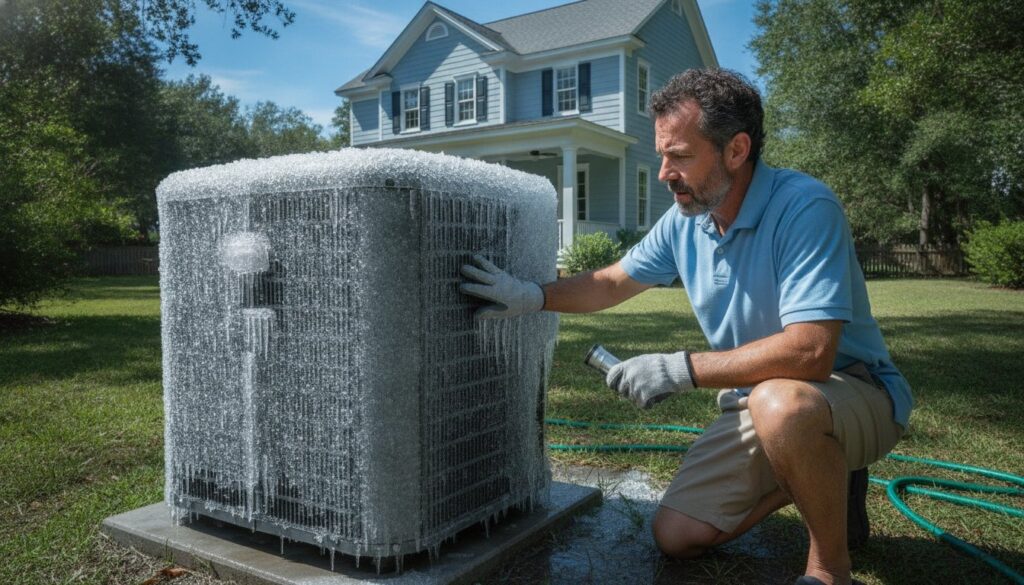
It’s a sweltering afternoon in the Lowcountry, the humidity is thick enough to feel, and suddenly your vents start blowing lukewarm air. You head to the indoor unit only to find a sight that makes no sense in the middle of a South Carolina summer: your cooling system is covered in a thick layer of white frost. It’s confusing to see ice when it’s ninety degrees outside, and we know that immediate fear of needing a total system replacement. Dealing with an ac unit freezing up repair is stressful, but it doesn’t have to mean your summer is ruined.
We understand that you want your home to be a comfortable sanctuary again without the dread of a massive bill. Discover why your AC is icing over and follow our step-by-step checklist to thaw your system and restore cool air to your home. We’ll guide you through common culprits like restricted airflow and explain how the transition to new refrigerants affects your older unit. You’ll learn how to get your system running efficiently again, lower your energy bills, and prevent that stubborn ice from returning to your Charleston home.
Key Takeaways
- Learn the “Golden Rule” of HVAC emergencies and why turning off your thermostat immediately is the best way to save your compressor from permanent damage.
- Follow a simple troubleshooting checklist for ac unit freezing up repair, starting with basic airflow checks like replacing clogged filters and clearing blocked return vents.
- Discover how unique Lowcountry factors, such as extreme humidity and salt air corrosion, accelerate ice buildup on your evaporator coils.
- Gain a clear understanding of the “Heat Exchange” process and why restricted airflow causes your system’s temperature to plummet below freezing.
- Identify the signs that suggest a professional diagnostic is needed to locate refrigerant leaks or more complex mechanical issues.
Help! My AC Unit is Covered in Ice: Immediate Steps to Take
Finding a layer of frost on your air conditioner during a Charleston heatwave is a confusing sight. This condition, known as “freezing up,” occurs when your evaporator coil temperature drops below 32 degrees Fahrenheit. At this point, the moisture pulled from your home’s humid air doesn’t drain away. Instead, it turns into solid ice that acts as an insulator, blocking all cooling power. If you see this happening, you need to act quickly to protect your equipment.
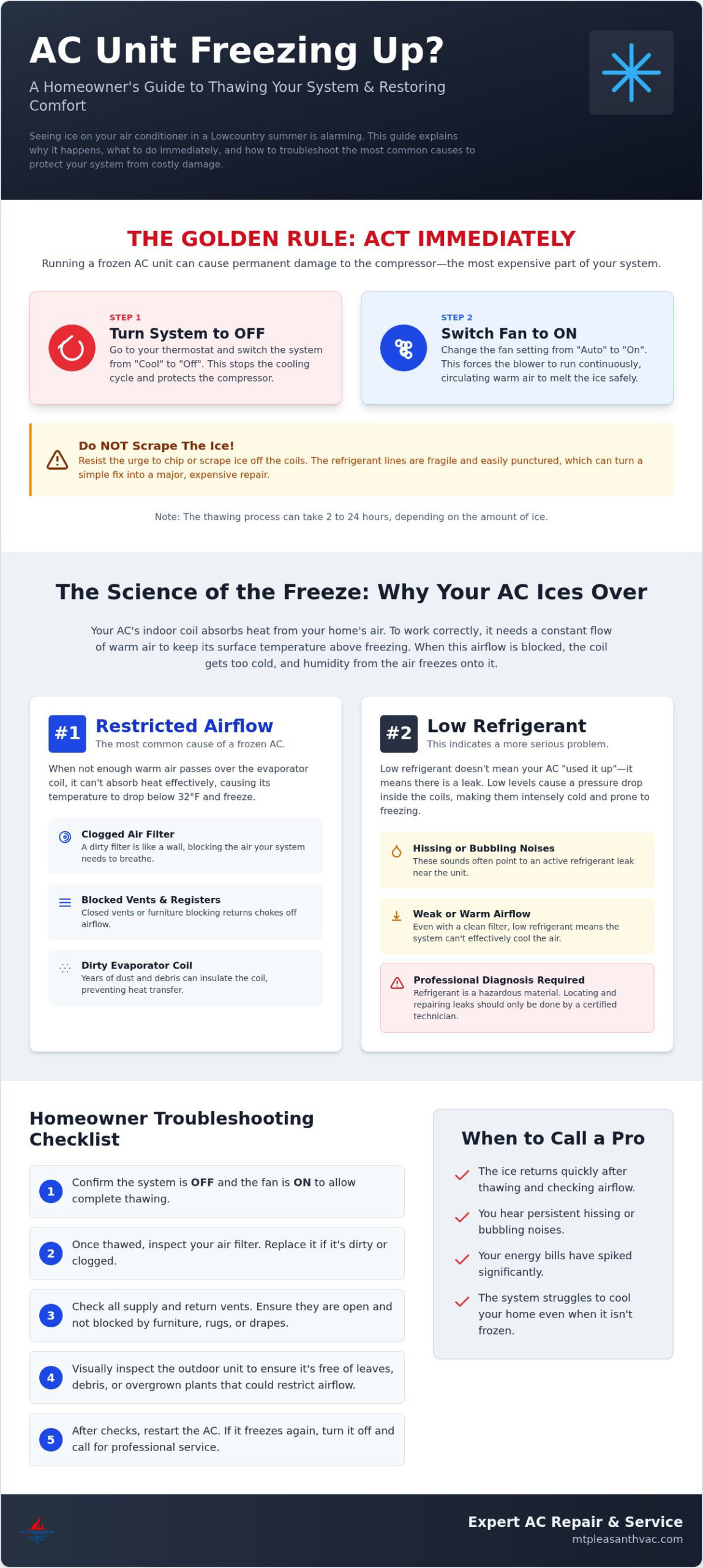
The “Golden Rule” for any homeowner in this situation is to turn the system off at the thermostat immediately. Why is this so urgent? Running a frozen unit forces the compressor to work under extreme pressure. Since the compressor is the heart of your system and one of the most expensive components to replace, turning the power off now can save you thousands of dollars later. Once the cooling is off, switch your thermostat fan setting from “Auto” to “ON.” This keeps the blower motor running, which pushes warm indoor air over the frozen coils to help them melt safely.
Understanding The Science of the Freeze helps clarify that this is a delicate balance of airflow and temperature. While you wait for the ice to melt, please resist the urge to help it along with tools. Never try to scrape or chip ice off the coils with a knife or screwdriver. The copper refrigerant lines are thin and easily punctured. A single slip could turn a simple ac unit freezing up repair into a major refrigerant leak that requires a much more complex fix.
Recognizing the Warning Signs of a Frozen AC
How do you know your system is icing over before it becomes a total block of ice? Keep an eye out for these specific symptoms that suggest your unit is struggling:
- Visual Frost: You see white ice buildup on the outdoor copper refrigerant lines or the indoor evaporator coil.
- Warm Air: The system is running constantly, but the air coming from your vents feels lukewarm or humid.
- Unusual Noises: Listen for hissing or bubbling sounds, which often indicate a refrigerant leak that causes the coil temperature to plummet.
Why You Must Thaw the Unit Before a Technician Arrives
It’s natural to want an immediate solution, but a technician cannot diagnose a system that they can’t see. If the internal components are encased in ice, we can’t check the refrigerant levels or inspect the coil for damage. Thawing is a slow process that can take anywhere from 2 to 24 hours depending on the severity of the buildup. By starting the thawing process the moment you notice a problem, you ensure that AC repair Mount Pleasant SC experts can get straight to work the moment they arrive at your door.
The Science of the Freeze: Airflow vs. Refrigerant
Why does a machine designed to cool your home end up looking like a block of ice? It seems counterintuitive, but the answer lies in a delicate balance of physics. Your air conditioner relies on a process called “Heat Exchange.” The indoor evaporator coil acts like a sponge, absorbing heat from your home’s air to keep you comfortable. For this to work safely, the coil needs a constant, high-volume stream of warm indoor air. This warmth keeps the refrigerant inside the coil from getting too cold. When that air supply is cut off, the heat exchange fails, and the refrigerant temperature plummets until the moisture on the coil turns into solid ice.
Think of your AC as a system that needs to “breathe” to survive. When something blocks that breath, the unit starts to suffocate. It’s no longer just a cooling machine; it’s a system under extreme physical stress. This struggle is what eventually leads to an ac unit freezing up repair. If you suspect your system is working too hard just to keep up with the Charleston heat, scheduling a professional inspection can help identify these balance issues before the ice starts to form.
Restricted Airflow: The #1 Culprit
Airflow is the lifeblood of your HVAC system. When your air filters are gray, dusty, or clogged, they act like a solid wall that prevents warm air from reaching the evaporator coil. This lack of air causes the refrigerant to stay too cold for too long. Similarly, if you have blocked return vents or you’ve closed too many supply registers in unused rooms, you’re inadvertently changing the system’s internal pressure. A clogged blower motor fan contributes to coil freezing by failing to move sufficient air across the heat exchanger, causing temperatures to drop below the freezing point.
Refrigerant Leaks and Low Pressure
There’s a common misconception that refrigerant is a fuel that gets “used up” over time. In reality, your AC is a closed system; if the refrigerant is low, it means you have a leak. Low refrigerant levels cause a drop in system pressure, which paradoxically makes the remaining refrigerant much colder than it should be. This extreme cold quickly turns any humidity into ice. Because an ac blowing warm air fix often involves checking these pressure levels, a professional leak test is usually the first step in a permanent repair. The physical properties of R-410A mean that even a small loss in pressure can lead to a total system freeze-up during a humid South Carolina afternoon.
Your AC Freezing Up Troubleshooting Checklist
Is your system struggling to keep up with the Lowcountry heat? Before you call for an ac unit freezing up repair, there are several things you can safely inspect yourself. Often, a frozen system is simply a cry for help from a unit that can’t get enough air. Use this checklist to identify the source of the problem while your unit finishes its thawing cycle.
- Check the Air Filter: Pull your filter out and hold it up to a light. If it’s gray, dusty, or you can’t see light through the fibers, replace it immediately. A clogged filter is the most common reason for a system to ice over.
- Inspect the Return Vents: Walk through your home and ensure that no furniture, rugs, or heavy curtains are blocking the large intake vents. Your AC needs to pull in a specific volume of air to keep the coils warm.
- Clean the Ductwork: Over time, dust and debris can accumulate inside your system, restricting airflow. Scheduling a service with Pronto Air Duct Cleaning ensures your ventilation is clear and your system is breathing properly.
- Examine the Evaporator Coil: If your indoor unit has an accessible panel, take a look at the silver fins of the coil. If they are covered in a layer of pet hair or grime, that dirt acts as insulation, preventing the air from warming the refrigerant.
- Check the Condensate Drain Line: Look at the white PVC pipe near your indoor unit. If you see standing water in the emergency pan or clogs in the line, the excess moisture can contribute to ice formation and humidity issues.
- Verify Thermostat Settings: Check your cooling demand. It’s tempting to set the dial to 60 degrees during a Charleston scorcher, but this doesn’t make the air colder. It only forces the system to run indefinitely, which can lead to a frozen coil if there’s even a minor airflow restriction.
While you’re waiting for your unit to thaw and checking these items, it’s a great opportunity to look at other home maintenance tasks. For homeowners who want to ensure their entire property is in top shape, American Handyman provides reliable, professional handyman services that complement specialized HVAC maintenance.
The ‘Safe to DIY’ vs. ‘Call a Pro’ Line
We believe in empowering homeowners to handle basic maintenance, but it’s important to know where the DIY path ends. You can safely change filters, clear vent obstructions, and use a wet-dry vac to clear a clogged drain line. However, internal mechanical issues require an expert. Handling refrigerant is where we draw a hard line. It’s illegal and dangerous for unlicensed individuals to open the refrigerant loop or attempt to “top off” a system. These chemicals require specialized recovery equipment and EPA certification to handle safely.
Signs Your Frozen AC Needs Professional Repair
Just as owners of precision machinery trust Euro Performance Auto Shop LLC for specialized mechanical repairs, homeowners should rely on certified technicians for the delicate internal components of their cooling systems.
Sometimes, a new filter isn’t enough to solve the problem. If you notice any of the following, it’s time to bring in a professional for an ac unit freezing up repair:
- The ice returns almost immediately after you’ve thawed the unit and replaced the filter.
- You notice oily stains near the refrigerant line connections, which is a telltale sign of a chemical leak.
- The indoor blower motor isn’t spinning, or it’s making a loud grinding or screeching noise when it tries to start.
Preventing Ice Buildup in the Lowcountry Climate
Living in Mount Pleasant means our HVAC systems face unique environmental pressures that most generic advice misses. During a peak Charleston summer, your air conditioner isn’t just a cooler; it’s a massive dehumidifier. It can pull several gallons of water out of your indoor air every single day. If your system faces even a minor restriction, that heavy moisture load turns into a solid block of ice almost instantly. This is why local knowledge is vital for avoiding a frequent ac unit freezing up repair.
We also have to contend with the “Salt Air” factor. If you live near the coast, the salty mist in our air can slowly corrode the delicate aluminum fins on your outdoor unit. This corrosion creates a barrier that reduces heat transfer efficiency. It forces your system to run longer and colder, which increases the risk of a freeze. Many homeowners try a “set it and forget it” approach with their thermostats, but our climate requires a more active strategy. Seasonal adjustments help prevent the system from overworking during sudden humidity spikes.
Humidity Management and the Drain System
High humidity means your evaporator coil is constantly wet. This moisture needs a clear path out of your home at all times. If your condensate pump fails or the drain line develops a clog, that standing water can quickly turn into ice or lead to indoor flooding. Because stagnant water also attracts unwanted insects, you might check out Mosquito Assassin Pest Control LLC to see how professionals manage these property risks. A float switch is a critical safety device that automatically shuts down your system if it detects a drain clog, preventing expensive water damage to your floors or ceiling. Keeping these lines clear is just as important as changing your filters.
In our humid climate, a sticky “biofilm” often forms on the evaporator coils, trapping dust and reducing airflow. Professional coil cleanings remove this buildup, ensuring your system can breathe properly. Checking refrigerant pressures twice a year is also essential to ensure peak performance and longevity. Our hvac maintenance plans charleston homeowners rely on often pay for themselves by catching these small issues before they require an emergency ac unit freezing up repair. Regular checkups are the best way to ensure your comfort isn’t interrupted by a sudden system failure.
Restoring Your Comfort: Professional AC Repair in Mount Pleasant
When your troubleshooting steps don’t resolve the issue, it’s time for a professional ac unit freezing up repair. We’ve seen many homeowners feel pressured into expensive replacements the moment a system starts icing over. At MT Pleasant Heating & Air Conditioning, our approach is different. We focus on restoring your current system’s efficiency whenever possible. Our diagnostic process isn’t about just “topping off” your refrigerant; it’s about finding the specific mechanical or chemical imbalance that caused the freeze in the first place.
When our technician arrives at your door, you can expect a thorough investigation. We use advanced leak detection tools, including electronic sniffers and specialized dye tests, to locate even the smallest pinhole leaks in your evaporator coil. Simply adding refrigerant to a leaking system is like trying to fill a bucket with a hole in the bottom. We secure your system by fixing the source of the pressure drop, ensuring your home stays cool long after we leave. This commitment to finding the root cause is why our neighbors trust us to handle their most frustrating HVAC emergencies.
When a Frozen Unit Signals a Replacement
For homeowners in other humid coastal areas who need the same level of diagnostic expertise, you can discover Ultra Air Heating and Cooling for professional AC repair and HVAC services in Southwest Florida.
Homeowners further north in the Mid-Atlantic region can find similar high-quality support from B&B Air Conditioning & Heating Service, which has provided reliable HVAC and generator services to Maryland and Northern Virginia for decades.
Similarly, for readers based in the United Kingdom, you can explore Residential Air Conditioning Installation and Servicing with Essex Home Air Conditioning, which provides expert installation and maintenance for homeowners across the Essex region.
For homeowners in Northern California facing similar cooling challenges, Christensen Heating and Cooling provides expert AC repair and maintenance services for residents in the Rocklin and Roseville region.
Similarly, homeowners in the desert heat of Nevada can learn more about professional cooling and maintenance solutions from ProServ Las Vegas.
While we always aim to fix what’s broken, there are times when a repair is no longer the most cost-effective path. We generally use the 10 to 15 year rule as a starting point. If your system is in its second decade of service and requires a major component like a new evaporator coil, the investment might not make sense. This is especially true as we navigate the R-410A refrigerant phase-down that began in 2026. While we can still legally service these units, the rising cost of older refrigerants makes major repairs on aging systems less practical. If you’re weighing your options, our hvac repair vs replacement guide provides a deeper look at how to make the right choice for your budget.
24/7 Emergency Service: We’re Ready When You Freeze
AC failures don’t wait for convenient business hours, and neither do we. We provide 24 hour ac repair mount pleasant residents can count on because we know how unbearable a humid Charleston night can feel without a working system. As a locally owned and operated expert, we understand the specific layout and coastal challenges of Mount Pleasant homes. Our service is neighborly and low-stress, designed to give you peace of mind when your comfort is on the line. Don’t spend another hour in a sweltering house. Contact MT Pleasant Heating & Air for fast AC repair today.
Restore Your Home’s Cool Comfort Today
Dealing with a frozen air conditioner doesn’t have to be a disaster. By remembering the golden rule of turning the system off immediately, you’ve already taken the most important step in protecting your compressor from permanent damage. Whether the issue was a simple clogged filter or a more complex refrigerant leak, you now have the tools to understand why your system struggles in our humid Lowcountry climate. Regular maintenance remains your best defense against the salt air and high moisture levels that challenge every HVAC unit in Mount Pleasant.
If your troubleshooting steps didn’t clear the frost, it’s time to seek a professional ac unit freezing up repair to ensure your system is balanced and efficient. At MT Pleasant Heating & Air Conditioning, we’re proud to be locally owned and operated right here in the Lowcountry. Our expert technicians are committed to a “fix it before we replace it” philosophy, saving you money while restoring your peace of mind. We offer 24 hour ac repair in Mount Pleasant because we know that comfort can’t wait for Monday morning. Schedule Your AC Diagnostic in Mount Pleasant Today and let us get your home back to the sanctuary it should be.
Frequently Asked Questions
Can I just let the ice melt and turn the AC back on?
No, letting the ice melt is only a temporary fix that doesn’t address the root cause. While the system might blow cold air for a short time after thawing, the underlying issue like restricted airflow or a refrigerant leak will cause the ice to return quickly. Turning it back on without a proper inspection risks damaging the compressor. You should investigate the checklist items or call for a professional diagnostic to ensure a permanent solution.
How long does it take for an AC unit to thaw?
Thawing typically takes between 2 and 24 hours depending on the thickness of the ice and the outdoor temperature. To speed up the process, turn off the cooling at the thermostat and set the fan to the “ON” position. This circulates warm air from your home over the frozen coils. Don’t use hair dryers or heat guns, as extreme heat can damage the delicate aluminum fins or copper refrigerant lines.
Why is my AC freezing up if the filter is clean?
Even with a clean filter, several other issues can cause an ac unit freezing up repair to become necessary. Common culprits include a dirty evaporator coil, blocked return vents, or a failing blower motor that isn’t moving enough air. Additionally, low refrigerant levels due to a leak will cause the coil temperature to drop below freezing. In our coastal environment, salt air corrosion can also reduce the efficiency of the heat exchange process.
Will a frozen AC unit fix itself?
No, a frozen system won’t fix itself. Ice is a symptom of a mechanical or airflow problem that requires intervention. If you simply wait for it to melt and restart the unit, the ice will inevitably return. Ignoring the problem can lead to a complete system breakdown or a burnt-out compressor. It’s best to identify the cause early while the repair is still manageable and helps you avoid a much larger bill later.
Is it expensive to fix an AC unit that is freezing up?
The cost depends entirely on the root cause of the freeze. Simple fixes like replacing a clogged filter or clearing a condensate drain line are very affordable. However, if the freeze-up is caused by a refrigerant leak or a damaged evaporator coil, the repair will be more involved. We always prioritize fixing your existing system before suggesting a replacement, helping you avoid unnecessary expenses while restoring your home’s comfort in the Charleston heat.
Can low refrigerant cause an AC to freeze?
Yes, low refrigerant is a leading cause of ice buildup. When refrigerant levels drop due to a leak, the pressure inside the evaporator coil also drops. This causes the remaining refrigerant to expand more than intended, making it much colder than 32 degrees. As moisture from your home’s air hits this super-chilled coil, it freezes instantly. Since refrigerant isn’t “used up,” a freeze-up almost always indicates a leak that needs professional attention.
What happens if I run my AC while it is frozen?
Running a frozen system can cause catastrophic damage to your compressor. Because the ice blocks the heat exchange process, the liquid refrigerant might not turn back into a gas before reaching the compressor. Compressors are designed to handle gas, not liquid, and this “slugging” can lead to total mechanical failure. If you notice ice, turn the system off immediately to prevent a simple repair from turning into a full and expensive system replacement.
How often should I change my air filter in Mount Pleasant?
In the high-humidity environment of Mount Pleasant, you should check your filter every 30 days and change it at least every 90 days. During the peak of summer, when your AC runs constantly to battle South Carolina’s heat, monthly changes are often necessary. Pet owners or families with allergies may need to swap them even more frequently to ensure the airflow remains strong enough to prevent an ac unit freezing up repair.