Imagine it’s 2 AM on a Tuesday in July. Your Mount Pleasant home is already feeling like a sauna because the humidity is climbing toward 90 percent and your vents are blowing warm air. You’re likely staring at your thermostat, wondering if this is a simple tripped breaker or a total system collapse. It’s stressful to feel stuck between an unbearable night of heat and the fear of a massive, unexpected bill from a contractor you’ve never met. We understand that losing climate control in the Lowcountry isn’t just an inconvenience; it’s a genuine emergency for your family’s comfort.
Our team provides the responsive heat pump emergency service sc residents trust to restore peace of mind without the high-pressure sales tactics. You’ll discover exactly when to call for professional help, how we navigate unique coastal challenges like salt-air corrosion, and what to expect during our transparent diagnostic process. We’ll show you how we prioritize efficient repairs to keep your home cool and your stress levels low. This guide helps you move from the chaos of a broken system to a clear, affordable path forward.
Key Takeaways
- Learn to distinguish between a minor glitch and a true emergency, such as acrid smells or a total loss of temperature control during a Lowcountry heatwave.
- Discover how the unique coastal environment, including salt-air corrosion and extreme humidity, specifically impacts the lifespan of your heat pump’s outdoor components.
- Access the 24/7 heat pump emergency service sc residents depend on for a transparent diagnostic that focuses on repairing your system rather than pushing for a replacement.
- Understand the importance of local expertise in navigating Mount Pleasant building codes, including hurricane strapping and flood elevation requirements for HVAC equipment.
- Find out how regular maintenance can prevent the #1 cause of summer system shutdowns: clogged condensate lines triggered by South Carolina’s high humidity.
Recognizing a Heat Pump Emergency in the Lowcountry
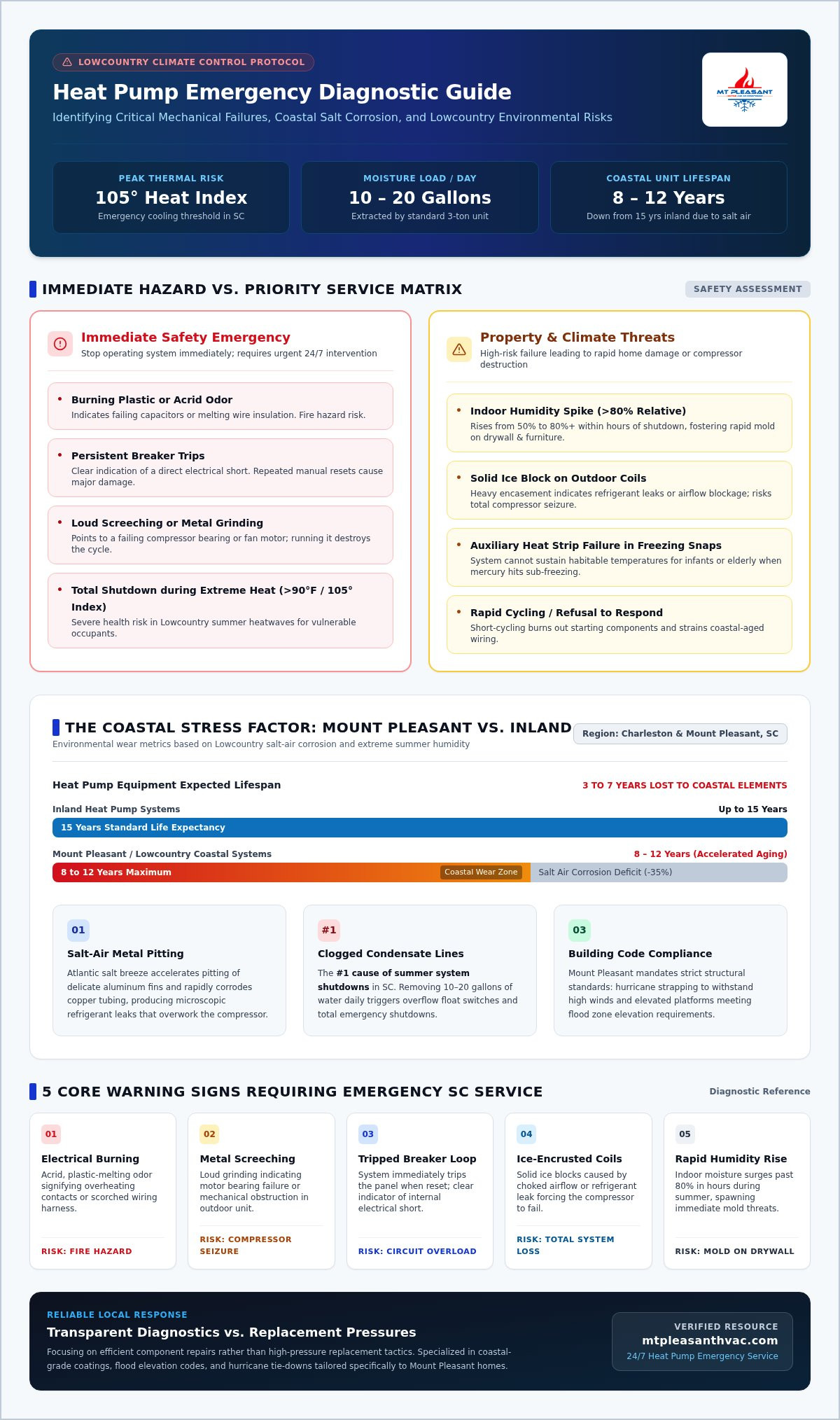
How do you know if your system just needs a routine tune-up or if you’re facing a genuine crisis? In South Carolina, the line between an annoyance and an emergency usually depends on the weather outside and the safety of your home inside. A total loss of cooling when the heat index hits 105 degrees isn’t just uncomfortable; it’s a health risk. Similarly, hearing a loud grinding noise or metal-on-metal screeching from your outdoor unit suggests a mechanical failure that could destroy the entire heat pump refrigeration cycle if you leave it running. If your system is rapidly cycling on and off or refuses to respond to the thermostat at all, you likely need the heat pump emergency service sc experts provide to prevent further damage.
When “Emergency” Means Immediate Safety Concerns
Sometimes the signs are more subtle but equally dangerous. Have you noticed a sharp, acrid odor similar to burning plastic? This often indicates electrical components are overheating or wires are melting. If you find yourself resetting a tripped breaker repeatedly, stop immediately. A breaker that won’t stay set is a safety feature telling you there’s a direct short. Ignoring these smells or electrical red flags can lead to a fire. In the winter, keep an eye out for heavy ice buildup on the outdoor coils. While a light frost is normal, a solid block of ice can lead to a total compressor failure, turning a repairable issue into an expensive replacement.
Comfort Emergencies: High Humidity and Cold Snaps
In Charleston and Mount Pleasant, our humidity is a unique challenge. When a heat pump fails in the summer, indoor humidity levels can skyrocket from a comfortable 50 percent to over 80 percent in just a few hours. This moisture doesn’t just make you sweat; it creates the perfect environment for rapid mold growth on your drywall and furniture. This makes a fast response essential for protecting your property. During rare winter cold snaps, the failure of your auxiliary heat strips is another critical emergency. Without those backup coils, your home can’t maintain a safe temperature for infants or elderly family members when the mercury drops below freezing.
Look for these critical signs that your system needs professional heat pump emergency service sc intervention:
- Electrical burning smells: A sign of melting wire insulation or failing capacitors.
- Grinding or shrieking: Indicates a failing fan motor or compressor bearing.
- Persistent breaker trips: A clear warning of a dangerous electrical short.
- Total loss of climate control: Especially dangerous when Lowcountry temperatures exceed 90 degrees.
- Ice-encrusted coils: A sign of refrigerant leaks or airflow blockages that threaten the compressor.
Common Causes of Urgent Heat Pump Failure in Coastal SC
Living in the Lowcountry means dealing with unique environmental stressors that inland systems never face. While a heat pump in a drier climate might last 15 years, our units often reach the end of their reliable life in just 8 to 12 years. This shortened lifespan is driven by the very things we love about the coast: the salt air and the high humidity. When these forces combine, they create the perfect environment for mechanical failure, often necessitating the professional heat pump emergency service sc homeowners rely on during our hottest months.
The Impact of Salt Air on Heat Pump Longevity
Salt spray is a silent killer for HVAC systems. It accelerates the pitting of aluminum fins and corrodes copper tubing, eventually leading to microscopic refrigerant leaks. These leaks force your compressor to work harder, which eventually leads to a complete shutdown. To avoid these surprises, local homes often require specialized coastal-grade components or protective coatings that resist the corrosive effects of the Atlantic breeze. Following a professional ENERGY STAR maintenance checklist can help identify this corrosion early, but if your system is already struggling, it’s usually because the damage has reached a critical point.
Electrical and Mechanical Stress Factors
Humidity management is another major factor. On a typical summer day in Charleston, relative humidity often exceeds 80 or 90 percent. A standard 3-ton heat pump has to pull between 10 and 20 gallons of water out of the air every single day. This massive latent load places immense strain on the fan motor and the compressor. If your condensate drain line gets even slightly clogged, the system’s safety float switch will trip, causing an immediate “no-cool” emergency. This is actually the most common reason we receive urgent calls during the peak of July.
We also see a high volume of capacitor failures during peak heat. These small components act like batteries to kick-start your motors; when temperatures stay above 90 degrees for days, they often overheat and fail. Sometimes, the issue is a reversing valve that gets stuck, trapping your system in the wrong mode just as the weather shifts. If you’re experiencing any of these issues, don’t wait for the system to fail completely. Our team at MT Pleasant Heating & Air Conditioning specializes in these coastal challenges and focuses on fixing the root cause to keep your system running longer. Homeowners dealing with uneven temperatures throughout their home may also want to explore multi zone hvac systems sc as a long-term solution to eliminate hot and cold spots once their emergency is resolved.
Emergency vs. Standard Repair: When to Call for 24/7 Support
Is that strange humming noise worth an after-hours call, or can it wait until Monday morning? In Mount Pleasant, the answer usually depends on the current heat index and the specific symptoms your system is showing. While a standard repair can often be scheduled during business hours, certain situations require the immediate heat pump emergency service sc experts provide to prevent a small glitch from turning into a catastrophic failure. Choosing between a standard restoration and an emergency call comes down to a simple risk assessment: will waiting cause more damage to my home or my health?
Simple Checks Before You Call
Before you pick up the phone for an emergency dispatch, take five minutes to verify a few basics that might save you a service fee. First, check your thermostat batteries; a blank screen often just means the AA batteries died. Next, ensure your settings haven’t been accidentally switched to “Heat” during a summer night or “Cool” in the winter. Finally, check your air filter. A severely clogged filter can mimic a total system failure by choking off airflow and causing the coils to freeze. If your filter is clean and the thermostat is responsive but the air still isn’t flowing, the issue is likely internal and requires professional eyes.
When you’re facing a potential mechanical breakdown, following EPA guidelines for heat pump repair is essential for safety. Federal law requires that only Section 608 certified technicians handle refrigerant leaks or major component repairs. If your unit has lost all cooling capacity when outdoor temperatures exceed 90°F, the “emergency” isn’t just about the machine; it’s about the safety of your family in the intense South Carolina humidity. Residents with infants or elderly family members should never risk waiting through a weekend without climate control.
When Waiting Is Not an Option
There are three scenarios where we always recommend calling for 24/7 support immediately:
- Active water leakage: If you see water dripping from your ceiling or pooling around the indoor air handler, your condensate drain is likely backed up. Waiting can lead to thousands in drywall and flooring repairs.
- Electrical red flags: Visible sparks, a persistent burning smell, or a circuit breaker that trips immediately after being reset are signs of a fire hazard.
- Total loss of airflow in extreme weather: When the Lowcountry heat index surpasses 100°F, your home can reach dangerous temperatures in just a few hours.
While emergency diagnostic fees are a bit higher than standard rates, they are a small investment compared to the cost of replacing a seized compressor or repairing a water-damaged attic. Our team focuses on providing a calm, logical path forward to restore your comfort and protect your system from further damage.
The MT Pleasant HVAC Emergency Response Process
When you reach out for help in the middle of a heatwave, you’re looking for more than just a repairman. You want a neighbor who understands exactly how quickly a Lowcountry home can become uncomfortable. Our process is built on speed, transparency, and technical excellence. We dispatch NATE-certified technicians who specialize in the unique demands of coastal systems, ensuring that the person arriving at your door has the tools and the training to handle any crisis. This responsive heat pump emergency service sc residents depend on prioritizes your family’s safety from the moment we take your call.
Professional Diagnostics and Local Expertise
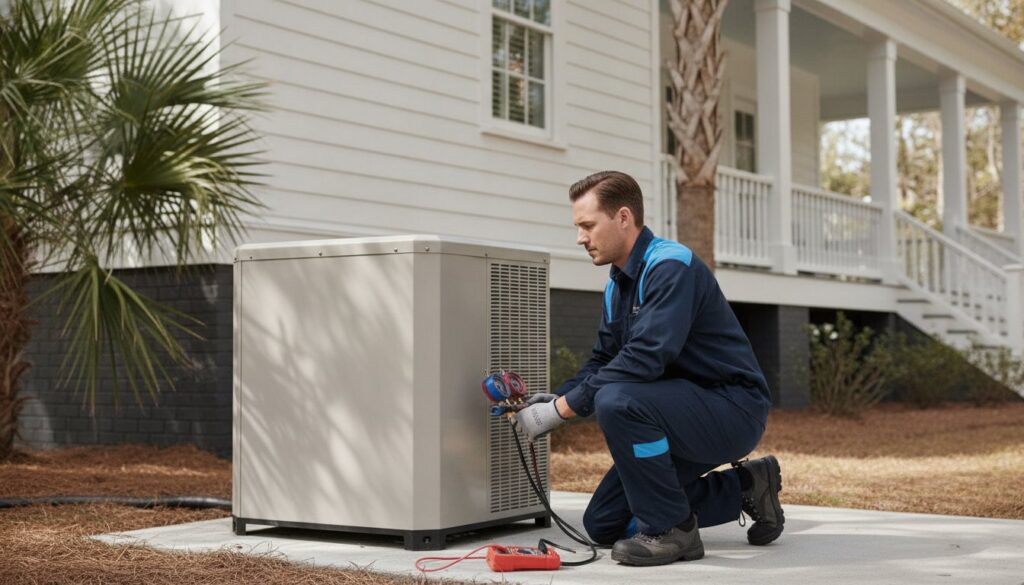
The first step in our response is a comprehensive diagnostic that goes beyond the surface. We don’t just patch the obvious leak; we look for the root cause of the failure to prevent a repeat emergency next week. Our technicians carefully test refrigerant levels and electrical continuity, paying close attention to the connections most vulnerable to salt-spray corrosion. By evaluating the specific health of your heat pump repair charleston sc components, we can determine if a component is failing due to age or environmental stress. Before any tools are picked up for the repair, you’ll receive a clear, upfront estimate. We believe in honest communication, which is why we explain every option and always focus on fixing your existing unit rather than pushing for a total replacement.
Restoring Your Home’s Climate Control
Once you approve the repair, we get to work immediately using the high-quality replacement parts stocked right on our service trucks. We know that every minute matters when the humidity is climbing. After the mechanical work is done, we don’t just pack up and leave. We stay to ensure the system successfully cycles and reaches your desired setpoint. Our technicians also take the time to calibrate your thermostat for optimal performance in the heavy SC air, helping you manage energy costs while maintaining comfort. To help you avoid another midnight crisis, we’ll share practical tips on preventing future failures, much like the proactive steps outlined in our guide to heat pump service Mount Pleasant. If your system is currently struggling to keep up with the Charleston heat, reach out to our local experts to get your comfort back on track today.
Why Local Expertise Matters for Mount Pleasant Heat Pump Service
Choosing a company for your heat pump emergency service sc doesn’t have to be a gamble. Does your current HVAC contractor know the difference between a standard inland setup and a coastal Mount Pleasant installation? We live where you live, and we understand that a unit in Carolina Park or Park West faces different pressures than one in an inland city. The combination of intense thermal loads and the constant assault of salt-laden air requires a specific type of expertise. As a locally owned and operated ally, we prioritize the integrity of your system and the long-term health of our community over a quick, high-pressure sale.
Our technicians are well-versed in the specific building codes that govern our area. For instance, outdoor units in Mount Pleasant must comply with coastal wind design speeds of 130 to 150 mph, which requires approved hurricane strapping and secure tie-downs. If your home is in a FEMA Special Flood Hazard Area, we also ensure your equipment meets local freeboard requirements to stay above design flood elevations. This attention to detail prevents future emergencies and keeps your home in compliance with South Carolina mechanical codes.
Choosing a Trusted Local Guide
There is a distinct advantage to working with a technician who knows the “salt air” struggle firsthand. We’ve seen how quickly unprotected copper and aluminum fins can degrade near the Wando River or Shem Creek. This local knowledge allows us to offer honest assessments that focus on fixing what is broken rather than pushing for unnecessary upgrades. For homeowners with unique architectural needs, we also provide specialized ductless hvac maintenance Charleston residents use to keep historical or compact spaces comfortable year-round. Our goal is to be your practical ally, providing the clarity you need during a stressful maintenance crisis.
Ready to Restore Your Comfort?
When you need heat pump emergency service sc, you’re looking for a fast, reliable path back to a cool home. We provide 24/7 assistance to ensure you’re never left to suffer through a humid Lowcountry night. To help us speed up your repair, you can prepare for your technician’s arrival by clearing any debris away from the outdoor unit and ensuring we have easy access to your indoor air handler and thermostat. These small steps help us get straight to the diagnostic process and restore your climate control even faster.
Don’t suffer in the heat; contact MT Pleasant Heating & Air now for emergency service. We’re ready to provide the rapid, professional solutions you need to get your home back to its best.
Restoring Your Lowcountry Comfort Today
Dealing with a sudden mechanical failure in the middle of a South Carolina summer can feel overwhelming. By now, you know how to spot the warning signs of a true crisis and why our unique coastal environment is so tough on your equipment. You don’t have to face these challenges alone or worry about being pushed into a replacement you don’t need. Our focus remains on providing the honest, effective heat pump emergency service sc homeowners deserve to protect their families and their budgets.
As locally owned Mount Pleasant experts, we’re committed to our neighborly approach. We offer a 24/7 rapid response team that prioritizes fixing what is broken and restoring your peace of mind. Why suffer through another hour of heat or worry about electrical red flags? You can Get 24/7 Emergency Heat Pump Repair Now and let our team handle the technical details. We’re here to ensure your home stays safe, dry, and cool, no matter what the Lowcountry weather throws your way. You’re just one call away from a more comfortable home.
Frequently Asked Questions
Is it an emergency if my heat pump is making a loud noise?
Loud noises like grinding, metal-on-metal shrieking, or heavy thumping are clear signs of mechanical distress. In our coastal environment, salt air can accelerate the wear on fan motor bearings and compressor components. If you hear these sounds, shut the system down immediately to prevent a total collapse. Our technicians can diagnose the internal failure and often replace the specific part before it causes permanent damage to the entire system.
How much does emergency heat pump service cost in South Carolina?
While we don’t provide flat-rate pricing without a diagnostic, emergency service typically involves a dispatch fee plus the cost of labor and parts. Because we are a locally owned Mount Pleasant contractor, we focus on transparent estimates and prioritize repairing your existing unit rather than pushing for a costly replacement. This approach helps keep your unexpected expenses manageable while ensuring your home’s climate control is restored by a professional who understands Lowcountry systems.
What should I do if my heat pump is blowing warm air in the summer?
First, verify that your thermostat is set to “Cool” and your air filter isn’t completely blocked. If those basics are correct, your system might have a failed capacitor, a refrigerant leak, or a stuck reversing valve. These issues require the heat pump emergency service sc experts provide to avoid overheating the compressor. We’ll perform a full diagnostic to find the root cause, ensuring your Charleston home returns to a safe, comfortable temperature quickly.
Can I run my heat pump if the outdoor unit is covered in ice?
You should never run a heat pump that is encased in ice. While a light frost is normal during a defrost cycle in winter, a thick layer of ice indicates a serious problem with airflow or refrigerant levels. Running the unit in this state can lead to a catastrophic compressor failure. Turn the system off at the thermostat and call for assistance so we can safely thaw the unit and fix the underlying malfunction.
How quickly can a technician arrive for an emergency call in Mount Pleasant?
Because we are locally based right here in Mount Pleasant, our 24/7 rapid response team can typically arrive at your Charleston area home shortly after your call. We understand that humidity levels in the Lowcountry make a cooling failure an urgent priority. Our technicians are dispatched with fully stocked service trucks, which allows us to complete most emergency repairs on the spot without the need for a second visit or long wait times.
Is a refrigerant leak considered an HVAC emergency?
Yes, a refrigerant leak is a critical issue that requires immediate attention. Low refrigerant levels force your heat pump to work much harder to move heat, which can lead to the compressor burning out. Additionally, federal regulations require that leaks be handled by certified professionals to protect the environment. We use specialized tools to find the specific leak point in your coastal unit and restore the system to its proper operating pressure.
Does my heat pump need to be replaced if it stops working suddenly?
A sudden breakdown does not automatically mean you need a new system. Many “catastrophic” failures are actually caused by small, replaceable parts like a failed start capacitor or a tripped safety float switch. We pride ourselves on being a “repair-first” company. When you call for heat pump emergency service sc, our technicians provide an honest assessment of your unit’s health, focusing on restoring efficiency and longevity rather than pressuring you into a replacement.
Will emergency service void my heat pump manufacturer warranty?
Professional emergency service will not void your manufacturer warranty. In fact, most manufacturers require that repairs be performed by licensed and certified technicians to keep the warranty active. We follow all manufacturer protocols and use high-quality parts that meet or exceed original equipment standards. Keeping detailed records of your professional repairs and maintenance is actually the best way to ensure your warranty remains valid for its full term.