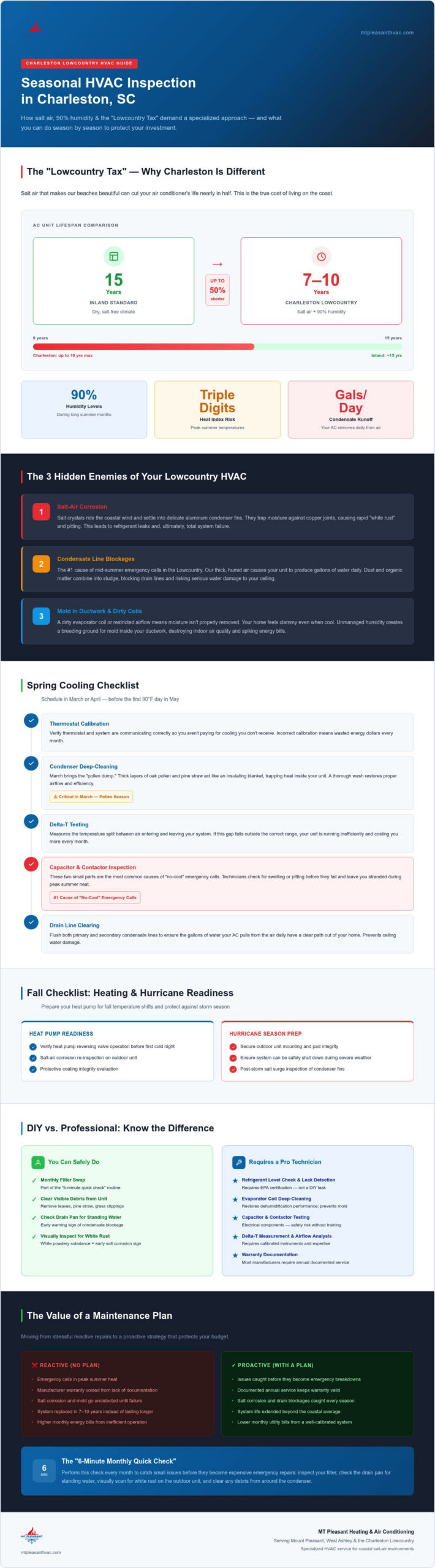
Did you know that the same salt air that makes our beaches beautiful can cut your air conditioner’s life nearly in half? While a standard unit might last fifteen years inland, the corrosive Lowcountry environment often forces homeowners into expensive replacements in just seven to ten years. It’s a frustrating reality, especially when you’re already facing high energy bills and 90% humidity during our long summers. You deserve to feel confident that your cooling system won’t quit when the heat index hits triple digits. A professional seasonal hvac inspection charleston residents can rely on is more than just a basic tune-up; it’s a vital defensive strategy for your home.
We understand the unique challenges of living on the coast, and we’re here to help you protect your investment. This comprehensive guide reveals exactly what your system needs to survive the salt air and heavy moisture levels that define our region. You’ll discover a season-by-season checklist designed to lower your monthly utility costs, prevent emergency breakdowns, and extend the life of your unit. We will walk you through everything from spring cooling preparations to critical hurricane season readiness, giving you the peace of mind that comes with a well-maintained home.
Key Takeaways
- Understand the “Lowcountry Tax” and how Charleston’s unique salt air and high humidity accelerate wear on your cooling system compared to inland units.
- Learn the essential spring steps to calibrate your thermostat and deep-clean your condenser before the peak summer heat arrives.
- A professional seasonal hvac inspection charleston expert can help you prepare for hurricane season and ensure your heat pump is ready for fall temperature shifts.
- Discover the “6-minute quick check” you can perform monthly to catch small issues before they turn into expensive emergency repairs.
- Evaluate the financial benefits of a maintenance plan to move from stressful reactive fixes to a proactive strategy that lowers utility bills.
Why Charleston’s Climate Demands a Specialized HVAC Inspection
Living in Mount Pleasant or West Ashley means enjoying the ocean breeze, but your AC unit feels differently about it. We often talk about the “Lowcountry Tax.” This refers to the accelerated wear and tear caused by our 90% humidity and salt-laden air. A generic maintenance checklist found online won’t protect you here. Those guides don’t account for the way salt crystals bond to metal or how quickly a drain line can clog with local algae. A specialized approach is necessary to keep your home comfortable and your system efficient.
Why is a local perspective so important? Most national brands assume your unit lives in a dry, salt-free climate. In Charleston, your heating, ventilation, and air conditioning (HVAC) systems work much harder to pull moisture from the air. Without a seasonal hvac inspection charleston homeowners risk more than just discomfort. They risk voiding their manufacturer’s warranty. Most manufacturers require documented annual service to honor parts replacements. If you skip these checks, you might be on the hook for a bill that should have been covered by the factory.
The most common reason for a mid-summer emergency call in the Lowcountry is a clogged condensate line. Because our air is so thick with moisture, your unit creates gallons of runoff every day. This water carries dust and organic matter that quickly turns into a sludge-like blockage. A specialized inspection includes clearing these lines and testing safety switches. This simple step prevents water damage to your ceiling and keeps your system running when you need it most.
The Hidden Enemy: Salt-Air Corrosion
Salt is a silent destroyer for any outdoor mechanical system. It hitches a ride on the wind and settles deep into the delicate aluminum fins of your condenser. Once there, these crystals trap moisture against copper joints, leading to rapid corrosion. Have you noticed a white, powdery substance on your unit? That is often a sign of “white rust” or pitting. During a professional seasonal hvac inspection charleston technicians check for this decay. We also evaluate the integrity of protective coatings. Catching these signs early prevents the refrigerant leaks that often lead to total system failure.
Humidity Management and IAQ
In our region, your air conditioner is actually a giant dehumidifier. If the system isn’t calibrated correctly, it might cool your home quickly but leave the air feeling heavy and clammy. This happens when the evaporator coil is dirty or the airflow is restricted. When moisture isn’t removed, it creates a breeding ground for mold inside your ductwork. A professional cleaning of the coils restores your system’s ability to pull water from the air. This protects your indoor air quality and keeps your energy bills from skyrocketing during a humid July.
The Spring Cooling Checklist: Prepping for the Lowcountry Heat
Spring in Charleston arrives with a burst of color from the azaleas, but it also signals a deadline for your air conditioner. Before the first 90-degree day hits in May, your system needs to be ready for a six-month marathon. A thorough seasonal hvac inspection charleston homeowners schedule in March or April can prevent a total system shutdown in July. We focus on preparing the unit to handle the heavy latent heat loads that define our subtropical climate.
Our spring checklist goes beyond a simple filter swap. We look at the components that work the hardest when the sun is relentless. This includes:
- Thermostat Calibration: We ensure your thermostat and system are communicating correctly so you aren’t paying for cooling you don’t receive.
- Condenser Deep-Cleaning: March brings the “pollen dump.” We wash away the thick layers of oak pollen and pine straw that act like an insulating blanket, trapping heat inside your unit.
- Delta-T Testing: This measures the temperature split between the air entering and leaving your system. If this gap isn’t within a specific range, your unit is running inefficiently.
- Capacitor and Contactor Inspection: These two small parts are the most common causes of “no-cool” calls. We check them for swelling or pitting before they leave you stranded.
- Drain Line Clearing: We flush the primary and secondary lines to ensure the gallons of water your AC pulls from the air have a clear path out of your home.
Electrical Component Stress Test
Charleston is famous for its afternoon thunderstorms, which often bring sudden power surges. These jolts can fry sensitive circuit boards and weaken your blower motor over time. During your inspection, we test the amp draw on your motors to see if they’re working harder than they should be. We also inspect the wiring for any signs of overheating. If you’re noticing your house feels a bit clammy as the humidity rises, it might be time to schedule your spring maintenance before the summer rush begins.
Airflow and Filtration Optimization
The heavy pollen in Mount Pleasant doesn’t just coat your car; it chokes your HVAC system. If your return air plenum has even small leaks, it can pull unfiltered, humid air directly from your attic or crawl space. Managing this moisture is critical, as detailed in the EPA moisture and mold control guide, which explains how standing water in drip pans can lead to air quality issues. For most Lowcountry homes, choosing a filter between MERV 8 and 11 provides the perfect balance of capturing allergens without putting excessive strain on your blower motor.
The Fall Heating and Storm Readiness Checklist
As the Atlantic hurricane season winds down in November, Charleston homeowners often breathe a sigh of relief. However, your HVAC system has just finished its most grueling stretch of the year. A fall seasonal hvac inspection charleston residents schedule is less about cooling and more about recovery and transition. We shift the focus from fighting 90-degree afternoons to ensuring your system can handle the damp, chilly nights that follow. This visit acts as a post-game checkup for your unit after months of high-intensity operation.
The primary goal during this transition is ensuring the reversing valve in your heat pump is functioning correctly. In our region, heat pumps are the dominant choice for home comfort. This valve is the heart of the system, allowing it to switch from cooling your home to warming it. If it sticks due to summer wear, you won’t know until you’re shivering during the first cold snap. We also take this time to clear away any debris left behind by summer tropical squalls. Pine needles, mulch, and salt spray can accumulate quickly, obstructing airflow and inviting corrosion. The same coastal conditions that threaten residential systems are equally punishing on larger equipment, which is why commercial HVAC maintenance in Mt. Pleasant follows many of the same salt-air and humidity protocols that protect homes throughout the Lowcountry.
- Auxiliary Heat Testing: We test your electric heat strips to ensure they activate when the temperature drops. These often sit idle for months and can fail without warning.
- Lubrication: Moving parts like the fan motor bearings need fresh lubrication to prevent friction and overheating during the heating cycle.
- Salt Spray Removal: We gently rinse the outdoor coils to remove salt deposits that may have built up during the peak of storm season.
Heat Pump Specific Inspections
Heat pumps face unique challenges in the Lowcountry’s “winter” weather. One of the most critical checks is the defrost cycle. Have you ever seen your outdoor unit encased in ice during a 40-degree rainstorm? That usually happens because the defrost board or sensor has failed. We test this cycle now so your unit stays clear of ice when the humidity and cold collide. We also verify refrigerant levels specifically for the heating mode. Pressures fluctuate differently in the winter, and a system that worked fine in July might struggle in December if the charge is slightly off.
Electrical and Safety Verifications
The constant vibration of a Charleston summer can actually loosen electrical connections over time. We tighten every terminal and check for signs of “pitting” on the contactors. It’s also vital to ensure your outdoor unit is still level on its pad. Heavy rain or minor storm surges can cause the ground to shift. If the unit isn’t level, oil can pool in the wrong places, potentially starving the compressor and leading to a major breakdown. We also test your emergency heat setting to confirm your family stays safe and warm regardless of the outdoor conditions.
Professional Inspection vs. DIY: What You Can Safely Handle
Are you wondering how much of your HVAC maintenance you can tackle yourself? It’s natural to want to save a few dollars, especially when living in a high-cost coastal area. While there are simple tasks you can manage, some areas are best left to a professional. A comprehensive seasonal HVAC inspection in Charleston often pays for itself through improved efficiency and the prevention of catastrophic failures. Professionals use specialized tools like manometers to measure static pressure and multimeters to test electrical loads, providing a level of precision that a visual check simply can’t match.
One area that’s strictly off-limits for homeowners is refrigerant. Adding coolant or “topping off” your system without a license is not only illegal under federal law, but it’s also dangerous. If your system is low, there’s a leak. Masking the problem by adding more refrigerant can lead to compressor failure, turning a small repair into a total replacement. We recommend a monthly “6-minute quick check” to stay ahead of trouble. Walk around your unit, check your filter, and ensure your thermostat is responsive. If you notice anything unusual, it’s time to reach out.
The Safe DIY List
You can safely rinse your outdoor condenser with a garden hose to remove salt and dust. Just be careful to use low pressure. High-pressure washers will bend the delicate aluminum fins and restrict airflow. Another helpful tip is pouring a half-cup of distilled white vinegar down your condensate drain line access pipe every few months. This helps prevent the algae buildup that causes so many Lowcountry ceiling leaks. Finally, keep a close eye on your utility bills. A sudden, unexplained spike in energy usage is often the first sign that your system is struggling.
When to Call a Trustworthy Local Guide
When should you put down the tools and call for help? Electrical components like capacitors are a major danger zone. These parts store a high-voltage charge even when the power is off, posing a serious shock risk. You should also listen for weird sounds. A high-pitched squealing often indicates a failing motor bearing, while loud banging or clicking usually points to a mechanical obstruction or a failing relay. A thorough seasonal hvac inspection charleston technicians perform ensures these safety hazards are addressed before they become emergencies. Inspecting heating strips for cracks or fire hazards requires professional training to keep your home safe. If your system is making strange noises, you should request a professional diagnostic visit today.
Long-Term Protection: The Value of a Charleston Maintenance Plan
Imagine it is mid-July in the Lowcountry. The humidity is 90%, and your air conditioner suddenly stops. This is the “reactive” trap many homeowners fall into. By shifting to a proactive mindset, you can eliminate the stress of a “no-AC” emergency. A consistent seasonal hvac inspection charleston families schedule through a maintenance plan ensures your system is evaluated before the extreme heat arrives. It moves you from a state of worry to a state of total control over your home’s comfort and climate.
There is also a clear financial advantage to this approach. Maintenance plans typically pay for themselves through a combination of lower utility bills and significant repair discounts. Beyond the immediate savings, there is the long-term benefit of home value. In competitive markets like Mount Pleasant, a documented history of professional care is a major selling point. It shows potential buyers that the home has been meticulously maintained, which can increase confidence and resale value. MT Pleasant Heating & Air Conditioning acts as your long-term ally, focusing on fixing what is broken and preserving your equipment rather than pushing for unnecessary upgrades.
Peace of Mind During Peak Season
During a record-breaking July heatwave, the most valuable benefit of a plan is priority service. Our members get “front of the line” access, which is crucial when local contractors are booked weeks in advance. This service reduces the mental load of homeownership by using automated scheduling. We remember the dates so you don’t have to. If your system is already showing signs of terminal failure despite your best efforts, you might find our HVAC installation guide for Charleston, SC homeowners helpful for planning your next steps.
Extending System Life by 3-5 Years
The harsh coastal environment usually limits an unprotected unit’s lifespan to just seven to ten years. However, consistent cleaning and professional diagnostics can extend that life by three to five years. By catching small refrigerant leaks or failing capacitors early, we prevent the “domino effect” where one bad part destroys the entire compressor. This level of preventative care is the best insurance policy for your home investment. Join our preventative maintenance plan today and keep your Lowcountry home cool all year long.
Secure Your Home’s Comfort Year-Round
Your home is likely your biggest investment, and in the Lowcountry, your HVAC system is what makes that investment livable. We have explored how the combination of salt air and high humidity creates a unique set of challenges that standard maintenance guides often overlook. By committing to a consistent seasonal hvac inspection charleston homeowners can effectively extend the lifespan of their units while keeping monthly utility costs under control. Whether it is clearing oak pollen in the spring or testing heat strips before a winter cold snap, these small steps provide the peace of mind you deserve.
As your locally owned and operated neighbor, we are here to serve as your trustworthy guide. Our team consists of expert heat pump specialists who understand the mechanical nuances of coastal living. We focus on fixing what is broken and helping you avoid the stress of a mid-summer breakdown. If an emergency does happen, we offer 24/7 emergency service to restore your comfort quickly. Ready to protect your system? Schedule Your Seasonal Inspection with MT Pleasant Heating & Air Conditioning today. Let’s work together to ensure your home remains a cool, dry sanctuary all year long.
Frequently Asked Questions
How often should I schedule an HVAC inspection in Charleston, SC?
You should schedule an inspection twice a year to maintain peak performance. In our subtropical climate, your system works nearly year-round to manage both heat and extreme humidity. A spring visit prepares the unit for the intense moisture of July, while a fall checkup ensures your heat pump transitions safely to heating mode. This bi-annual rhythm helps catch small issues like salt-air corrosion before they turn into major mechanical failures.
Is it worth getting an AC tune-up every year?
An annual tune-up is essential for coastal homes. Without it, your system’s efficiency can drop significantly due to dirty coils and clogged lines. Regular maintenance also preserves your manufacturer’s warranty, which often requires proof of professional service to cover parts. It’s a small investment that prevents the high cost of emergency repairs and keeps your monthly utility bills from spiking during the hottest months of the summer.
What is the best month to have my HVAC inspected in the Lowcountry?
The best months for a seasonal hvac inspection charleston residents should aim for are March or April. This allows you to beat the summer rush and ensure your cooling is ready before the first heatwave. For the heating season, September or October is ideal. This timing coincides with the peak of hurricane season, allowing a technician to check for storm damage and ensure your heat pump is ready for the first cold snap.
Can salt air really ruin my HVAC unit in Mount Pleasant?
Salt air is a significant threat to units in Mount Pleasant and surrounding coastal areas. Salt crystals settle on aluminum fins and copper joints, trapping moisture and causing rapid corrosion. This often reduces the lifespan of a standard unit from fifteen years down to as little as seven or ten years. Professional inspections include rinsing these deposits and checking for pitting to protect your system from premature failure.
What happens if I skip a seasonal HVAC inspection?
Skipping an inspection often leads to unexpected breakdowns during the most humid weeks of the year. Small problems, like a weakening capacitor or a slightly clogged drain line, can escalate into total system shutdowns or water damage to your ceilings. You’ll likely see higher energy bills as the system struggles to dehumidify your home. Most importantly, you risk losing years of operational life from your expensive heating and cooling equipment.
How long does a professional HVAC inspection usually take?
A thorough professional inspection typically takes between 60 and 90 minutes. This timeframe allows the technician to perform a deep-cleaning of the condenser, test electrical components, and clear condensate lines. We also take time to calibrate your thermostat and measure the temperature split. It’s a methodical process that ensures every part of your system is evaluated for efficiency and safety before we provide you with a full report on your unit’s health.
Will a seasonal inspection help lower my Charleston energy bills?
Regular inspections are one of the most effective ways to lower your energy costs. When your coils are clean and your refrigerant levels are precise, the system doesn’t have to run as long to reach your desired temperature. This is especially important in Charleston, where high humidity forces units to work overtime. Restoring your system’s efficiency can lead to noticeable savings on your monthly utility bills throughout the cooling season.
What is included in a standard seasonal HVAC checklist?
A standard checklist includes cleaning the outdoor condenser coils, flushing the condensate drain lines, and testing electrical connections for safety. Technicians also check the amp draw on the blower motor and inspect the reversing valve in your heat pump. We verify refrigerant levels and calibrate the thermostat. These steps are designed to address the specific moisture and corrosion challenges faced by homeowners throughout the greater Charleston area and the Lowcountry.