A Mount Pleasant summer does not leave much room for an air conditioner that is only working halfway. If your system is running longer, cooling unevenly, or making a new sound, an AC tune up checklist can help you spot concerns before they turn into a hot-house emergency. Regular service also gives your equipment the best chance to cool efficiently through long stretches of heat and humidity.
Some tasks are appropriate for homeowners, while others need a trained HVAC technician with the right tools and diagnostic experience. Knowing the difference protects both your comfort and your equipment.
Why an AC Tune-Up Matters in Coastal South Carolina
Air conditioners in Mount Pleasant and Charleston work hard. High humidity can make a home feel uncomfortable even when the thermostat shows the right temperature, and the salt air near the coast can be hard on outdoor equipment. Add pollen, summer storms, and long cooling seasons, and small maintenance issues can build quickly.
A proper tune-up is not simply a quick look at the outdoor unit. It is a practical inspection of airflow, electrical components, drainage, refrigerant performance, and overall operation. The goal is to catch worn parts, restricted airflow, and developing problems while repairs are usually simpler and less disruptive.
Maintenance cannot prevent every breakdown. A part can still fail without warning, especially on an older system. But a seasonal visit often reduces the risk of avoidable failures and can help a technician identify whether a repair makes sense or whether replacement should be considered.
AC Tune Up Checklist: What Homeowners Can Handle
Start with a few simple checks before cooling season begins and repeat them during the summer if the system is running heavily. Always turn off power to the system before reaching into or cleaning around equipment.
Check and Replace the Air Filter
A clogged filter is one of the most common causes of poor AC performance. It restricts airflow, makes the system work harder, and can contribute to frozen coils or uneven temperatures. Check the filter monthly during peak cooling season, especially if you have pets, allergies, construction dust, or a busy household.
The right replacement interval depends on the filter type and your home. Many standard filters need attention every 30 to 90 days. Make sure the airflow arrow on the new filter points toward the equipment.
Clear the Outdoor Unit
Your condenser needs open space to release heat. Remove leaves, pine straw, grass clippings, and other debris from around the unit. Keep shrubs and plant growth trimmed back so air can move freely around the cabinet.
Avoid aggressively spraying the unit with a pressure washer. High pressure can bend delicate coil fins and create a new problem. If the outside coil looks heavily coated with dirt or pollen, professional cleaning is the safer choice.
Inspect Supply Vents and Return Grilles
Walk through the house and make sure supply vents and return grilles are not blocked by rugs, furniture, drapes, or stored items. Closing multiple vents to force more air into one room is rarely a good solution. It can interfere with the airflow your system was designed to handle and may increase strain on the equipment.
If one room remains warmer than the rest, the cause could be airflow, ductwork, insulation, window exposure, or equipment sizing. A technician can help narrow it down rather than treating the thermostat as the problem.
Test the Thermostat
Set the thermostat a few degrees below the current indoor temperature and listen for the system to start. Confirm that cool air is coming from the vents and that the thermostat reading appears reasonable.
If you use a programmable or smart thermostat, check the schedule before summer arrives. A schedule that keeps the system running when no one is home can add unnecessary wear and energy use. On the other hand, setting the temperature dramatically higher all day may not provide the savings you expect in a humid climate. A moderate setting and consistent schedule often work better.
Watch the Condensate Drain
Air conditioning removes moisture from indoor air, and that water must drain properly. Look for water around the indoor unit, staining near the ceiling below an attic air handler, or a clogged drain pan. Also pay attention if the system shuts off unexpectedly during humid weather, since some systems have safety switches that respond to drainage backups.
Do not ignore water where it does not belong. A drain issue can lead to equipment shutdowns, ceiling damage, and mold concerns if left unresolved.
What a Professional AC Tune-Up Should Include
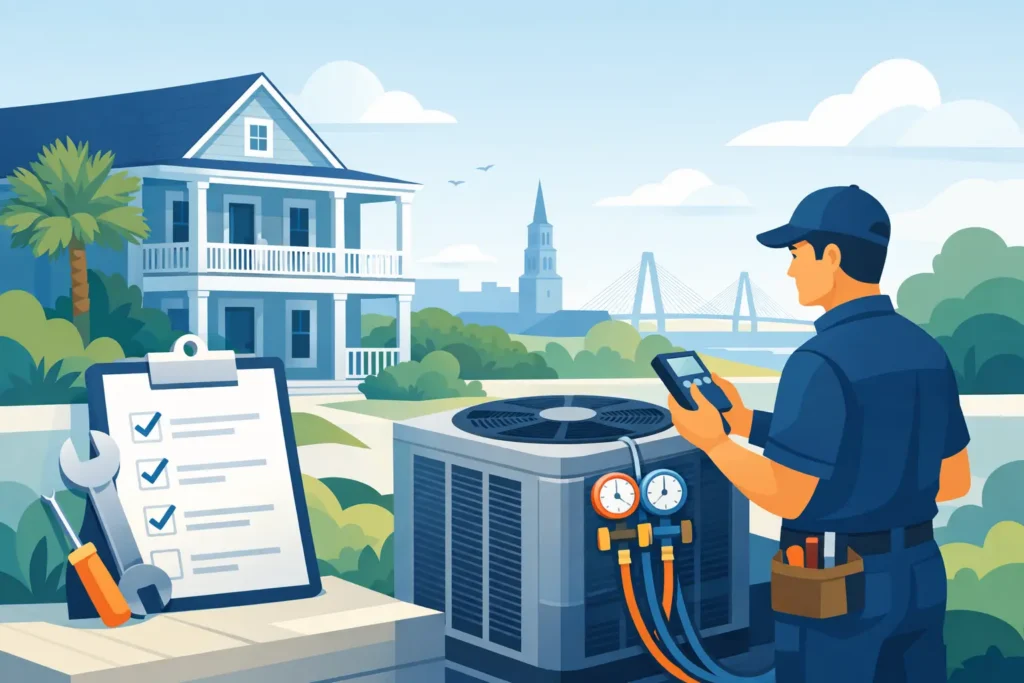
A trained technician goes beyond the visual checks that homeowners can perform safely. The service should focus on how the entire system is operating, not just whether it turns on.
A thorough professional visit commonly includes these essential tasks:
- Inspecting electrical connections, capacitors, contactors, wiring, and system controls for wear or unsafe conditions.
- Checking refrigerant performance and looking for signs of leaks, improper charge, or coil problems.
- Cleaning components as needed, including indoor and outdoor coils, while protecting sensitive equipment.
- Evaluating blower performance, temperature difference, airflow, and duct-related concerns that affect comfort.
- Flushing or clearing the condensate drain and inspecting the drain pan and safety switches.
- Listening for unusual operation, checking moving parts, and identifying components that may fail soon.
The technician should also discuss what was found in plain language. A good recommendation explains the problem, the urgency, the repair options, and the likely consequences of waiting. Not every worn component requires immediate replacement, but a homeowner deserves enough information to make a practical decision.
Warning Signs That Should Move You Up the Schedule
Do not wait for routine maintenance if your AC is showing clear signs of trouble. A system that blows warm air, trips a breaker, freezes up, leaks water, smells burnt, or makes grinding or loud buzzing noises should be inspected promptly.
Rising utility bills can also signal a problem, particularly when your household habits have not changed. Dirty coils, low airflow, duct leaks, electrical issues, and refrigerant concerns can all make an air conditioner run longer than it should.
Short cycling is another issue worth addressing. This is when the system starts, runs briefly, and shuts off repeatedly. It may be related to thermostat placement, airflow restrictions, electrical problems, refrigerant issues, or an oversized system. The cause matters, so it is best not to guess.
When to Schedule Service
Spring is usually the best time for an AC tune-up, before the first major heat wave puts your system under full demand. Scheduling early can also make it easier to address a needed repair before your comfort is on the line.
That said, late is better than never. If summer is already underway, a maintenance visit can still reveal problems that are reducing efficiency or placing stress on your equipment. Older systems, homes with high indoor humidity, and equipment that has had past repair issues may benefit from more frequent attention.
For homeowners who want dependable answers without being pushed toward unnecessary replacement, Mt Pleasant Heating & Air provides experienced diagnostics, maintenance, repairs, and 24/7 emergency support. When an air conditioner cannot keep up, a timely inspection can often protect comfort and help you make a confident next step.