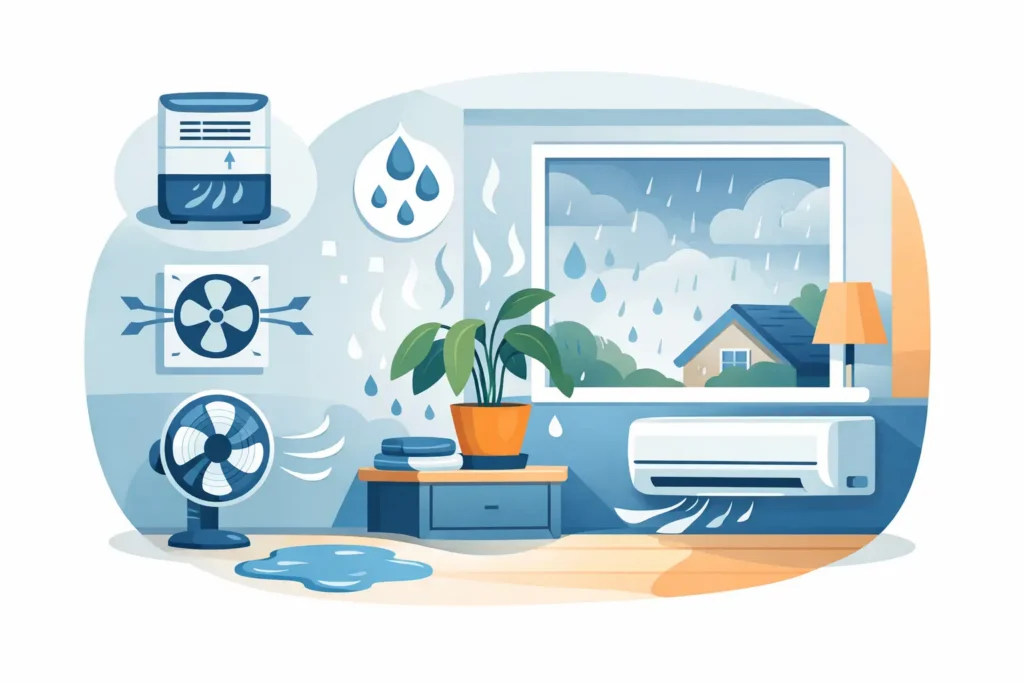
That sticky feeling indoors is not always a thermostat problem. In coastal South Carolina, high moisture can make a home feel warmer than the temperature on the display, leave rooms smelling musty, and force your air conditioner to work harder. Knowing how to reduce indoor humidity helps protect both your comfort and your home.
A healthy indoor relative humidity level is generally between 30% and 50%. In a humid climate such as Mount Pleasant and Charleston, staying near the upper end of that range is often realistic and comfortable. Once indoor humidity regularly rises above 60%, mold growth, condensation, dust mites, and moisture damage become more likely.
Start by Measuring the Humidity
Before changing equipment settings or buying a dehumidifier, confirm what is happening. An inexpensive digital hygrometer gives you a clear reading of relative humidity in the rooms that feel dampest, such as bedrooms, bathrooms, laundry areas, and rooms near a garage or crawl space.
Check readings at different times of day. If humidity spikes after showers, cooking, or laundry, ventilation may be the main issue. If it stays high all day while the air conditioner runs, the problem may involve AC performance, outside air leaks, a moisture source under the home, or a system that is not removing enough water from the air.
Watch for other clues as well: window condensation, warped wood, bubbling paint, damp closet walls, a persistent musty odor, or an AC that leaves the house cool but clammy. Those are signs worth addressing early rather than covering up with fragrance or lowering the thermostat further.
Use Your Air Conditioner the Right Way
Your central air conditioner cools the home, but it also removes moisture as warm indoor air passes over the cold evaporator coil. For that dehumidification process to work, the system needs adequate runtime, proper airflow, and a clean coil and drain system.
Avoid setting the thermostat extremely low to fight humidity. A colder setting can make the house uncomfortable, increase energy use, and still fail to solve the source of the moisture. Instead, use a steady temperature that feels comfortable for your household, often around 72 to 76 degrees, and allow the system to run normally.
Short cycling is one of the most common reasons a home feels cool but humid. An oversized AC unit can satisfy the temperature setting quickly and shut off before it has had enough time to remove moisture. The same issue can happen when equipment is improperly sized, airflow is restricted, or the thermostat is located in a spot that cools too quickly.
A dirty air filter can also reduce airflow across the coil and affect comfort. Check the filter monthly during heavy-use seasons and replace it as needed based on its type and your household conditions. Homes with pets, renovations, or frequent pollen exposure may need more frequent changes.
If the AC runs consistently but humidity remains high, do not assume replacement is the answer. A professional inspection can identify issues such as a dirty evaporator coil, clogged condensate drain, low refrigerant, duct leakage, blower settings, or a thermostat setup that is limiting moisture removal. In many cases, a repair or adjustment restores performance without replacing the whole system.
Vent Moisture Outside, Not Into the House
Everyday activities add a surprising amount of water vapor indoors. Showers, stovetop cooking, dishwashers, and clothes dryers all release moisture. The practical fix is to capture that moisture at the source and move it outdoors.
Run the bathroom exhaust fan during showers and for roughly 20 minutes afterward. The fan should vent outdoors, not into an attic, soffit, or enclosed space where moisture can create a larger problem. If the fan is noisy, weak, or rarely used because it does not seem effective, it may need cleaning, repair, or replacement.
Use the kitchen range hood when boiling water or cooking foods that create steam. A recirculating hood can help with odors and grease, but it does not remove moisture outdoors. When humidity is already high, a vented hood is the better choice.
Make sure the dryer vent is properly connected, clean, and terminated outside. A damaged or disconnected dryer vent can send warm, humid air directly into a laundry room or wall cavity. Never rely on indoor clothes drying during humid weather unless you have good ventilation or dedicated dehumidification.
Seal the Places Humid Air Gets In
Air leaks let more than conditioned air escape. During a Lowcountry summer, they can pull hot, humid outdoor air into your home. That extra moisture increases the load on the AC and can make certain rooms feel uncomfortable no matter how low the thermostat is set.
Start with obvious gaps around exterior doors, windows, plumbing penetrations, attic access points, and recessed fixtures. Weatherstripping and caulk can help when installed correctly. Keep doors and windows closed while the air conditioning is running, especially on humid days when opening the house for “fresh air” can raise indoor moisture quickly.
Ductwork deserves attention too. Leaky return ducts in an attic, garage, or crawl space may pull humid, unconditioned air into the system. Supply duct leaks waste cooled air before it reaches the rooms that need it. Professional duct inspection is particularly valuable when one part of the home stays clammy or when energy bills rise without a clear explanation.
Do Not Ignore Crawl Space and Drainage Problems
For many homes in Mount Pleasant and Charleston, the moisture problem begins below the living space. A vented crawl space can hold damp air for long stretches, especially after heavy rain or during the summer. That moisture can move upward through gaps in the floor system and affect indoor comfort, flooring, insulation, and HVAC ducts.
Look for standing water, wet insulation, damaged vapor barriers, plumbing leaks, or musty odors in the crawl space. Also check that gutters, downspouts, and grading direct water away from the foundation. A dehumidifier inside the house cannot fully overcome a persistent water intrusion problem below it.
The right crawl space solution depends on the home. Some need drainage corrections and a new vapor barrier; others may benefit from encapsulation, sealed vents, or a dedicated crawl space dehumidifier. Because these measures affect airflow and building moisture, an on-site assessment is better than a one-size-fits-all recommendation.
When a Portable or Whole-Home Dehumidifier Makes Sense
A portable dehumidifier can be useful for a single trouble spot, such as a bedroom, basement, laundry room, or enclosed storage area. Choose a unit sized for the room and expected moisture level, keep doors and windows closed while it runs, and empty or drain the collection tank as directed. It is a practical support tool, but it can be noisy and may not solve a whole-house issue.
A whole-home dehumidifier is often a better fit when humidity stays high throughout the house despite a properly operating AC system. It works with the HVAC system or through its own duct connections to remove moisture from the entire home. This can improve comfort at a slightly higher thermostat setting, reduce musty odors, and provide more consistent humidity control during mild, rainy weather when the AC does not run enough to dehumidify.
The trade-off is upfront cost, installation planning, maintenance, and drainage requirements. A qualified technician should size the equipment based on the home, occupancy, moisture sources, and existing HVAC setup. Bigger is not automatically better.
Know When to Call an HVAC Professional
Call for service if your indoor humidity is regularly above 60%, the AC is cooling but the home feels damp, water is collecting around the indoor unit, or you notice mold-like odors from vents. These symptoms can point to equipment or drainage issues that should not be left through another humid season.
An experienced HVAC technician can test system operation, inspect airflow and duct conditions, clear condensate problems, and determine whether your current equipment is capable of handling the home’s moisture load. Mount Pleasant Heating & Air Conditioning can help homeowners identify the real cause before recommending a repair, adjustment, or humidity-control upgrade.
A dry, comfortable home should not require you to keep the thermostat unreasonably low. Start with a humidity reading, address visible moisture sources, and have the HVAC system evaluated when simple steps do not change the result. Acting early protects your comfort now and helps prevent more expensive moisture damage later.
Related guides: whole-house humidifier vs. dehumidifier. For professional help, see air conditioning services.
Need a hand with this? Mount Pleasant Heating & Air Conditioning has served Lowcountry homes and businesses since 2007, with 24/7 emergency service.
Call (843) 714-0863 or request service online. Related service: AC repair in Mount Pleasant.