A Charleston-area summer afternoon is a rough time to learn that your air conditioner has stopped working. The best ways to prevent breakdowns are usually not complicated, but they do require attention before your system is pushed to its limit. A few practical habits can reduce emergency repairs, protect your equipment, and help your home stay comfortable when the heat and humidity arrive.
HVAC equipment does not typically fail without warning. Restricted airflow, neglected maintenance, electrical wear, and drainage problems often build quietly over time. Addressing those small issues early is less disruptive and usually far less expensive than waiting for a no-cooling or no-heat call.
Best Ways to Prevent Breakdowns Before They Start
The most reliable approach is to treat your heating and cooling system like any major part of your home. It needs clean airflow, regular professional attention, and prompt repairs when something changes. Skipping maintenance may save money for a season, but it can shorten equipment life and turn a manageable repair into a larger one.
Change the air filter on schedule
A dirty air filter is one of the most common causes of unnecessary HVAC strain. When the filter is clogged, the blower must work harder to move air through the system. That can lead to weak airflow, uneven temperatures, frozen evaporator coils, higher energy bills, and extra wear on the blower motor.
Most homes should check the filter monthly and replace it every one to three months. The right interval depends on the filter type, how often the system runs, whether you have pets, and indoor air quality concerns. A household with multiple pets or allergy-sensitive family members may need more frequent changes.
Do not assume the most restrictive filter is always the best choice. High-efficiency filters can be useful when matched correctly to the equipment, but an overly restrictive filter may reduce airflow. A qualified technician can recommend a filter that supports both comfort and system performance.
Keep the outdoor unit clear and clean
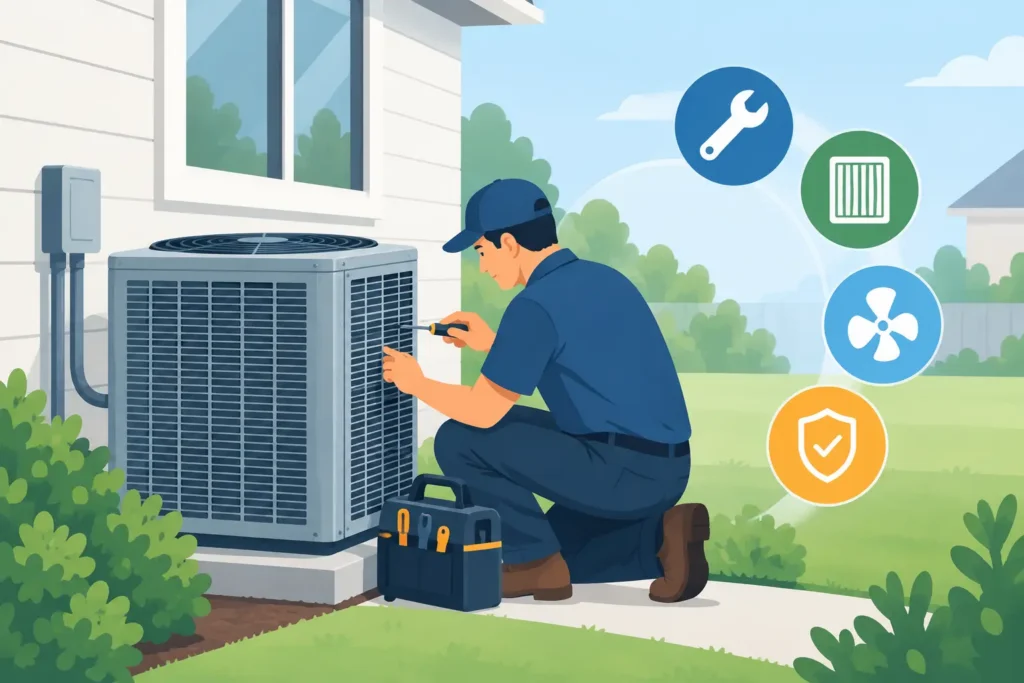
Your outdoor condenser or heat pump needs room to release heat. Leaves, pine straw, mulch, salt residue, grass clippings, and shrubs can block the coil and force the system to run longer. In coastal South Carolina, seasonal debris and humid conditions can make this especially important.
Keep at least two feet of open space around the unit, and avoid stacking furniture, planters, or yard tools nearby. Gently remove loose debris from the outside of the unit, but do not use a pressure washer or bend the delicate coil fins. If the coil is visibly dirty, professional cleaning is the safer option.
Also pay attention to landscaping. Plants that looked neatly trimmed in spring can grow into an airflow problem by late summer. Keeping the area open gives your system a better chance of keeping up during peak demand.
Schedule maintenance before heavy-use seasons
Professional maintenance is one of the best investments a homeowner can make in preventing unexpected HVAC failures. An AC tune-up before summer and a heating inspection before colder weather allow a technician to find worn parts, low refrigerant concerns, drainage issues, electrical problems, and performance changes before they become urgent.
During a thorough visit, a technician can inspect connections, measure system operation, clean key components, test safety controls, check the condensate drain, and look for signs that a repair is developing. This is not about replacing equipment that still has useful life. It is about getting clear information and making practical repairs at the right time.
For older systems, maintenance matters even more. Age alone does not mean replacement is necessary. Many older units can continue serving a home reliably with proper care and accurate diagnostics. The decision depends on the condition of the equipment, repair history, efficiency, and the cost of the repair compared with the value it provides.
Protect Airflow Throughout Your Home
Your HVAC system is designed to move a specific amount of air. Problems with return vents, supply registers, ductwork, or thermostat settings can disrupt that balance and make the equipment work harder than it should.
Keep supply vents and return grilles open and unobstructed. Closing vents in unused rooms may seem like an easy way to save energy, but it can increase pressure in the duct system and reduce airflow across the indoor coil or heat exchanger. Large furniture, rugs, and curtains should not block returns or registers.
If some rooms are consistently warmer or cooler than others, do not ignore the issue. Uneven comfort can point to leaking ducts, insufficient insulation, improper system sizing, zoning needs, or airflow restrictions. A professional evaluation can identify the cause instead of simply treating the symptom.
Watch the condensate drain
Air conditioning removes moisture from indoor air, and that moisture has to drain away properly. In a humid climate, the condensate line works hard for much of the year. Algae, dirt, and buildup can clog the drain, leading to water leaks, high indoor humidity, system shutdowns, or damage around the air handler.
Check around the indoor unit for moisture, staining, musty odors, or an overflowing drain pan. If your system has a safety float switch, it may shut off the equipment when it detects a backup. That is a protective feature, not a problem to bypass.
Homeowners can help by keeping the area around the air handler accessible and dry. Drain line cleaning is often included in professional maintenance and is worth addressing before the cooling season is in full swing.
Respond Early to Small Changes
A breakdown rarely improves on its own. Call for service when your system starts making unusual sounds, cycling on and off frequently, running longer than normal, blowing warm air in cooling mode, or producing noticeably weaker airflow. Strange odors, recurring thermostat problems, and unexplained increases in utility costs are also worth checking.
Waiting can be tempting when the system is still running. However, a failing capacitor, loose electrical connection, worn blower motor, or refrigerant issue can put stress on other parts of the system. Early service often gives you more repair options and reduces the chance of losing cooling during the hottest part of the day.
There are a few situations that deserve immediate attention. Turn the system off and request professional help if you smell burning, hear loud grinding or screeching, see ice building on refrigerant lines, notice water near electrical components, or have repeated breaker trips. Continuing to run the equipment can increase damage and create a safety concern.
Use Your Thermostat Wisely
A programmable or smart thermostat can support efficiency, but it should be used with reasonable settings. Dropping the temperature dramatically when you get home will not cool the house faster. It only tells the system to run longer, which can add stress during extreme heat.
Choose a comfortable temperature and make gradual adjustments when possible. In summer, keeping the thermostat at a steady setting while you are home helps limit excessive cycling. When you are away, raise the setting modestly rather than turning the system completely off. In a humid area, allowing the house to get too warm can also allow indoor moisture levels to rise.
Thermostat problems can also imitate equipment failures. If the display is blank, settings are inconsistent, or the system does not respond properly, the cause may be a simple battery, wiring, or configuration issue. It still deserves a professional check if the problem continues.
Do Not Put Off Needed Repairs
Preventive maintenance does not eliminate every repair. Capacitors wear out, contactors fail, motors age, and storms can affect electrical components. The goal is to repair issues before they trigger a larger failure or leave your family without reliable heating or cooling.
When a technician recommends a repair, ask what part is affected, what could happen if it is delayed, and whether the repair will reasonably extend the system’s life. A dependable HVAC company should explain the options clearly, including when repairing an existing system makes more sense than replacement.
For homeowners in Mount Pleasant and Charleston, planning ahead is especially valuable before the summer rush. Mt Pleasant Heating & Air can inspect your system, identify developing concerns, and help you make informed decisions based on your equipment’s actual condition. A clean filter, clear outdoor unit, timely tune-up, and early service call can make the difference between a comfortable season and an inconvenient emergency.