When a Mount Pleasant summer afternoon is hot, sticky, and still, an air conditioner that simply turns on is not always enough. The real question behind variable speed versus single stage AC is how consistently your system can keep your home cool, dry, and comfortable without driving up energy use or creating unnecessary repair concerns.
A higher-efficiency system can be a smart investment, but it is not automatically the right answer for every home. The best choice depends on your current equipment, ductwork, insulation, comfort priorities, budget, and how long you plan to stay in the house.
Variable Speed Versus Single Stage AC: The Main Difference
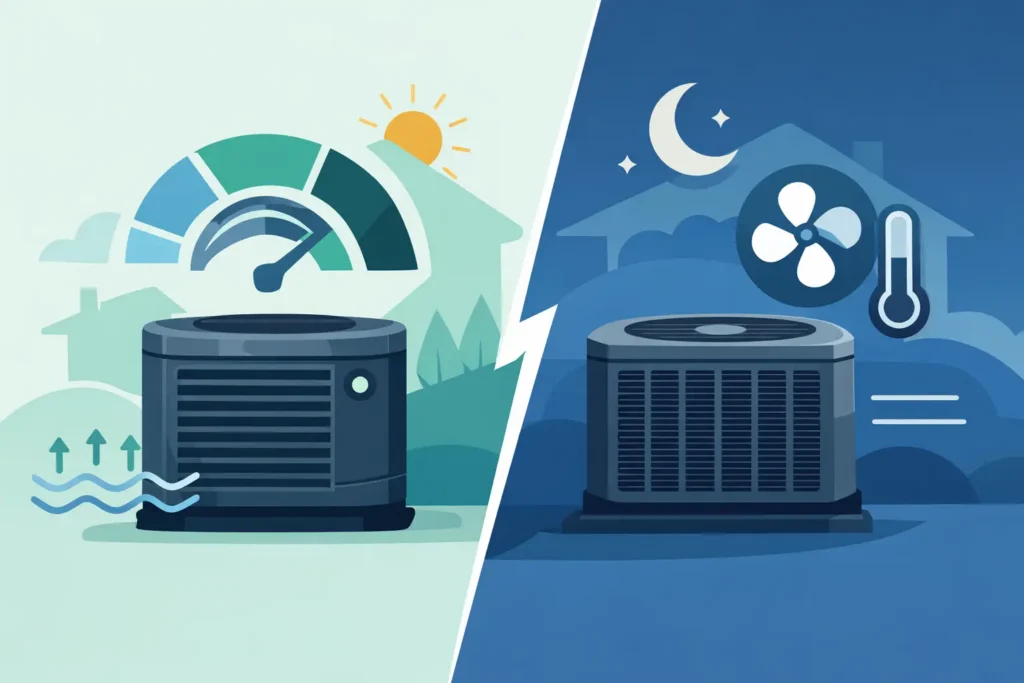
A single-stage air conditioner has one operating setting: full output. When your thermostat calls for cooling, the compressor turns on at 100% capacity. Once the thermostat reaches its set temperature, the system shuts off. It then repeats that cycle as indoor temperatures rise.
A variable-speed air conditioner can adjust its output over a broad range. Instead of repeatedly switching between fully on and fully off, it can run at lower speeds for longer periods when the home needs only mild cooling. It increases capacity when outdoor heat, direct sun, cooking, guests, or other conditions place more demand on the system.
That difference affects more than utility bills. It changes how evenly the home cools, how well the system removes humidity, how much noise it makes, and how the equipment responds to the long cooling season common in the Charleston area.
Why Variable-Speed Cooling Feels Different
The strongest reason homeowners choose variable-speed equipment is usually comfort. A single-stage system may cool the thermostat location quickly while leaving an upstairs bedroom, bonus room, or sunny living area warmer than the rest of the house. Since it runs at full capacity, it can satisfy the thermostat before it has operated long enough to remove as much moisture as the home needs.
Variable-speed systems typically run longer at lower output. Those longer, gentler cycles allow more air to pass across the indoor coil, which can improve dehumidification. In coastal South Carolina, that matters. A house can read 72 degrees and still feel uncomfortable if indoor humidity remains high.
Steadier operation can also reduce temperature swings. Rather than feeling cool right after a cycle and slightly warm before the next one begins, many homeowners experience more consistent comfort from room to room. Variable-speed equipment is often quieter as well, especially during the lower-capacity operation that handles much of the daily workload.
The Case for a Single-Stage Air Conditioner
Single-stage AC is not outdated or automatically a poor choice. It remains a dependable, practical option for many homes. The equipment cost is usually lower, the controls are simpler, and repairs may be less expensive depending on the issue and the system model.
For a smaller home with good insulation, solid ductwork, limited hot spots, and a reasonable comfort target, a properly sized single-stage system can provide reliable cooling for years. Homeowners replacing an older unit on a tight budget may also find that a quality single-stage installation delivers a major improvement in performance and efficiency.
The key phrase is properly sized. An oversized single-stage unit can cool too quickly, cycle frequently, and leave humidity behind. An undersized unit may run continuously in extreme heat without keeping up. Neither situation is fixed by choosing equipment based only on the size of the old system.
Upfront Cost Versus Long-Term Value
Variable-speed systems generally cost more upfront than single-stage equipment. They use more advanced components and controls, and the installation may require additional attention to communicating thermostats, electrical requirements, and duct performance.
That added cost can make sense when the system will be in place for many years, energy use is a concern, or the home has persistent comfort and humidity issues. Longer run times at lower capacity can reduce energy consumption compared with a unit that repeatedly starts at full power. The exact savings, however, depend on how the system is sized, installed, maintained, and used.
A higher-end system should not be sold as a guaranteed utility-bill solution. If return ducts are undersized, supply registers are poorly balanced, attic insulation is inadequate, or air leaks are significant, a new variable-speed air conditioner may not perform to its potential. Addressing those conditions is often part of getting the comfort result you expect.
Humidity Control Matters in Coastal Homes
Humidity is where the variable-speed versus single stage AC decision becomes especially relevant for many local homeowners. Air conditioning removes moisture as a byproduct of cooling, but it needs enough run time to do that work effectively.
A variable-speed system’s lower-speed operation can help it run for extended periods without overcooling the home. This supports steadier moisture removal and can make rooms feel more comfortable at a slightly higher thermostat setting. Less humidity can also help reduce that clammy feeling, limit condensation concerns, and protect indoor finishes and furnishings.
Still, HVAC equipment is not a cure-all for every humidity problem. Crawl space moisture, duct leaks, bathroom ventilation, oversized equipment, and unsealed building gaps can all affect indoor humidity. A qualified technician should look at the full home comfort picture before recommending a system based solely on one symptom.
Installation Quality Can Matter More Than the Equipment Label
The best AC system on paper can disappoint when installation details are ignored. Before selecting either type of equipment, the contractor should evaluate your home’s cooling load rather than guessing based on square footage or replacing the existing unit with the same capacity.
A thorough recommendation considers insulation levels, windows, home orientation, ceiling height, occupancy, duct design, return-air capacity, and rooms that consistently run too warm or too cool. Refrigerant charge, airflow settings, drainage, electrical connections, and thermostat setup also affect performance and equipment life.
For variable-speed systems, setup is particularly important. These units are designed to adjust intelligently, but they need compatible controls and correct commissioning to operate as intended. For single-stage systems, airflow and sizing remain equally critical. Simple equipment does not mean a simple installation.
When Variable-Speed AC Is Often Worth Considering
Variable-speed cooling is often a strong fit when your current system struggles with uneven temperatures, humidity, noticeable noise, or frequent short cycling. It can also be a good choice for larger homes, multi-story homes, homes with open floor plans, and households that place a high value on quiet, consistent comfort.
It may be especially appealing if you plan to remain in the home long term and want to invest in lower operating costs and improved daily comfort. Homeowners with carefully maintained, higher-value properties often appreciate the more controlled operation, provided the rest of the system can support it.
When Single-Stage AC May Be the Better Fit
A single-stage system may be the sensible choice when the existing ducts are in good condition, the home cools evenly, humidity is manageable, and budget is the primary concern. It can also be an appropriate replacement when a homeowner needs dependable cooling now and does not need the added features of advanced equipment.
There is nothing wrong with choosing a well-installed, properly sized single-stage system. The goal is not to buy the most complex unit available. The goal is to install equipment that solves the actual comfort problem without paying for features you will not benefit from.
Make the Decision After a Real System Evaluation
Before replacing an air conditioner, ask for a clear explanation of what is causing your current concerns. Is the problem age-related equipment failure, poor maintenance, an incorrect refrigerant charge, restricted airflow, duct leakage, thermostat placement, or an improperly sized system? In some cases, a targeted repair or duct improvement can extend the life of existing equipment and improve comfort without immediate replacement.
If replacement is the right move, Mt Pleasant Heating & Air can assess how your home performs, explain the practical trade-offs, and recommend an option that fits your budget and comfort goals. A good system decision should leave you confident that your home will stay comfortable when the next humid South Carolina summer arrives.
Need a hand with this? Mount Pleasant Heating & Air Conditioning has served Lowcountry homes and businesses since 2007, with 24/7 emergency service.
Call (843) 714-0863 or request service online. Related service: AC installation and replacement.