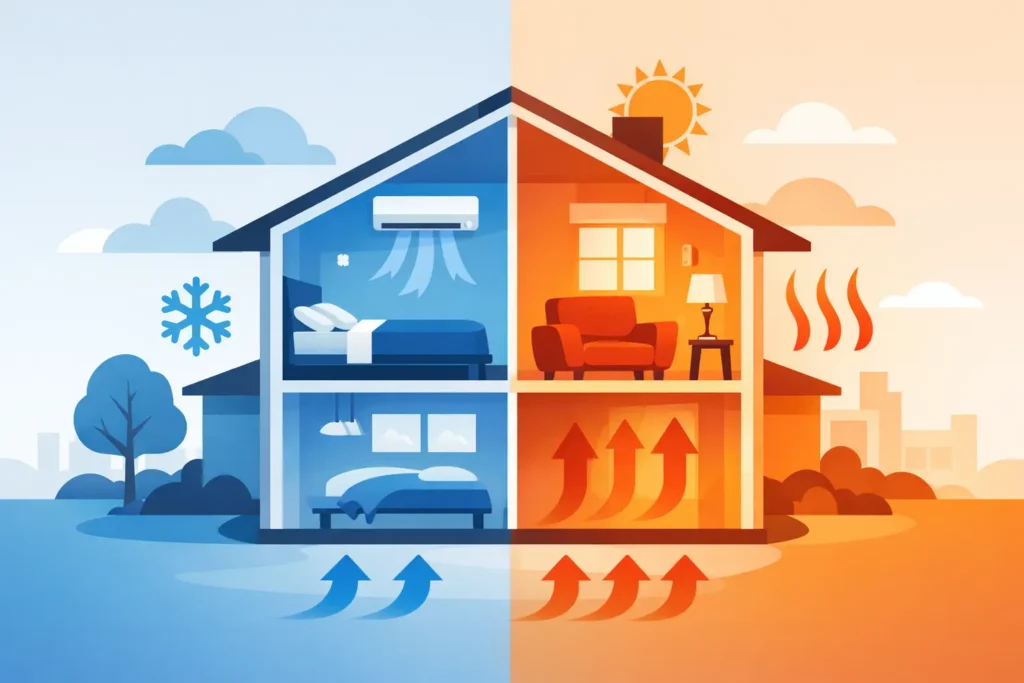
A bedroom that stays warm while the living room feels chilly is more than a minor annoyance. It can make parts of your home uncomfortable, raise energy bills, and leave you wondering whether your HVAC system is failing. What causes uneven home temperatures is not always one simple issue. Airflow, insulation, ductwork, equipment condition, and thermostat placement can all play a role.
The good news is that uneven temperatures are usually diagnosable. A careful inspection can separate a simple adjustment from a repair that needs prompt attention, helping you restore comfort without replacing equipment that still has useful life.
What Causes Uneven Home Temperatures?
Your heating and cooling system is designed to move conditioned air throughout the house at a controlled rate. When that air cannot reach every room properly, or when certain rooms gain or lose heat faster than others, temperatures become inconsistent.
In Mount Pleasant and Charleston, summer humidity, intense sun exposure, hot attics, and multi-story home layouts can make these differences especially noticeable. A room over the garage, an upstairs bedroom, or a sun-facing living area often has a very different comfort load than the center of the home. The key is identifying whether the issue is caused by the house, the HVAC system, or a combination of both.
Restricted airflow
Restricted airflow is one of the most common reasons one room feels different from the rest. A dirty air filter can limit the amount of air moving through the system, while closed or blocked supply vents prevent conditioned air from entering a room as intended. Furniture, rugs, drapes, and even built-in cabinetry can interfere with return-air grilles as well.
Start with the basics. Use the correct filter size, replace it on the schedule recommended for your household, and make sure supply and return vents are open and unobstructed. Fully closing vents to force air into another room is rarely a lasting fix. It can create excess pressure in the duct system and may reduce overall system performance.
Leaky, damaged, or poorly designed ducts
Ductwork carries cooled or heated air from the equipment to each room. If ducts have separated joints, leaks, crushed sections, or insufficient insulation, a portion of that conditioned air can escape before it reaches the rooms that need it.
Duct problems are especially likely when the affected room is far from the indoor unit or when ducts run through a hot attic, crawlspace, or garage. During a South Carolina summer, air traveling through an unconditioned attic can pick up heat quickly if the duct insulation is inadequate. In winter, the same issue can allow valuable heat to escape.
Some homes also have duct systems that were never properly balanced for the current layout. An addition, converted attic, renovated room, or enclosed porch may have changed the home’s heating and cooling needs without updating the distribution system. A professional can measure airflow at the registers, inspect accessible duct runs, and determine whether sealing, insulation, repairs, or balancing adjustments are appropriate.
Inadequate insulation and air leaks
Your HVAC system can only maintain a steady temperature if the home’s exterior envelope helps hold conditioned air inside. Weak attic insulation, gaps around windows and doors, poorly sealed recessed lights, and openings around plumbing or wiring can allow heat to enter in summer and escape in winter.
This issue often shows up in predictable places. Top-floor rooms may run hotter because heat collects in the attic and radiates downward. Rooms with large west-facing windows may become uncomfortable late in the afternoon. A bonus room over a garage can be difficult to condition because it is exposed to outdoor temperatures on multiple sides.
Adding insulation or air sealing can reduce the demand on your HVAC system, but the right approach depends on the home. New windows, for example, are not always the first or most cost-effective answer. Sometimes targeted attic air sealing and insulation improvements make a much larger difference.
Thermostat location or settings
A thermostat only senses the temperature where it is installed. If it sits near a sunny window, exterior door, kitchen, supply vent, or return grille, it may register a temperature that does not represent the rest of the house. The system may shut off while distant rooms still need cooling, or it may continue running after other areas are already comfortable.
Thermostat programming can also contribute to uneven comfort. A large temperature setback can make it harder for a system to recover evenly, particularly in humid weather. Smart thermostats and remote sensors can help in some homes by using readings from occupied rooms rather than relying on one central location. They are useful tools, but they cannot correct major duct leaks, insulation gaps, or undersized equipment.
An oversized, undersized, or aging HVAC system
Equipment size matters, but bigger is not automatically better. An oversized air conditioner may cool the thermostat area too quickly and shut off before air has circulated through the entire home. Short run cycles can also limit humidity removal, making rooms feel warmer and clammy even when the temperature reading looks reasonable.
An undersized system may run for long periods without keeping up during the hottest or coldest weather. That does not always mean the original installation was wrong. Home additions, aging insulation, larger windows, changed occupancy, or equipment wear can alter the home’s comfort needs over time.
Aging equipment may also lose capacity because of dirty coils, weak blower performance, refrigerant issues, or neglected maintenance. These problems deserve diagnosis before anyone recommends replacement. In many cases, a repair or maintenance service can restore performance and extend the system’s service life.
Zoning and multi-story challenges
Two-story homes naturally present a challenge because warm air rises. In cooling season, upstairs areas often absorb more heat from the roof while downstairs rooms remain cooler. During heating season, upper levels may warm faster than lower levels. One thermostat controlling both floors cannot always respond perfectly to both conditions.
A zoned HVAC system uses dampers and separate temperature controls to direct air where it is needed. It can be a strong solution for larger homes, distinct living areas, or floors with very different comfort needs. However, zoning is not necessary for every home and should not be used to hide underlying duct or insulation problems. In some situations, improving attic insulation, adjusting airflow, or adding a ductless mini-split to a difficult room is the more practical choice.
When Uneven Temperatures Need HVAC Service
If the difference between rooms is minor and temporary, start by checking the filter, vents, and thermostat settings. But a persistent difference of several degrees, weak airflow from one or more registers, unusual noises, frequent cycling, high indoor humidity, or a sudden change in comfort calls for a professional inspection.
An experienced technician should look beyond the thermostat. Proper diagnostics may include checking system capacity, airflow, blower operation, refrigerant performance, duct condition, insulation concerns, and thermostat placement. That process matters because a new system will not solve a disconnected duct or a poorly insulated bonus room.
Mt Pleasant Heating & Air helps homeowners identify the actual source of comfort problems and recommend sensible repair options. Whether the answer is maintenance, duct repair, thermostat service, equipment repair, or a more targeted comfort solution, the goal should be consistent temperatures and reliable performance – not an unnecessary replacement.
Small Changes That Can Improve Comfort Now
Until the underlying cause is addressed, a few practical steps may reduce the difference between rooms. Keep interior doors open when possible to support air circulation, use ceiling fans in the proper seasonal direction, and close blinds or shades in rooms with strong afternoon sun. Make sure return grilles have clear space around them, especially in bedrooms and hallways.
Avoid relying on portable space heaters or window units as a permanent workaround without understanding the cause. They may offer temporary relief, but they can add energy costs, create electrical concerns, and mask an HVAC issue that will worsen over time.
Comfort should not depend on which room you choose. If your home has a stubborn hot or cold spot, an accurate diagnosis can turn daily frustration into a practical repair plan and help every room feel more like home.
Related guides: step-by-step fixes for uneven cooling and why the upstairs runs hotter. For professional help, see AC repair in Mount Pleasant.
Need a hand with this? Mount Pleasant Heating & Air Conditioning has served Lowcountry homes and businesses since 2007, with 24/7 emergency service.
Call (843) 714-0863 or request service online. Related service: AC repair in Mount Pleasant.