In Mount Pleasant, the salt air is as much an enemy to your HVAC system as the blistering Lowcountry heat itself. It doesn’t take long for that coastal breeze to start taking a toll on your outdoor unit’s sensitive components, often leading to a sudden need for AC repair homeowners didn’t see coming. We all know the sinking feeling of walking into a house that’s stickier inside than it is outside. It’s incredibly frustrating when your home stops being a sanctuary and starts feeling like a sauna, especially when you’re worried a technician might try to push an expensive replacement you don’t actually need.
You deserve a clear, honest assessment and a fast path back to comfort without high-pressure sales tactics or unpredictable bills. We focus on restoring your cooling immediately while ensuring your system is healthy enough to withstand the next humidity spike, even as industry standards for refrigerants and efficiency evolve. This article will preview how we diagnose salt-air damage, why our team always aims to repair before recommending a replacement, and what a truly transparent service experience looks like for your Lowcountry home.
Key Takeaways
- Learn why Mount Pleasant’s salt air and humidity are “silent killers” for HVAC systems and how to spot early signs of coil corrosion.
- Understand our step-by-step diagnostic process for AC repair, focusing on sensory checks and electrical testing to find the root cause quickly.
- Master the “50% Rule” to determine if it’s more cost-effective to fix your current unit or invest in a new, energy-efficient installation.
- Discover simple troubleshooting steps, like checking thermostat settings and air filters, that could save you from an unnecessary service call.
- Find out how our 24/7 emergency response and “Repair First” philosophy provide confidence during the most brutal Lowcountry heat waves.
Understanding AC Failure in Mount Pleasant’s Coastal Climate
Living in the Lowcountry means accepting that the environment is constantly testing your home’s mechanical systems. While the Atlantic breeze makes Mount Pleasant a beautiful place to live, that same air carries salt and moisture that act as a slow-motion wrecking ball for your air conditioner. When the outdoor temperature hits the mid-90s with heavy humidity, your compressor isn’t just cooling the air; it’s fighting a chemical battle. Delaying a necessary AC repair often results in the system running longer cycles just to keep up, which quickly reflects in your monthly energy statement.
The Impact of Salt Air Corrosion
Salt air is a silent killer for HVAC units. Microscopic salt crystals settle on the aluminum and copper fins of your outdoor condenser, causing a chemical reaction called galvanic corrosion. This process eats through the metal, making it brittle and eventually causing it to flake away. As these fins deteriorate, the unit loses its ability to release heat effectively. You might notice your condenser struggling with restricted airflow or making a louder humming sound than usual. To prevent a total breakdown, coastal units often require specialized cleaning or protective coatings to shield these vulnerable parts from the brine.
Humidity and Your AC’s Dehumidification Role
Most homeowners focus on the temperature on the thermostat, but the real challenge in South Carolina is moisture removal. Understanding How Air Conditioning Works involves recognizing that the system must pull gallons of water out of the air every day to keep you comfortable. If your home feels sticky even though the air is cool, your system is failing its dehumidification role. High dew points in Charleston often lead to clogged condensate drains, which can cause water to back up and trigger a system shutdown.
If you spot ice forming on your indoor coils or smell a lingering musty odor, it’s a clear sign that the humidity has overwhelmed your unit’s ability to breathe. These “Mount Pleasant Symptoms” shouldn’t be ignored. A system that can’t drain properly or one that is freezing up will eventually burn out its motor. Seeking professional AC repair early ensures your home stays dry and your energy bills remain manageable throughout the peak of summer.
Our Transparent AC Diagnostic Process: What to Expect
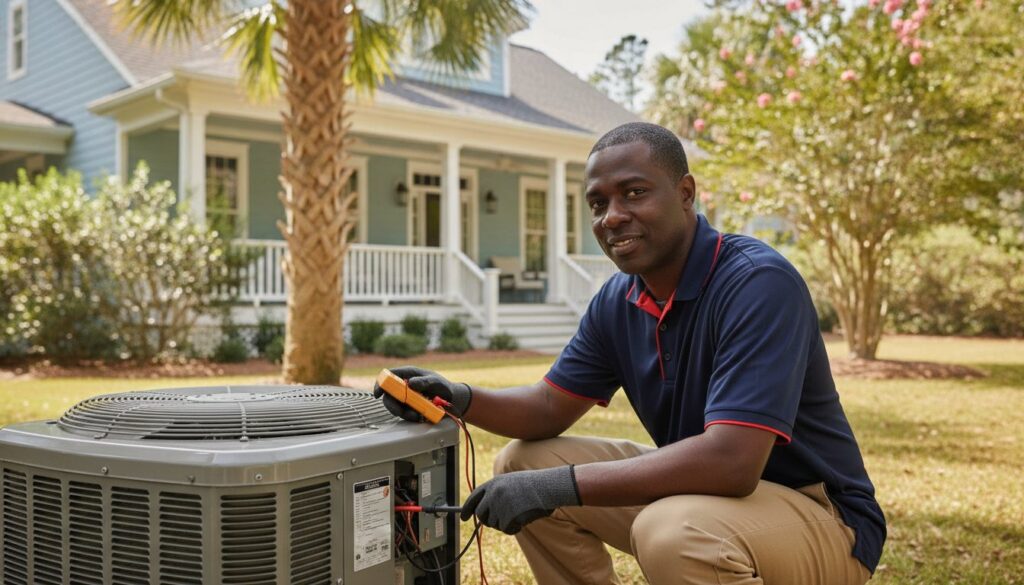
When your home starts warming up unexpectedly, the last thing you want is a technician who speaks in riddles or hides behind technical jargon. You need clarity. What exactly are we looking for when we pull up to your driveway? A thorough AC repair starts with an expert who knows how to listen before they even open their tool bag. We begin with a sensory evaluation, which means we’re listening for the telltale rattles of a failing motor or the high pitched squeal of a slipping belt. We also check the temperature differential at your vents to see if the system is actually cooling or just moving warm air around.
Step 1: Inspecting the Electrical ‘Heart’
Why does your system struggle to kick on? In the intense heat of a Lowcountry summer, capacitors are often the first components to fail. These parts act like temporary batteries that give your motors the necessary “push” to start spinning. We also test the contactor, which is the switch that sends high voltage power to the compressor. It’s common for local pests, like lizards or fire ants, to find their way into these electrical boxes, causing shorts that require a precise AC repair homeowners can trust. We also look for frayed wiring caused by years of unit vibration to prevent a future electrical failure.
Step 2: Airflow and Coil Health
Once we know the power is flowing, we look at how the air is moving through your home. Static pressure is the resistance to airflow within the ductwork. If this pressure is too high, your blower motor has to work twice as hard for half the results. We also perform a visual inspection of the evaporator coil. If dust or microbial growth has built up on the metal fins, the heat exchange process breaks down. If you’ve noticed your system running constantly but the house still feels clammy, you can schedule a diagnostic visit to catch these issues before they lead to a total compressor burnout.
Finally, we verify refrigerant levels and calibrate your thermostat. Low pressure usually indicates a leak, while pressure imbalances can point to a restriction in the lines. By checking the calibration of your control board, we ensure your unit isn’t just running, but running accurately. This methodical, step by step approach takes the guesswork out of the equation and provides you with a clear path back to a cool, comfortable home.
AC Repair vs. Replacement: Making the Honest Choice
After the diagnosis, the technician should tell you plainly whether a repair is the sensible fix or the system is near the end of its life. For the full decision guide, see HVAC repair vs. replacement, and for typical prices, our guide to AC repair costs.
Emergency AC Troubleshooting: What to Do Before You Call
If your AC has just quit, a few quick checks can save a visit: the thermostat setting and batteries, the breaker, and the air filter. Our guide to what to do when your AC stops working walks through each step and the warning signs that mean you should shut the system off.
Reliable 24/7 AC Repair Services in Mount Pleasant
If the visit can’t wait until morning, our 24-hour AC repair service covers nights, weekends and holidays. For scheduled service, see our AC repair service in Mount Pleasant.
Next Steps for Your Home’s Climate
Living in the Lowcountry means your air conditioner is constantly battling salt air and heavy humidity. We’ve explored how these coastal stressors lead to common failures and why a methodical diagnostic approach is essential for a lasting fix. Whether you’re deciding between a repair and a replacement or just need a quick troubleshooting tip, the goal is always the same: keeping your family cool and your energy bills manageable.
As a locally owned and operated team, we take pride in our “Repair First” philosophy. We provide expert diagnostics to ensure we fix it right the first time without pushing unnecessary upgrades. With our 24/7 emergency service available, you never have to worry about being left in the heat. Reliable AC repair is just a click away, giving you the confidence that your home sanctuary is in good hands.
Get Your Cool Back-Schedule Your AC Repair Today
Don’t let the summer heat dictate your comfort. We’re here to help you navigate any cooling emergency with honesty, speed, and the neighborly service you deserve.
Common Questions About Cooling in the Lowcountry
How much does a typical AC repair cost in Mount Pleasant?
The cost of an AC repair depends on several factors, including the specific part that failed and the complexity of the labor. Minor fixes like replacing a relay or clearing a clogged drain line are generally more affordable than major component repairs like a motor or coil. We believe in upfront pricing and will always provide a clear explanation of the work needed before we start. This ensures you aren’t surprised by the bill.
Why is my AC unit freezing up in this humidity?
High humidity makes your system work harder to remove moisture from the air. If airflow is restricted by a dirty filter or if your refrigerant levels are low, the indoor coil can drop below freezing temperatures. This causes condensation to turn into ice, which eventually chokes the system entirely. If you see ice, turn the unit off immediately and switch the fan to “on” to begin the thawing process before a technician arrives.
Do you offer emergency AC repair on weekends in Mount Pleasant?
Yes, we provide 24/7 emergency AC repair homeowners can count on every day of the week. We know that a cooling failure on a Saturday afternoon can quickly turn your home into an oven. Since we’re locally owned and operated, our technicians are always nearby and ready to respond. We’re committed to providing the same reliable service regardless of when your system decides to quit, treating you like a neighbor.
How often should I have my AC serviced in a coastal environment?
In a coastal environment like ours, we recommend professional maintenance at least twice a year. The salt air and high humidity in the Charleston area put significantly more strain on your equipment than in inland regions. A spring tune up ensures you’re ready for the summer heat, while a fall visit prepares your system for the cooler months. Regular cleaning of the outdoor coils is vital to prevent salt related corrosion and efficiency loss.
What are the signs that my AC capacitor is going bad?
A failing capacitor often gives off subtle sensory warnings before it quits completely. You might hear a persistent humming sound from the outdoor unit, but the fan won’t spin. Other signs include a clicking noise when the system tries to start or a noticeable delay in the cooling cycle. Visually, a bad capacitor often has a bulged or “mushroomed” top. These small parts are essential for giving your motor the starting boost it needs to run.
Is it worth repairing an AC unit that is 12 years old?
It is often a case by case decision. While a 12 year old unit is nearing the end of its typical 10 to 15 year lifespan in South Carolina, a minor repair might still be a smart investment if the system has been well maintained. We use a “Repair First” philosophy to help you weigh the cost of the fix against the potential energy savings of a newer, SEER2-compliant system. We’ll always give you an honest assessment. For a deeper look at what a new system involves, our HVAC installation guide for Charleston SC homeowners walks you through the full process from equipment selection to long-term efficiency planning.
Can salt air really ruin my air conditioner?
Salt air is one of the leading causes of premature HVAC failure in Mount Pleasant. The salt particles settle on the delicate copper and aluminum fins of your outdoor unit, leading to galvanic corrosion. Over time, this eats away the metal and prevents the system from releasing heat efficiently. This is why we emphasize specialized coastal maintenance and protective coatings that help shield your unit’s internal components from the harsh, salty Atlantic breeze.
What should I do if my AC is leaking water inside the house?
If you see water pooling around your indoor unit, turn the system off at the thermostat immediately. This is usually caused by a clogged condensate drain line or a cracked drain pan. Because your AC pulls gallons of water from the air daily, a backup can quickly lead to floor or ceiling damage. Shutting it down prevents further overflow while we work to clear the obstruction and ensure your drainage system is flowing freely again.
Need a hand with this? Mount Pleasant Heating & Air Conditioning has served Lowcountry homes and businesses since 2007, with 24/7 emergency service.
Call (843) 714-0863 or request service online. Related service: AC repair in Mount Pleasant.