A second-floor bedroom that never cools down, a sunroom that feels sticky by noon, or an aging AC system facing a major repair can force a real decision: central air vs ductless. Both systems can deliver dependable comfort in a Mount Pleasant home, but they solve different problems. The right choice depends on your home’s layout, existing ductwork, comfort priorities, and the condition of the equipment you already own.
A qualified HVAC evaluation should come before a replacement decision. A system that appears to be failing may have a repairable issue, while a room-by-room comfort problem may not require replacing an entire central system.
How Central Air and Ductless Systems Work
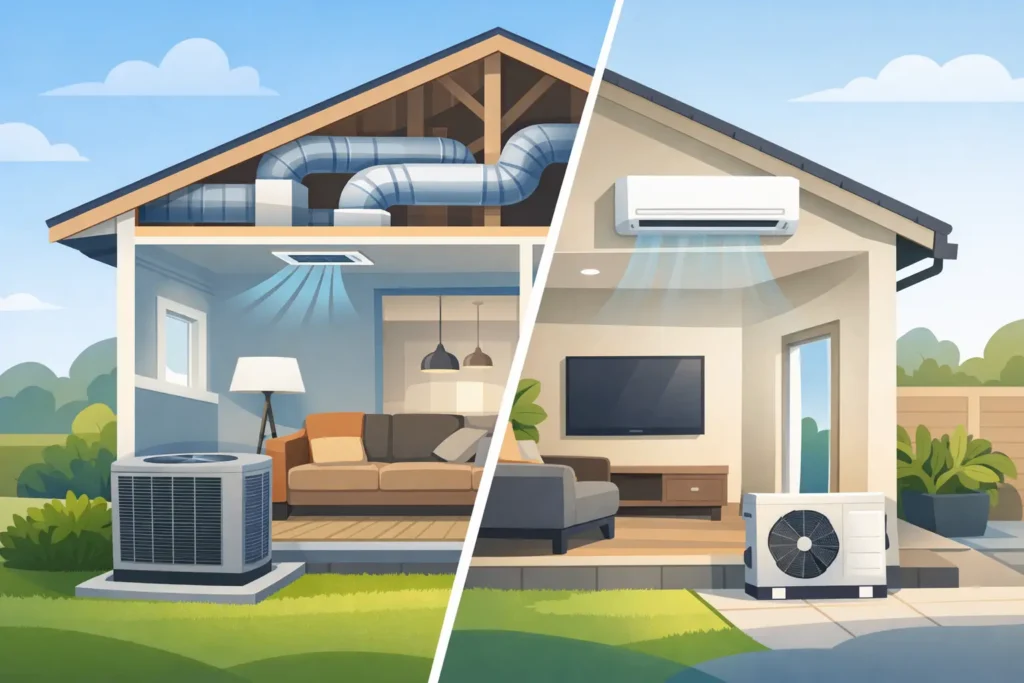
Central air conditioning cools air at one outdoor unit and moves it through a network of ducts to supply vents throughout the house. A thermostat controls the system as a whole, although zoning equipment can create more targeted control in some homes. Most central systems are paired with a furnace or air handler, and many newer heat pumps provide both heating and cooling through the same ductwork.
Ductless mini-splits use an outdoor condenser connected to one or more indoor air handlers by small refrigerant and electrical lines. Each indoor unit serves a specific room or zone and has its own temperature control. Because the system does not rely on ductwork, it can cool spaces that are difficult or expensive to connect to an existing central system.
Neither option is automatically better. A well-designed central system can keep a whole home consistently comfortable. A properly sized ductless system can provide exceptional efficiency and control where central air is impractical.
Central Air vs Ductless: The Biggest Differences
The clearest difference is coverage. Central air is built to condition the entire home through a single distribution system. Ductless is modular. You can install one unit for a primary bedroom, two units for an addition, or multiple indoor heads for broader whole-home coverage.
Installation is another major dividing line. If your home already has ducts in good condition, replacing an existing central AC or heat pump is often the straightforward path. The installation may still require careful sizing, electrical work, drainage adjustments, and duct repairs, but the basic air-delivery system is already there.
For a home without ducts, adding central air can involve opening walls and ceilings, building soffits, or giving up closet space for duct runs. In that situation, ductless equipment may be the less disruptive option. Refrigerant lines typically pass through a small exterior wall opening, allowing the installer to connect an outdoor unit to the indoor head without major reconstruction.
Comfort control also differs. Central air typically runs from one main thermostat, so the temperature setting represents the needs of the household as a whole. Ductless units allow individual rooms to be set differently. That is useful when one family member likes a cooler bedroom, when a home office runs warm from electronics, or when an upstairs space gets more afternoon sun.
When Central Air Makes More Sense
Central air is often the practical choice for homes with usable ductwork and a need for consistent, whole-home cooling. It keeps equipment largely out of sight, distributes air through familiar ceiling or floor registers, and can work with a single thermostat or a more advanced zoning setup.
For many Charleston-area homes, ducted systems also help manage humidity throughout the house when they are correctly sized and configured. That matters during long stretches of coastal heat, when a home can feel uncomfortable even if the thermostat shows the desired temperature. Proper airflow, refrigerant charge, drainage, and system sizing all affect how well an AC removes moisture.
Central air may also be the better fit when appearance is a priority. Ductless indoor heads are compact and much cleaner-looking than window units, but they are still visible on a wall or ceiling. Homeowners who prefer no visible indoor equipment often favor a ducted solution.
A central replacement is especially worth considering when ducts are sound, the home has balanced airflow, and the existing system has reached the end of its useful life. However, ducts should never be treated as an afterthought. Leaks, poor insulation, crushed flex duct, and undersized returns can reduce comfort and waste energy. Installing premium equipment on a weak duct system will not correct those underlying issues.
When Ductless Is the Better Answer
Ductless mini-splits are particularly effective for targeted comfort challenges. They are a strong option for a finished attic, garage conversion, enclosed porch, room addition, detached guest space, or any area that was added after the original HVAC system was installed. These rooms often have poor airflow because the central system was never designed to carry their added heating and cooling load.
They can also be useful in older homes without ductwork. Rather than undertaking a large renovation to add ducts, homeowners can create comfortable zones with less disruption. A ductless heat pump provides cooling in summer and efficient heating during much of South Carolina’s mild winter weather.
Efficiency is a real advantage of ductless equipment, especially for rooms used only part of the day. There are no duct losses between the air handler and the living space, and you do not need to cool an unused guest room just to make the kitchen comfortable. Still, efficiency depends on correct design. An oversized mini-split may cycle improperly or leave humidity behind, while an undersized unit will struggle during peak summer heat.
Ductless is not always the least expensive whole-home solution. One or two zones can be cost-effective, but several indoor units, multiple line sets, electrical upgrades, and more complex controls can add up. For a large home with existing ductwork, replacing central equipment may offer better value than installing a multi-zone ductless system throughout the property.
Consider Humidity, Maintenance, and Daily Use
In Mount Pleasant, cooling decisions are not only about temperature. Humidity control deserves equal attention. Both central and ductless systems can manage indoor moisture, but performance depends on equipment sizing, run time, installation quality, and how the home is used.
A central system that is too large may cool the air quickly and shut off before removing enough moisture. A ductless system installed in the wrong location can leave parts of a room less comfortable or fail to address moisture issues in adjoining spaces. This is why a load calculation and an in-home assessment matter more than choosing equipment based on square footage alone.
Both options need routine maintenance. Central systems need clean filters, clear condensate drains, outdoor coil cleaning, and periodic inspection of ductwork and airflow. Ductless units need their filters washed regularly, indoor coils and blowers kept clean, and drain lines inspected. Neglected ductless heads can develop odors, reduced airflow, or water leaks just as neglected central systems can develop performance problems.
Think about how you use the house, too. If every room is occupied and you want one consistent temperature across the home, central air is usually easier to live with. If certain areas sit empty for days or have dramatically different comfort needs, ductless zoning can offer more control.
Do Not Replace Equipment Before Diagnosing the Problem
A loud outdoor unit, uneven temperatures, rising power bills, or weak airflow does not always mean a full replacement is necessary. The cause may be a failing capacitor, dirty coil, refrigerant issue, thermostat problem, blocked drain, damaged duct, or worn blower component. Addressing the actual fault can restore performance and extend the life of equipment that still has useful years left.
On the other hand, frequent breakdowns, expensive compressor or coil repairs, obsolete refrigerant, and poor comfort despite repeated service can point toward replacement. The best decision is based on the system’s condition, repair history, efficiency, and expected remaining life – not a sales pitch or a guess.
Mt Pleasant Heating & Air can assess your existing system, ductwork, and problem areas to help you decide whether a repair, central replacement, or ductless addition makes the most sense. The goal is not to sell more equipment than you need. It is to create dependable comfort that holds up when summer heat arrives.
Before choosing, walk through your home at the hottest part of the day and identify where comfort breaks down. Those details give an experienced technician the information needed to design a solution that fits your home instead of forcing your home to fit the equipment.
Related guides: ducted vs. ductless cooling compared and ductless mini-split vs. heat pump. For professional help, see ductless mini-split service.
Need a hand with this? Mount Pleasant Heating & Air Conditioning has served Lowcountry homes and businesses since 2007, with 24/7 emergency service.
Call (843) 714-0863 or request service online. Related service: ductless mini-split service.