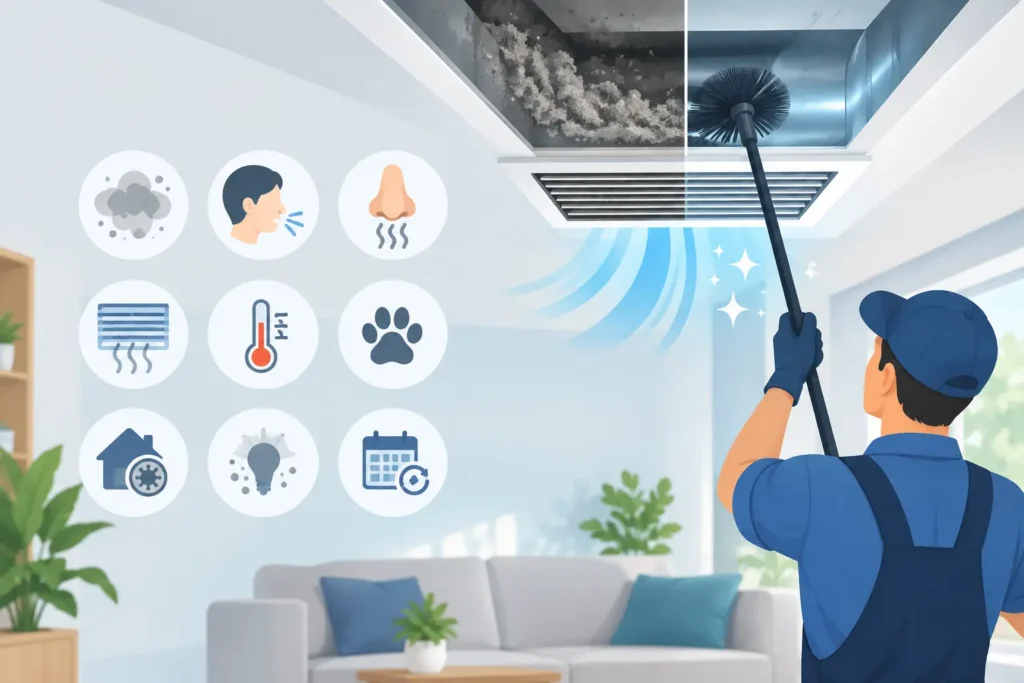
A layer of dust on the furniture one day after cleaning can be frustrating, especially when the AC is running constantly through a Mount Pleasant summer. It may be one of the signs your air ducts need cleaning, but it is not automatic proof. Dust can also enter through open doors, leaky windows, pet activity, or a poorly fitting air filter. The key is to look for a pattern, then have a qualified HVAC professional determine whether the ducts, the equipment, or another issue is affecting your comfort.
Signs Your Air Ducts Need Cleaning
Ductwork is out of sight, so it is easy to forget until indoor air feels stale or the system starts moving more dust than usual. These signs deserve attention, particularly when several appear at once.
1. Dust returns quickly after you clean
Some household dust is normal. However, if tables, floors, and supply vents look dusty again within a day or two of cleaning, debris inside the duct system could be contributing. Check that your filter is the correct size and is seated properly first. A filter with gaps around the frame allows unfiltered air to bypass it, which can send dust through the system and collect it in the ducts.
2. Visible debris is coming from supply vents
Dark dust, loose particles, pet hair, or small bits of insulation around vent covers are worth investigating. Remove a register cover and use a flashlight to look just inside the duct opening. A light coating of dust is common. Thick buildup, clumps of debris, or material blowing into the room calls for a professional inspection.
Do not push a household vacuum hose far into the duct or use sharp tools to scrape it. Flexible ductwork and internal components can be damaged more easily than homeowners expect.
3. You notice persistent odors when HVAC starts
A brief dusty smell after turning on heat for the first time in months can be normal. Persistent musty, sour, burning, or animal-like odors are different. Duct cleaning may help if odor-causing debris is inside the ductwork, but the source could also be a dirty evaporator coil, clogged condensate drain, electrical problem, pest activity, or microbial growth near the air handler.
Because odors have several possible causes, this is a situation where diagnosis matters more than guessing. Cleaning ducts without addressing the source may only provide temporary relief.
4. There are signs of moisture or possible mold
South Carolina humidity puts extra pressure on home comfort systems. Moisture around vents, water staining near duct runs, condensation on registers, or visible growth inside a vent should be addressed promptly. Moisture can encourage mold growth, damage insulation, and create odors that spread when the system operates.
Visible mold should not be treated as a simple dust issue. A technician should identify why moisture is present first. Depending on the cause, the needed work may include correcting an airflow problem, repairing duct insulation, clearing a drain issue, or improving humidity control before cleaning is considered.
5. Your home has recently been renovated
Drywall dust, sawdust, paint particles, and construction debris travel farther than most homeowners realize. Even when contractors cover work areas, fine dust can enter return grilles and settle in ductwork. If renovations took place while the HVAC system was operating, an inspection is a practical step before that debris continues circulating through the home.
This is especially useful after major kitchen remodels, additions, flooring projects, or drywall work. Replace the filter after construction, but remember that a new filter cannot remove debris that has already settled beyond the return opening.
6. You have had a pest problem in the attic or crawl space
Rodents, insects, and other pests can leave nesting materials, droppings, and odors near or inside damaged ductwork. If you hear activity in ceilings, find chewed insulation, or discover pests around the air handler, duct cleaning may be part of the solution. It should come after pest removal and duct repairs, not before.
A cleaning service cannot seal torn ducts or prevent animals from returning. The affected sections may need to be repaired or replaced to protect airflow and indoor air quality.
7. Allergy or respiratory symptoms worsen indoors
If family members feel congested, irritated, or sneeze more at home than elsewhere, indoor air deserves a closer look. Duct debris can be one factor, particularly in homes with pets, heavy pollen exposure, or recent construction. Still, ducts are not always the cause. Dirty filters, high indoor humidity, carpeting, outdoor allergens, and poorly maintained HVAC equipment can all play a role.
An honest evaluation looks at the entire system instead of promising that duct cleaning alone will solve every allergy concern.
8. Return grilles and filters get dirty unusually fast
Your return grille draws air into the HVAC system, so it will collect some dust. If it becomes heavily coated soon after cleaning, or if filters darken far earlier than expected, the system may be pulling in more airborne debris than it should. This can happen with leaky return ducts, excessive household dust, or a filter that is too restrictive for the system.
Changing filters more often is sometimes the right answer. Other times, the problem is an airflow or duct-sealing issue that needs professional attention.
9. Airflow is weak in certain rooms
Dirty ducts can restrict airflow when buildup is severe, but they are not the most common reason a room feels stuffy or under-conditioned. Closed dampers, crushed flex ducts, disconnected runs, undersized ductwork, blower problems, and equipment issues are often more likely causes.
If one bedroom is consistently warmer than the rest of the home, avoid assuming cleaning is the fix. A complete HVAC diagnostic can identify whether cleaning, duct repair, balancing, or equipment service will make the meaningful difference.
When Duct Cleaning Is Worth It – and When It Is Not
Duct cleaning is most sensible when there is confirmed heavy debris, post-construction dust, pest contamination, visible material at registers, or a moisture-related issue that has been corrected. It can also be appropriate in a home that has gone years without inspection and shows multiple warning signs.
It is not a substitute for routine HVAC maintenance. Cleaning ducts will not fix a failing compressor, a dirty coil, low refrigerant, poor insulation, or improperly sized equipment. It also should not be sold as a required annual service for every home. The right schedule depends on pets, allergies, filter habits, renovations, occupancy, and the condition of the system.
Be cautious of extremely low-priced offers that promise to clean an entire system in a few minutes. Thorough work takes time and should include an inspection of the supply and return sides of the system. A reputable provider explains what they found, what work is actually needed, and what can wait.
What a Professional Inspection Should Clarify
Before recommending duct cleaning, a skilled technician should inspect accessible ductwork, registers, return grilles, filters, and the air handler. They should also look for air leaks, damaged insulation, moisture, biological growth, and mechanical concerns that could be mistaken for dirty ducts.
If cleaning is appropriate, ask what areas are included and how debris will be contained during the process. The goal is to remove accumulated material without damaging ducts or sending particles back into the living space. If a technician finds disconnected or deteriorated duct sections, repair may be more valuable than cleaning alone.
For homeowners in Mount Pleasant and Charleston, indoor humidity and long cooling seasons make preventive HVAC maintenance particularly valuable. Keeping the filter changed, drain system clear, coils maintained, and ductwork intact gives your equipment a better chance to deliver clean, consistent comfort.
If dust, odors, or weak airflow are becoming part of daily life, do not settle for a quick answer or an unnecessary replacement recommendation. A careful HVAC inspection can identify whether your ducts need attention or whether another repair will better protect your home’s comfort.